Combustible dust vacuum requirements separate life-safety equipment from disaster-waiting-to-happen. Standard shop vacuums are ignition sources disguised as cleaning equipment, their plastic bodies build static charges that can trigger the dust explosions you’re trying to prevent.
Key Takeaways:
- Standard shop vacuums create static charges above 3,000 volts, enough to ignite most combustible dusts with MIE values between 1-100 millijoules
- NFPA-compliant combustible dust vacuums require conductive construction with resistance below 10^6 ohms between all metal components
- HEPA filtration at 99.97% efficiency is mandatory, bagless models and standard filters allow combustible particles to recirculate and create dust clouds
Why Can’t You Use a Shop Vac for Combustible Dust?
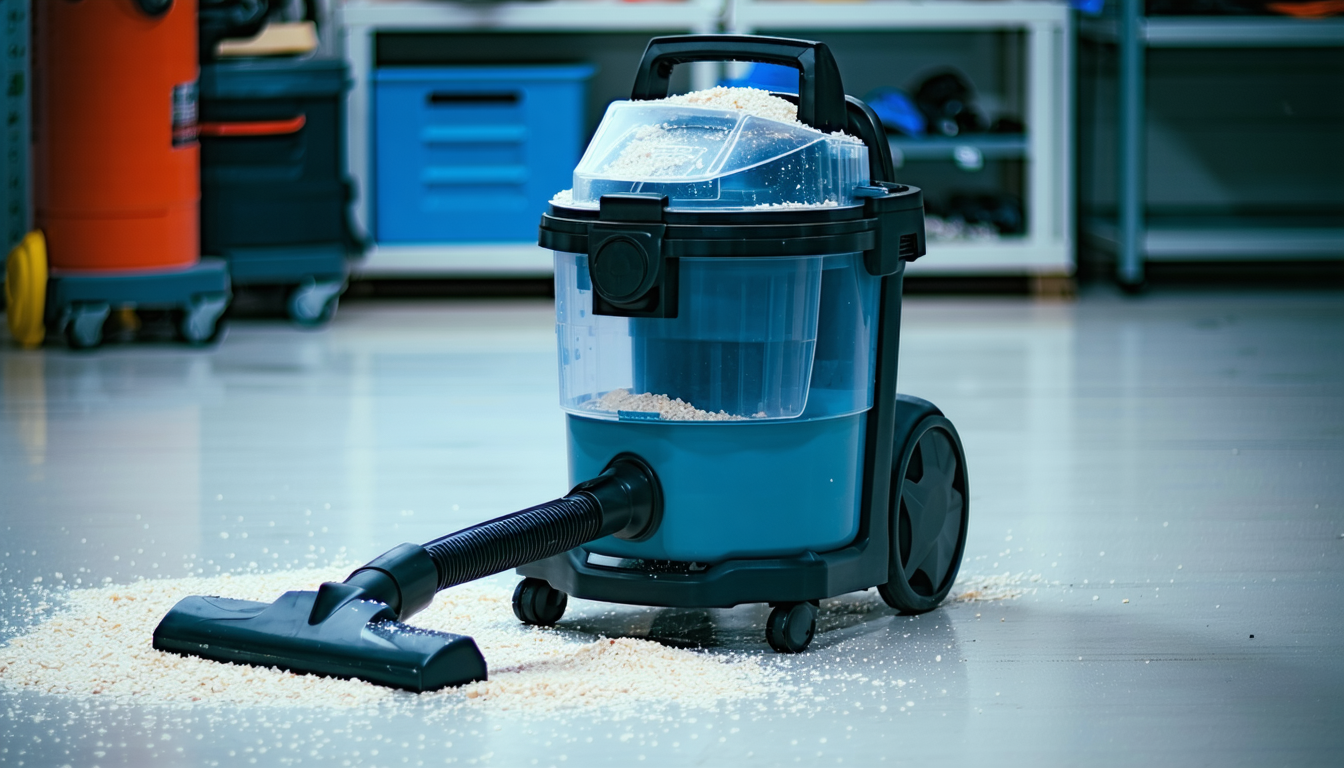
A static electricity ignition source is any surface that accumulates electrical charge without a conductive path to ground. This means every plastic shop vacuum becomes a bomb waiting for the right dust concentration.
Standard shop vacuums fail combustible dust collection on multiple fronts. Their plastic bodies build static charges during operation, reaching 3,000+ volts, well above the minimum ignition energy for most industrial dusts. The MIE value for wood dust sits at 40 millijoules. Aluminum powder ignites at just 15 millijoules. Your shop vac generates enough static to light both.
The hoses make things worse. Flexible plastic tubing has zero conductivity. Dust particles scraping against the interior walls create triboelectric charging, the same effect you get rubbing a balloon on your hair. The difference is your balloon doesn’t suck combustible particles through a non-conductive tube at 100+ CFM.
Particle recirculation creates the final hazard. Standard vacuum filters capture maybe 85% of particles. The remaining 15% gets blown back into your workspace as an airborne dust cloud. You just converted settled dust into the exact particle suspension needed for an explosion. Your “cleaning” equipment becomes the dust cloud generator.
Filtration inadequacy compounds the problem. Shop vac filters let particles below 10 microns pass through freely. Combustible dust particles between 0.1-420 microns create explosive atmospheres. Your standard filter blocks the big stuff but launches the dangerous fraction back into the air.
What Construction Requirements Make a Vacuum Combustible Dust Rated?
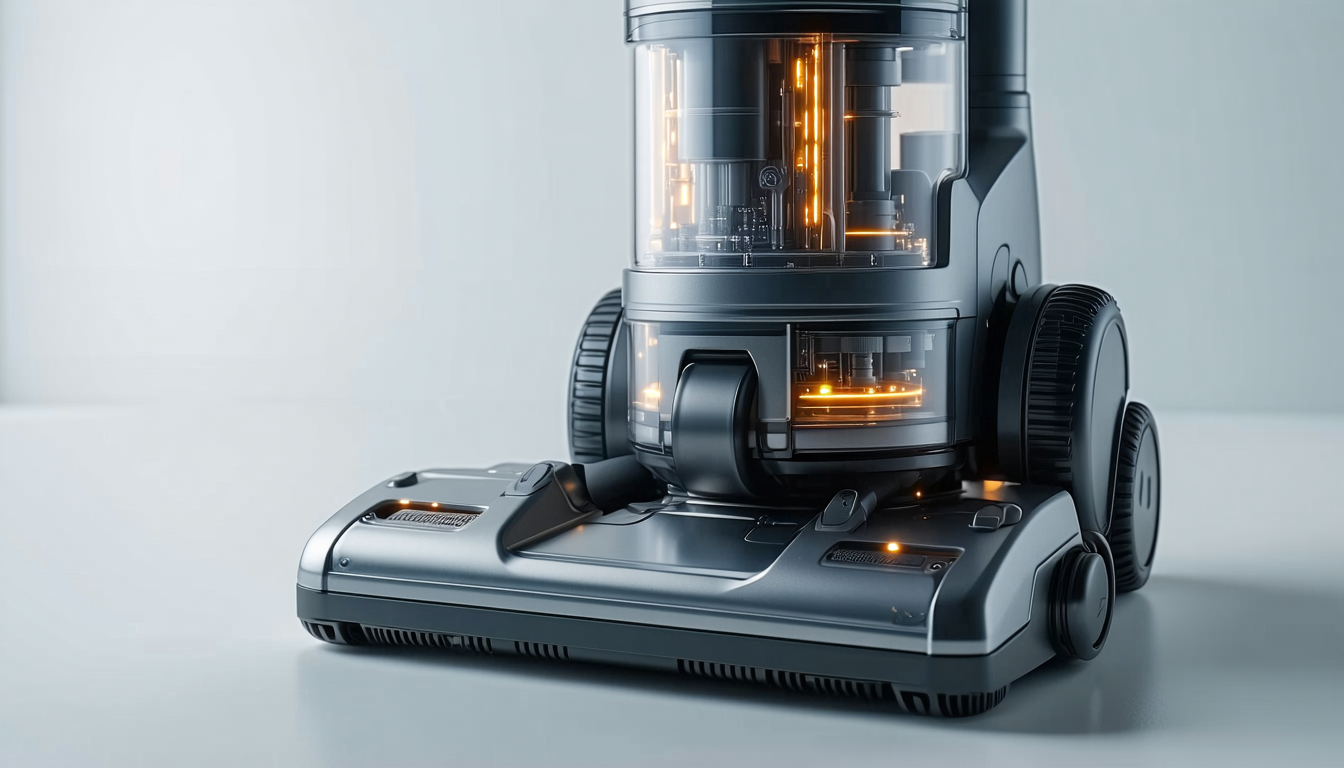
Conductive construction materials form the foundation of every compliant combustible dust vacuum. This means all-metal body construction with engineered grounding paths from every component to the electrical ground.
| Component | Requirement | Purpose |
|---|---|---|
| Main body | Stainless steel or aluminum | Prevents static buildup |
| Collection tank | Conductive metal | Maintains grounding path |
| Motor housing | Bonded to main ground | Eliminates charge accumulation |
| All joints | Resistance below 10^6 ohms | Ensures continuous conductivity |
| Filter housing | Conductive with bonding jumpers | Prevents charge isolation |
The resistance measurement between any two conductive parts cannot exceed 10^6 ohms per NFPA requirements. This threshold ensures static charges dissipate before reaching ignition levels. Bonding jumpers bridge joints where mechanical connections might create high-resistance paths.
Plastic components get banned entirely. No plastic wheels, handles, or trim pieces. Every surface the dust contacts must provide a conductive path to ground. Some manufacturers use conductive plastics, but metal construction eliminates the guesswork.
Grounding and bonding requirements extend beyond the vacuum body. The power cord must include a dedicated grounding conductor. All attachments, wands, crevice tools, brush heads, need conductive construction with bonding wires maintaining the grounding path.
Actually, this gets more complex with portable units. Wheels must be conductive with grounding straps dragging the floor. Static charges build up as you roll the unit across non-conductive surfaces. The grounding strap maintains continuous discharge.
Internal wiring follows explosion-proof standards. All electrical connections use sealed enclosures rated for Class II environments. The motor itself needs intrinsically safe construction or explosion-proof housing depending on your facility’s electrical classification requirements.
HEPA Filtration Requirements: Why 99.97% Efficiency Matters

HEPA filtration prevents combustible particle recirculation by capturing 99.97% of particles at 0.3 microns, the most penetrating particle size. This efficiency threshold isn’t arbitrary. It represents the minimum capture rate needed to prevent airborne dust cloud formation.
Particles below 420 microns create combustible dust clouds when suspended in air. Standard vacuum filters capture maybe 85% of this size range. The remaining 15% gets expelled as an airborne hazard. You’re not cleaning dust, you’re converting settled material into an explosive atmosphere.
Bagless system dangers multiply the recirculation problem. Every emptying cycle releases stored particles back into the workspace. Bagless combustible dust vacuums don’t exist in compliant designs. The containment system must isolate collected material from the airstream completely.
Filter loading affects efficiency over time. As HEPA filters collect particles, the cake layer actually improves filtration efficiency. But pressure drop increases, reducing airflow. Monthly efficiency testing ensures the filter maintains 99.97% performance throughout its service life.
Standard filters fail because they’re designed for visible particles, not combustible dust. A shop vac filter might capture sawdust chunks but miss the fine particles that create explosion hazards. The size distribution matters, it’s the particles you can’t see that kill people.
Filter replacement intervals depend on dust loading, but efficiency matters more than pressure drop. A partially loaded HEPA filter that maintains 99.97% efficiency outperforms a clean standard filter capturing 85%. Test efficiency monthly. Replace based on performance, not arbitrary schedules.
How Do Anti-Static Hoses and Grounding Systems Work?
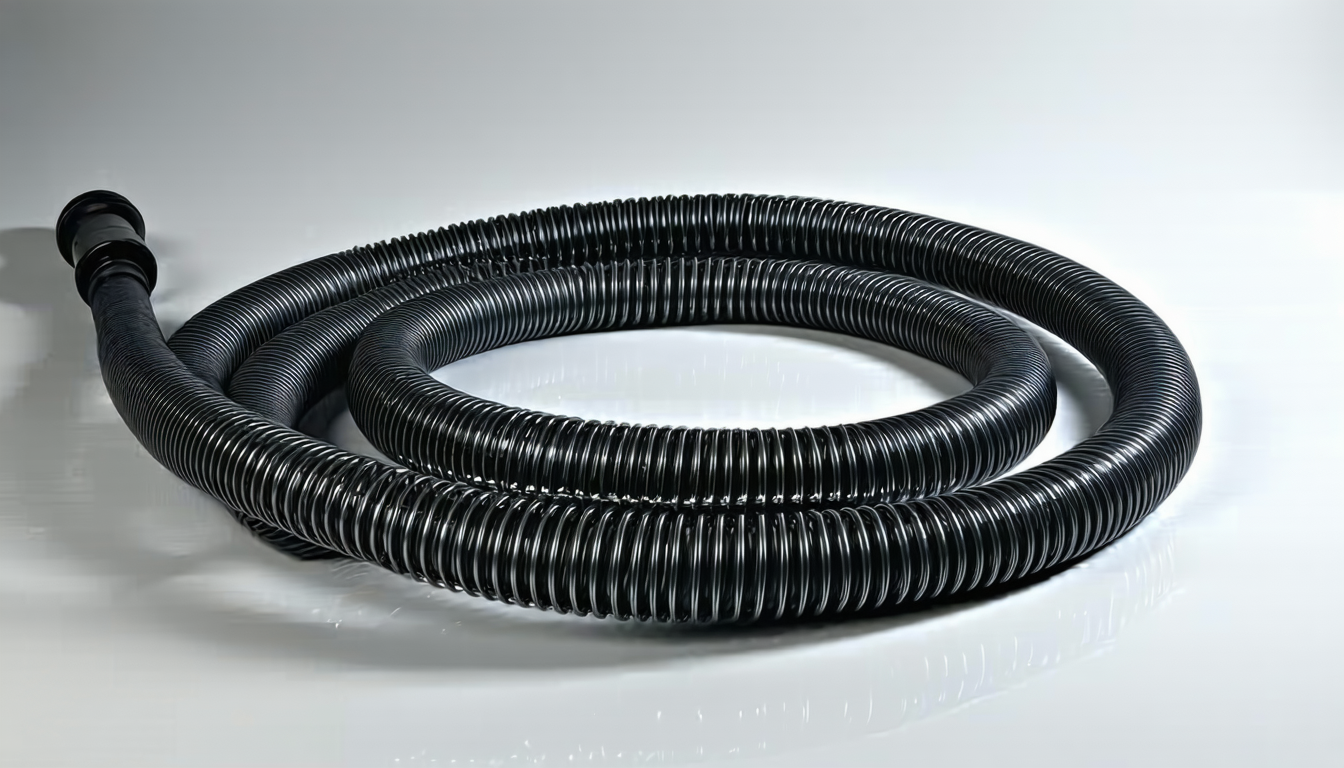
Anti-static hoses conduct static charges to ground through embedded conductive elements. Here’s how the grounding system functions:
Install the conductive wire spiral, Stainless steel wire coils through the hose wall, creating a continuous conductive path from vacuum to attachment point.
Connect bonding jumpers at each joint, Every hose connection needs a bonding wire maintaining electrical continuity across threaded or slip connections.
Attach the grounding wire to facility ground, A dedicated grounding conductor connects the vacuum frame to your facility’s electrical ground system.
Test continuity across the full system, Use an ohmmeter to verify resistance below 10^6 ohms from the nozzle tip through the hose to the vacuum ground terminal.
Maintain flexibility without compromising conductivity, The wire spiral must flex with the hose while maintaining continuous electrical contact throughout the coil length.
Conductive wire spiral construction uses 316 stainless steel embedded in the hose wall. The wire gauge and coil pitch determine conductivity. Tighter coils provide better conductivity but reduce hose flexibility. Manufacturers balance these tradeoffs based on application requirements.
Grounding wire attachment points need secure mechanical connections. Compression fittings work better than clamp-on terminals. The connection must survive repeated flexing without loosening. A loose grounding connection makes your entire system non-compliant.
Continuity testing should occur before each use in critical applications. Temperature changes, mechanical stress, and normal wear affect wire connections. A simple ohmmeter check takes 30 seconds and prevents ignition hazards.
Hose length affects resistance. Longer hoses need heavier gauge wire to maintain the 10^6 ohm maximum. Some facilities use multiple shorter hose sections with bonding jumpers rather than single long runs.
What NFPA and ATEX Ratings Should You Look For?
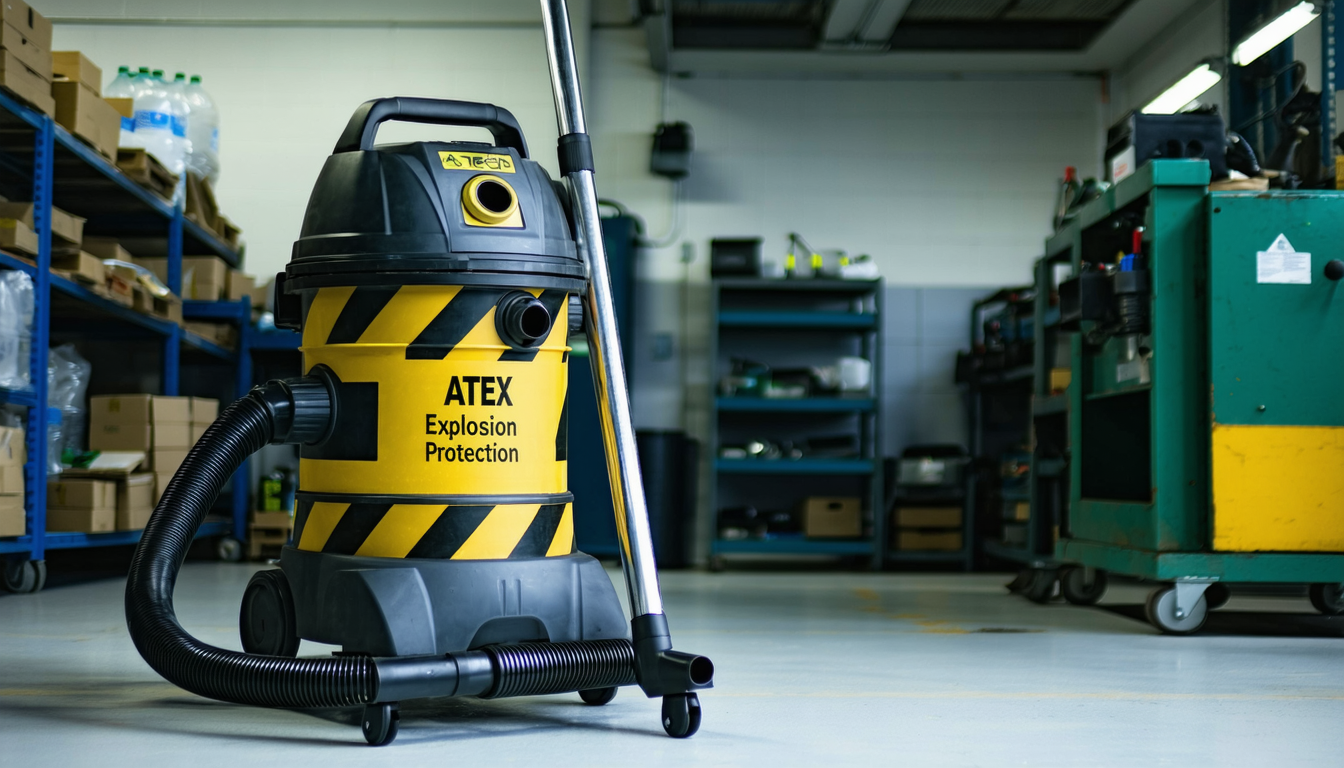
ATEX ratings indicate explosion protection classification for equipment used in potentially explosive atmospheres. The marking system tells you exactly which environments the vacuum can operate in safely.
| Rating Component | ATEX Marking | Application |
|---|---|---|
| Equipment Category | II 1D | Zone 20 – continuous dust presence |
| Equipment Category | II 2D | Zone 21 – occasional dust clouds |
| Equipment Category | II 3D | Zone 22 – abnormal dust conditions |
| Temperature Class | T135°C | Maximum surface temperature |
| Protection Method | Ex tD A21 IP6X | Dust ignition protection |
NFPA electrical classification requirements parallel the ATEX system but use different terminology. Class II Division 1 electrical rating covers areas with combustible dust during normal operations. Division 2 applies where dust appears only during abnormal conditions.
Certification marking requirements mandate third-party testing by recognized laboratories. Look for UL, CSA, or equivalent certification marks. Self-declared compliance means nothing in combustible dust applications. The certification must specifically address dust ignition protection.
Class II Division 1 electrical rating requires explosion-proof motor construction or intrinsically safe design. The motor cannot create ignition sources through sparking contacts, hot surfaces, or electrical faults. Surface temperature limits prevent dust ignition from heat sources.
ATEX equipment categories determine where you can use the vacuum. Category 1 equipment works in Zone 20 areas with continuous dust presence. Category 2 handles Zone 21 with occasional dust clouds. Category 3 covers Zone 22 where dust appears only during equipment malfunctions.
Temperature classification limits surface temperatures based on dust ignition characteristics. T135°C works for most organic dusts. Metal dusts need T75°C or lower ratings. The vacuum’s surface temperature during operation cannot exceed the classification limit.
Which Combustible Dust Vacuum Should You Choose?
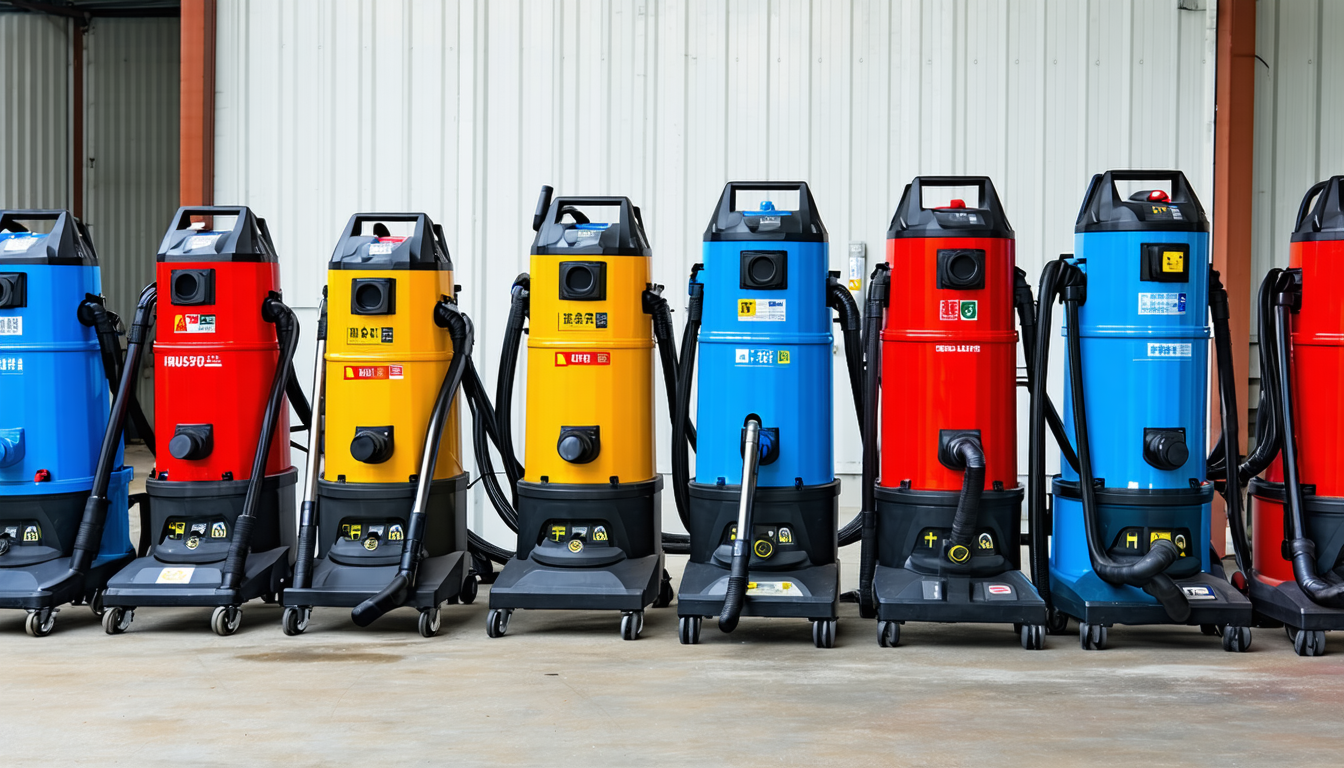
Vacuum selection depends on dust type and facility classification. Match the vacuum specifications to your specific combustible dust collection requirements:
For St-1 classified dusts, Standard NFPA-rated units with conductive construction and HEPA filtration handle wood dust, plastic dust, and most organic materials safely.
For St-2 classified dusts, Enhanced protection systems with improved grounding and additional safety interlocks work for agricultural dusts and some metal powders.
For St-3 classified dusts, Suppression-capable units with explosion detection systems are mandatory for aluminum powder, magnesium dust, and other highly explosive materials.
For portable applications, Battery-powered units eliminate electrical ignition sources but require frequent recharging and have limited suction capacity.
For continuous operations, Stationary units with permanent installation provide higher capacity and integrate with facility dust collection systems.
For maintenance applications, Smaller portable units work for housekeeping tasks but need frequent filter changes due to limited capacity.
Kst classification drives protection requirements. St-3 dusts with explosion pressures above 300 bar require suppression systems and enhanced detection. St-1 dusts work with standard NFPA-rated models that meet conductive construction requirements.
Facility electrical classification determines motor requirements. Class II Division 1 areas need explosion-proof motors. Division 2 areas accept intrinsically safe designs. The vacuum’s electrical rating must match or exceed your facility classification.
Maintenance frequency requirements vary by dust type and collection volume. Metal dusts need daily filter inspections. Organic dusts allow weekly checks. High-volume applications need spare filter sets to minimize downtime during changes.
Cost considerations favor matching capacity to actual needs. Oversized units waste energy and money. Undersized units create maintenance headaches and compliance gaps. Calculate your actual dust generation rates before selecting capacity.
Frequently Asked Questions
Can you retrofit a standard vacuum to be combustible dust compliant?
No, you cannot retrofit standard vacuums for combustible dust use. The plastic body construction creates static charges that conductive coatings cannot eliminate. Compliant vacuums require all-metal construction with engineered grounding paths from the design phase.
Do I need different vacuums for different types of combustible dust?
Yes, dust classification affects vacuum requirements significantly. St-3 dusts need explosion suppression systems and enhanced detection capabilities. St-1 and St-2 dusts work with standard NFPA-rated units that meet conductive construction and HEPA filtration requirements.
How often do combustible dust vacuum filters need replacement?
HEPA filter replacement depends on dust loading and facility conditions, typically every 6-12 months under normal use. However, filter efficiency testing should occur monthly to ensure 99.97% efficiency is maintained throughout the service life.