Over half of all combustible dust explosions happen inside dust collectors, the equipment facilities think protects them. Combustible dust collection compliance under NFPA 660 requires specific transport velocities, explosion protection, and filtration standards most systems don’t meet.
Key Takeaways:
- NFPA 660 Section 7.1.2 requires transport velocities of 3,500+ FPM for wood dust, most systems run 2,800-3,200 FPM
- Air recirculation from baghouse collectors requires filtration efficiency of 99.9%+ per NFPA 660 Chapter 9
- Collection system compliance costs average $85,000-$240,000 depending on explosion protection requirements
What Makes a Dust Collection System NFPA 660 Compliant?
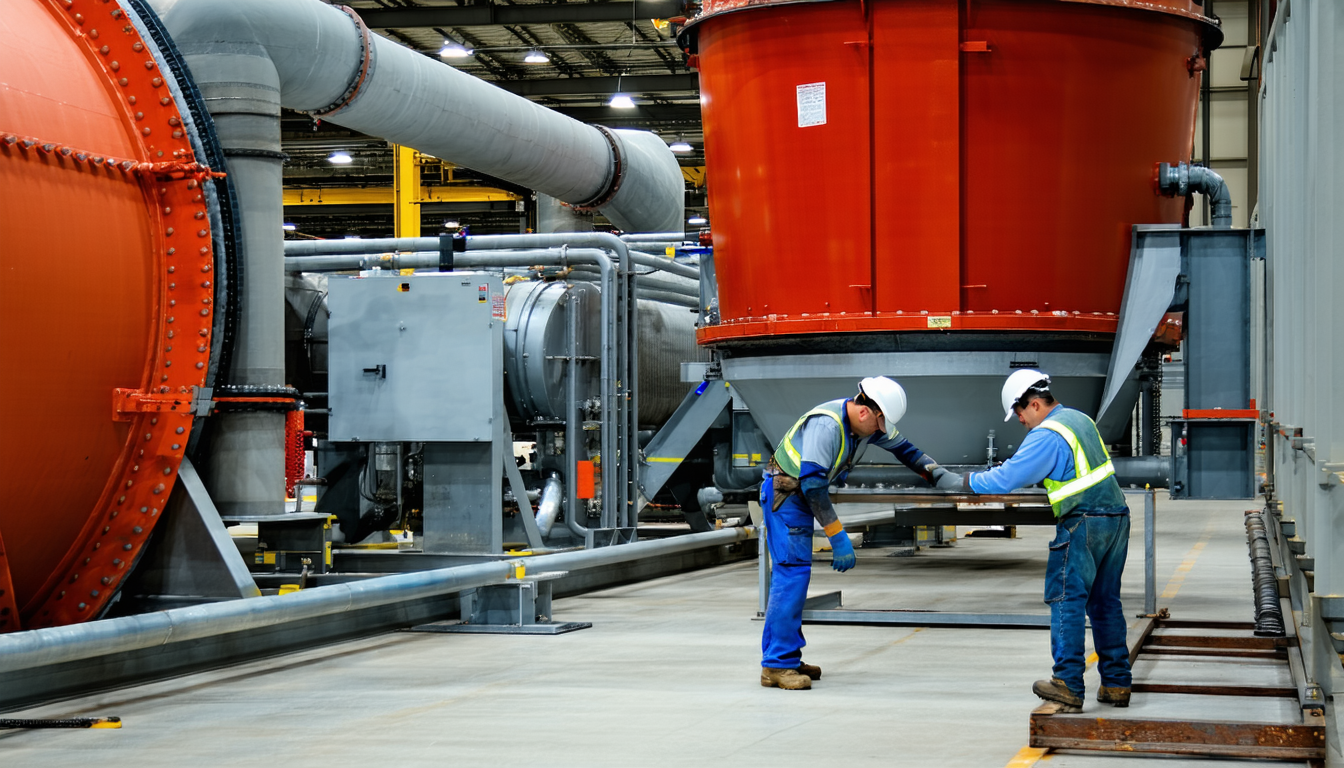
NFPA 660 compliant dust collection system is a configuration that meets Section 7 requirements for transport velocity, explosion protection, and electrical classification. This means your existing collector probably needs upgrades.
NFPA 660 took effect December 2024 replacing five separate standards. The consolidated standard shifts from component-level compliance to system-level analysis. Where NFPA 652 let you address dust collectors independently, NFPA 660 requires evaluating the entire collection network as one system.
Compliance centers on three elements. Transport velocity must prevent accumulation in ductwork. Explosion protection must meet Section 7.2 requirements. Electrical systems must match Class II Division ratings for your dust type.
The system approach changes how you calculate risks. A compliant baghouse collector connected to non-compliant ductwork creates a non-compliant system. You can’t fix parts, the whole network must meet NFPA 660 standards simultaneously.
Most facilities discover compliance gaps during their first system-level assessment. The collector meets specifications, but ductwork runs too slow or electrical classification stops at the unit boundary. NFPA 660 closes these integration gaps.
Baghouse vs Cartridge Collectors: Which Type Handles Combustible Dust?
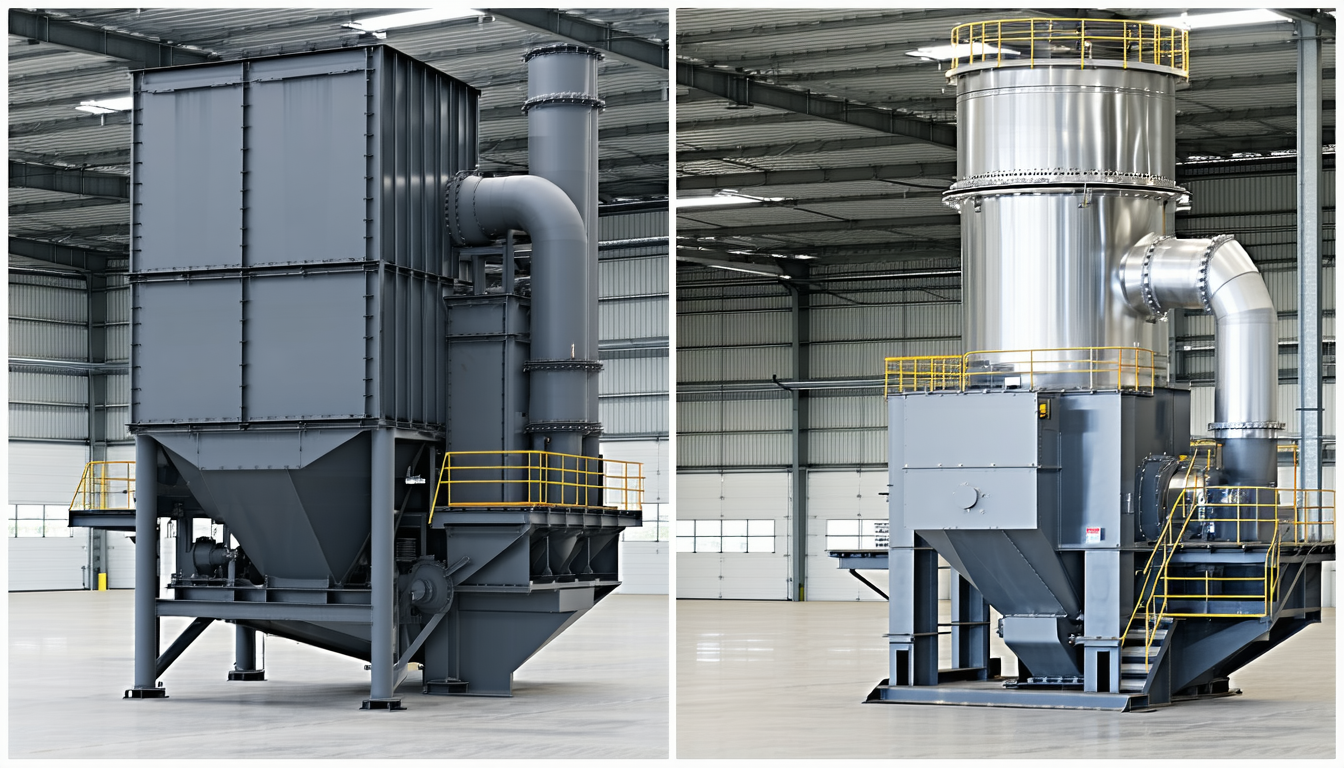
Cartridge collectors have 10-15x more surface area per cubic foot than baghouses. This density creates different explosion dynamics and protection requirements.
| Feature | Baghouse Collector | Cartridge Collector |
|---|---|---|
| Filter Surface Area | 200-400 sq ft per unit | 2,000-6,000 sq ft per unit |
| Explosion Risk Factor | Lower surface area = reduced flame propagation | Higher surface area = faster flame travel |
| Cleaning Method | Reverse air or shaker = gentler | Pulse jet = aggressive, risk of filter damage |
| Protection Requirements | Standard venting often sufficient | May require suppression systems |
| Maintenance Access | Easy filter replacement | Cartridge changeout more complex |
Baghouse collectors use fabric filtration with lower surface density. The reverse air or shaker cleaning method prevents aggressive pressure pulses that can damage combustible dust filters. Explosion protection typically requires standard venting per NFPA 68.
Cartridge collectors pack more filtration into smaller footprints using pleated media. The pulse jet cleaning creates pressure spikes that can compromise filter integrity with combustible dust. The higher surface area means flames propagate faster during an explosion event.
NFPA 660 doesn’t prefer one type over another. The standard focuses on system performance, transport velocity, explosion protection, and electrical compliance. Baghouse vs cartridge collector selection depends on your facility’s space, maintenance capabilities, and explosion protection budget.
Most facilities choose baghouse collectors for combustible dust applications. The lower surface area and gentler cleaning method reduce explosion risk and protection costs.
How Do You Size Ductwork and Set Transport Velocity for Combustible Dust?

NFPA 660 requires minimum 3,500 FPM transport velocity for wood dust. Most existing systems run 2,800-3,200 FPM and need upgrades.
Calculate minimum velocity for your dust type. NFPA 660 Table 7.1.2 lists specific velocities by material, wood dust requires 3,500 FPM, metal dust needs 4,000 FPM, pharmaceutical dust requires 3,500 FPM.
Size ductwork to maintain velocity at lowest airflow. Use the formula: Duct Area = CFM ÷ (Velocity × 60). For 2,000 CFM at 3,500 FPM, maximum duct area is 9.5 square inches.
Account for static pressure increases. Higher velocities create more friction loss, expect 15-25% higher static pressure compared to non-combustible dust systems.
Design for accumulation prevention. NFPA 660 Section 7.1.3 requires smooth interior ductwork with minimal direction changes. Avoid pockets where dust can settle below minimum transport velocity.
Size fans for peak velocity requirements. Most systems need 20-30% more airflow capacity to maintain transport velocity with loaded filters.
Transport velocity prevents dust accumulation in ductwork. Accumulation creates explosion propagation paths and secondary explosion risks. The higher velocities required by NFPA 660 increase energy costs but eliminate accumulation zones.
Ductwork sizing affects your entire system. Smaller ducts maintain velocity but increase pressure drop. Larger ducts reduce pressure but risk accumulation if airflow drops. Size conservatively, it’s easier to throttle excess airflow than retrofit undersized ductwork.
What Explosion Protection Does NFPA 660 Require for Dust Collectors?
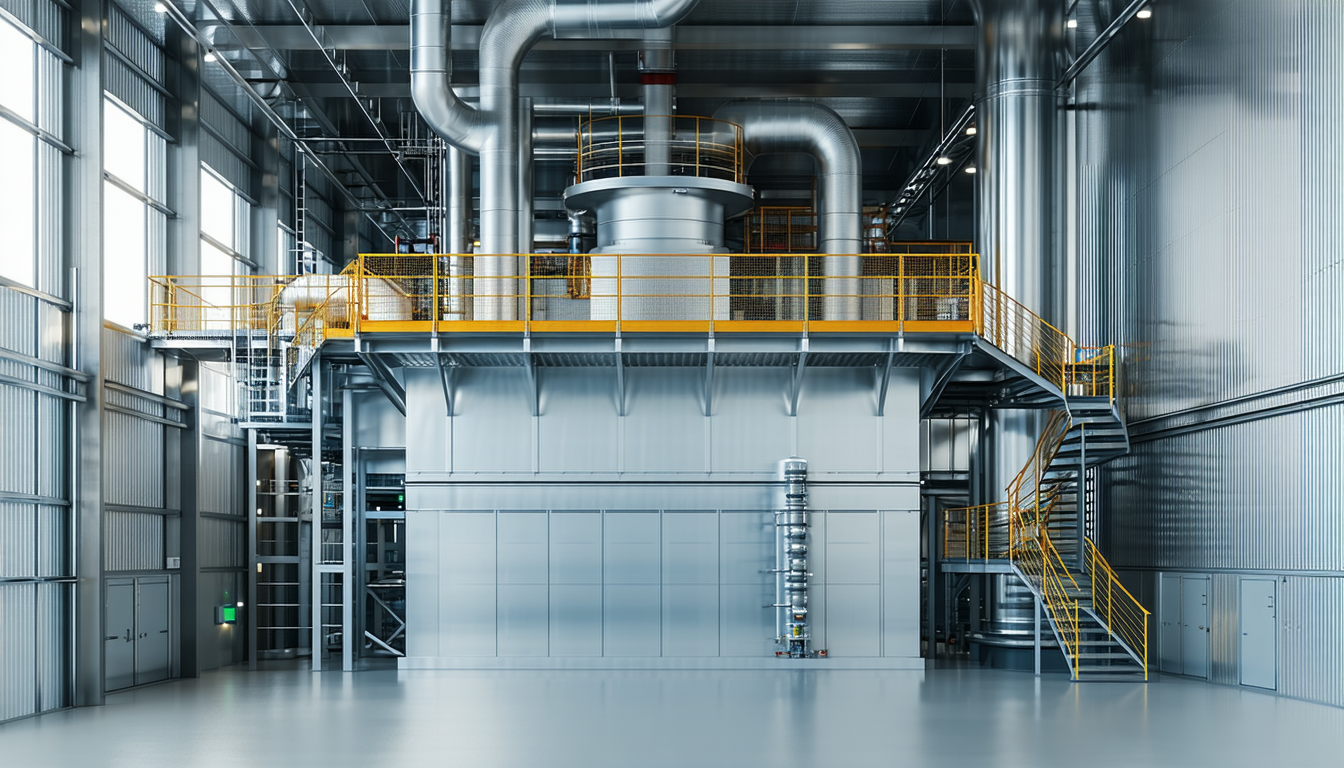
Dust collector explosion protection per NFPA 660 Section 7.2 is mandatory unless dust concentration stays below 25% of the minimum explosive concentration. Most facilities cannot guarantee this limit.
Deflagration venting protects outdoor collectors. NFPA 68 vent area calculations require Kst values and vessel volume data. Vent panels must discharge to safe areas with adequate clearance zones.
Explosion suppression systems work for indoor installations. Chemical suppression agents stop deflagrations within milliseconds but require detection systems and agent distribution networks.
Isolation systems prevent explosion propagation. Explosion isolation valves in ductwork stop deflagrations from traveling between connected equipment.
Inerting systems eliminate explosion potential. Nitrogen inerting reduces oxygen below combustion levels but requires continuous monitoring and backup systems.
Venting vs suppression selection depends on collector location. Outdoor units typically use venting because it costs less and requires minimal maintenance. Indoor units need suppression because vent discharge creates facility hazards.
NFPA 660 requires protection system integration with the collection system. Explosion isolation valves must coordinate with collector shutdown sequences. Suppression systems need detection points throughout the ductwork network, not just at the collector.
Most facilities choose venting for outdoor collectors and suppression for indoor units. Combination approaches use venting at collectors with isolation valves in connecting ductwork. The protection system must address the entire collection network as one integrated unit.
Can You Recirculate Air From Combustible Dust Collectors?

NFPA 660 allows recirculation only with continuous monitoring and 99.9% filtration efficiency. Air recirculation from baghouse collectors requires meeting Chapter 9 filtration standards.
| Feature | Air Recirculation | NFPA 660 Requirement | Baghouse Capability |
|---|---|---|---|
| Filtration Efficiency | Must achieve 99.9%+ | Chapter 9.2.3 mandates continuous verification | Standard bags achieve 99.5-99.8% |
| Monitoring Requirements | Continuous opacity or particle monitoring | Real-time dust detection with alarms | Requires additional monitoring equipment |
| Backup Protection | Automatic outdoor discharge on alarm | Fail-safe operation required | Damper system with position confirmation |
| Filter Media | High-efficiency options required | MERV 15+ or HEPA grade | Specialty bags increase replacement costs |
Standard baghouse collectors achieve 99.5-99.8% efficiency with typical filter media. Meeting the 99.9% requirement needs specialty high-efficiency bags or secondary filtration stages. The efficiency difference sounds small but represents a 5-10x reduction in allowable emissions.
Continuous monitoring adds complexity and cost. Opacity monitors detect filter breakthrough but require calibration and maintenance. Particle counters provide direct measurement but cost more and need clean air reference points.
Most facilities choose outdoor discharge over recirculation. The monitoring and high-efficiency filtration costs often exceed the energy savings from recirculation. Outdoor discharge eliminates the risk of recirculating combustible particles during filter breakthrough events.
Recirculation makes sense when energy costs are high and outdoor discharge creates environmental issues. Calculate the total cost of compliance, monitoring equipment, high-efficiency filters, and backup systems, before committing to recirculation.
What Electrical and Grounding Requirements Apply to Combustible Dust Collection Systems?
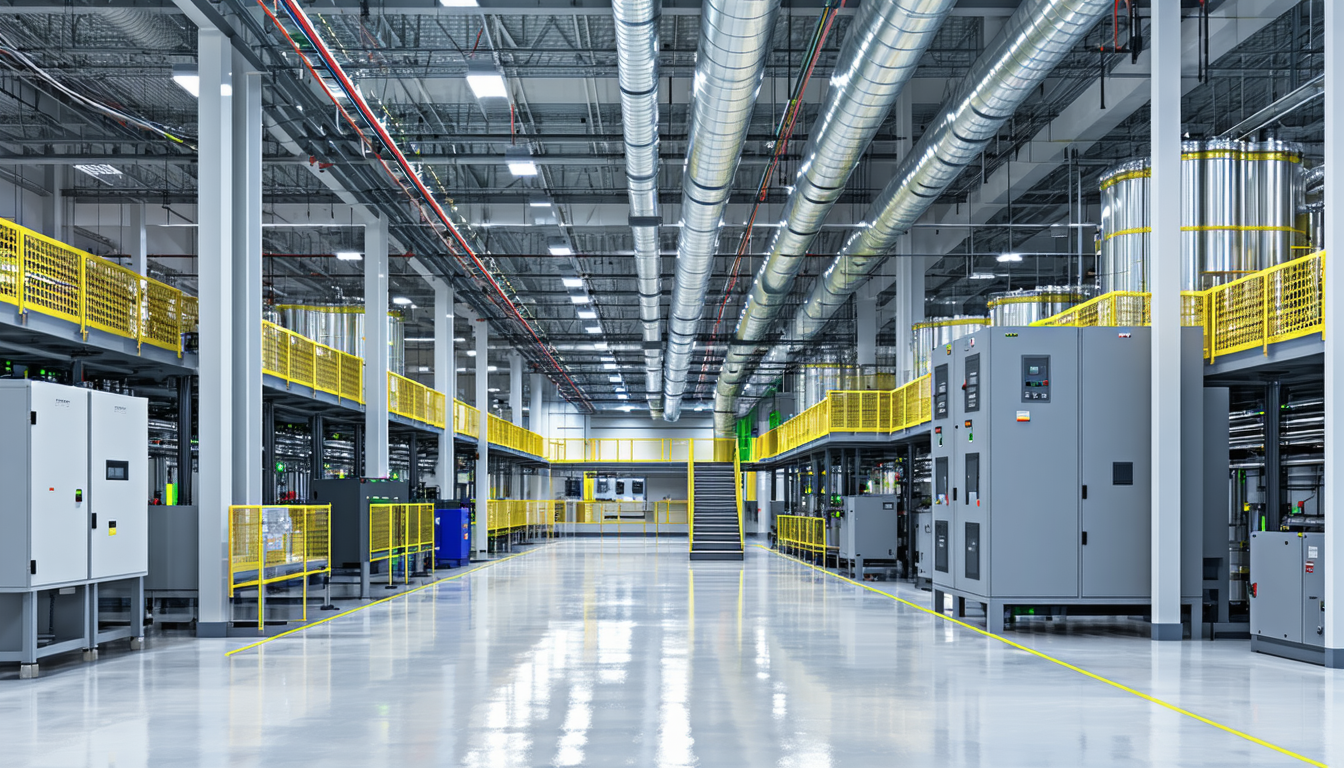
Dust collection systems require Class II electrical classification and proper grounding per NFPA 77. Ductwork resistance to ground must not exceed 10 ohms.
Class II electrical areas surround combustible dust equipment. Division 1 applies inside collectors and ductwork where dust accumulation is normal. Division 2 covers areas around equipment where dust might appear during abnormal conditions.
Motors must match the electrical classification. Class II Division 1 motors cost 25-40% more than standard units but prevent ignition from electrical arcs or hot surfaces. The motor enclosure must exclude dust and prevent internal temperatures from reaching ignition levels.
Bonding and grounding prevent static electricity buildup during dust transport. NFPA 77 requires connecting all metal components in the collection system to ground. Ductwork joints need bonding jumpers to maintain electrical continuity across flanged connections.
Static electricity poses the highest ignition risk in dust collection systems. Moving dust generates static charges that can accumulate to dangerous levels without proper grounding. The 10-ohm resistance limit ensures adequate discharge paths for static buildup.
Grounding system testing must verify continuity throughout the network. Test resistance from each ductwork section to the main ground electrode. Document results and retest after maintenance that might compromise connections.
Most facilities need electrical upgrades for NFPA 660 compliance. Standard industrial motors and wiring don’t meet Class II requirements. Budget for motor replacements, conduit upgrades, and grounding system installation when planning combustible dust collection compliance.
Frequently Asked Questions
Do I need explosion protection on every dust collector in my facility?
NFPA 660 Section 7.2 requires explosion protection on collectors handling combustible dust unless the dust concentration stays below 25% of the MEC. Most facilities cannot guarantee this concentration limit, making protection mandatory.
Can I retrofit my existing dust collector for combustible dust compliance?
Retrofitting is possible but expensive, typically 60-80% the cost of new equipment. You’ll need explosion protection, electrical upgrades, and often ductwork modifications to meet transport velocity requirements.
What maintenance does NFPA 660 require for dust collection systems?
Section 7.4 requires monthly visual inspections of ductwork for accumulation, quarterly filter change documentation, and annual explosion protection system testing. Most facilities fail on documentation, not the actual maintenance.