Industrial dust collector cost planning gets complicated fast when NFPA 660 explosion protection requirements turn your $50,000 equipment budget into a $150,000 project. Most quotes exclude the safety systems that combustible dust handling requires.
Key Takeaways:
- Basic dust collector equipment runs $15,000-$200,000 depending on CFM, but explosion protection adds 40-120% to total project cost
- Installation and ductwork typically cost 30-50% of equipment price, with combustible dust transport velocity requirements driving higher material costs
- Annual filter replacement runs $2,000-$15,000 per system, plus $5,000-$20,000 for explosion protection maintenance and testing
How Much Does an Industrial Dust Collector Cost by System Type?
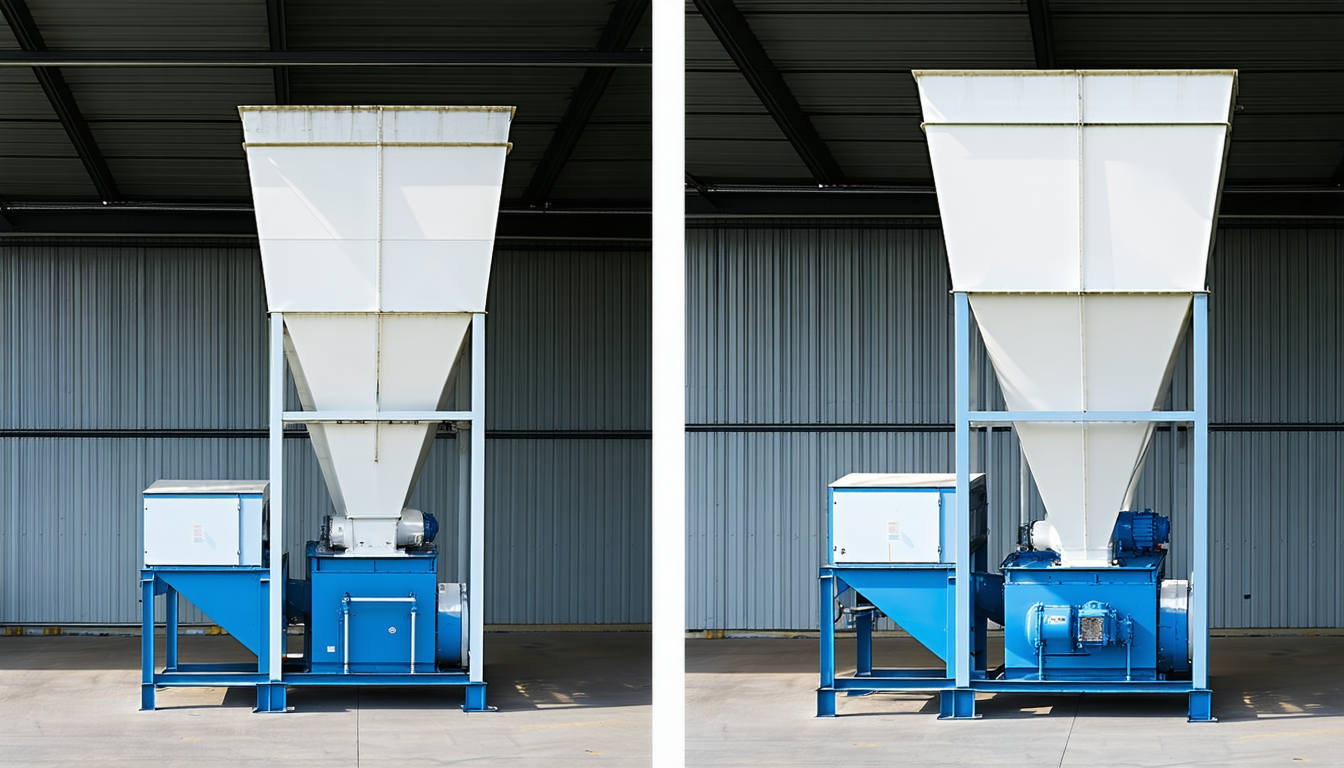
Baghouse collectors cost $25,000-$200,000 depending on airflow capacity and construction materials. Cartridge collectors range $15,000-$120,000 for comparable CFM ratings. The price difference comes down to filter surface area, cleaning mechanism complexity, and structural requirements for combustible dust applications.
| Feature | Baghouse Collector | Cartridge Collector |
|---|---|---|
| Base Equipment Cost | $25,000-$200,000 | $15,000-$120,000 |
| CFM Range | 1,000-50,000+ | 500-15,000 |
| Combustible Dust Premium | +30-50% base cost | +20-40% base cost |
| Filter Replacement | $1,500-$8,000 annual | $2,000-$12,000 annual |
| Maintenance Complexity | Lower | Higher |
Combustible dust handling adds 20-40% to base equipment cost because the dust collection system requires spark-resistant construction, conductive materials, and reinforced housings for explosion venting integration. A standard $40,000 cartridge collector becomes $50,000-$56,000 when built for combustible dust service.
The CFM capacity drives the base price more than collector type. A 5,000 CFM baghouse runs $45,000-$65,000 while a comparable cartridge system costs $40,000-$58,000. But cartridge collectors hit capacity limits around 15,000 CFM where baghouse systems scale to 50,000+ CFM applications.
What Do Explosion Protection Add-Ons Cost for Dust Collectors?
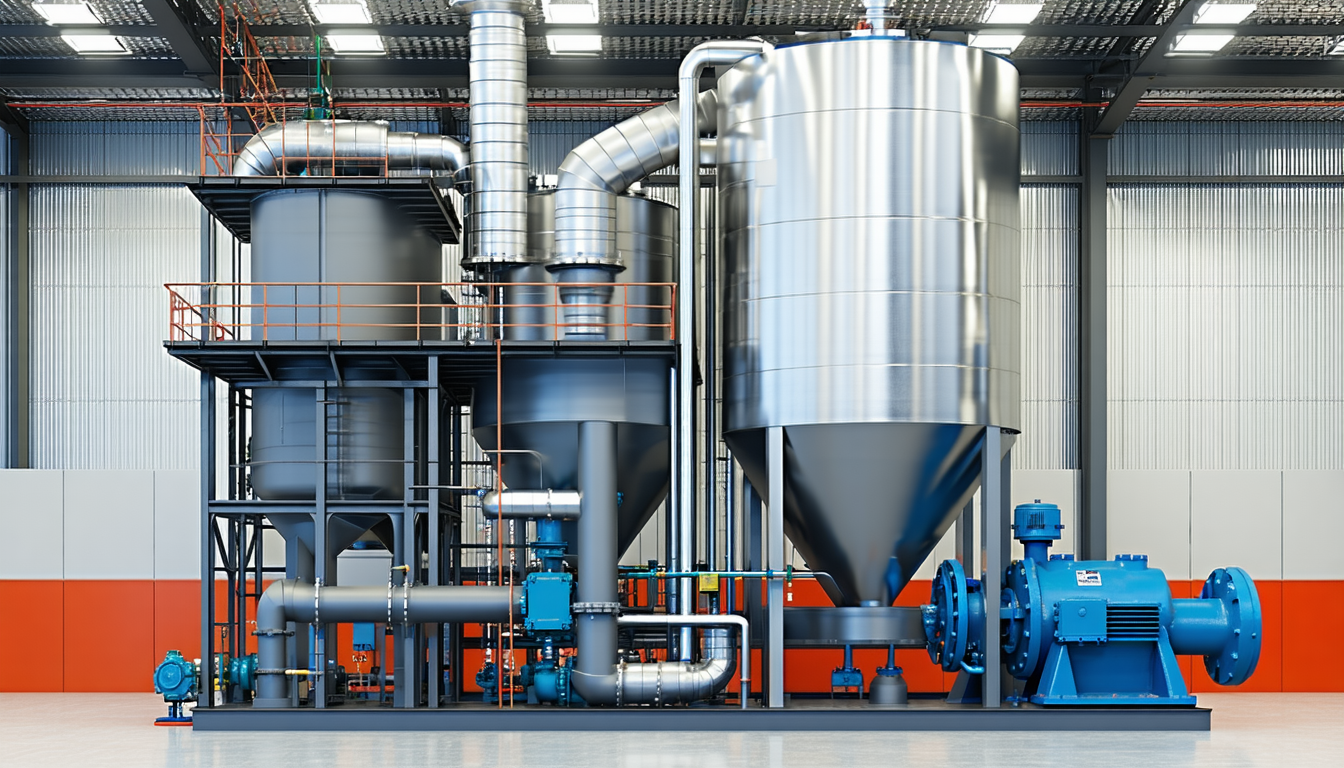
Explosion protection systems increase cost by 40-120% above the base collector price. NFPA 660 requires these safety systems for combustible dust applications, and they represent the largest cost surprise in most projects.
| Protection Type | Equipment Cost | Installation Cost | NFPA 660 Requirement |
|---|---|---|---|
| Explosion Venting | $8,000-$25,000 | $3,000-$8,000 | Section 7.1.1 |
| Isolation Valves | $15,000-$50,000 | $5,000-$12,000 | Section 7.3.1 |
| Spark Detection | $5,000-$15,000 | $2,000-$5,000 | Section 6.3.2 |
| Suppression Systems | $35,000-$125,000 | $10,000-$25,000 | Alternative to venting |
| Electrical Upgrades | $8,000-$20,000 | $12,000-$30,000 | Class II locations |
Explosion venting costs $8,000-$25,000 for the panels plus structural reinforcement. Isolation valves run $15,000-$50,000 depending on duct diameter and response time requirements. Spark detection systems add $5,000-$15,000 for sensors, control panels, and integration with shutdown sequences.
Dust explosion protection typically adds $28,000-$90,000 to a standard dust collector installation when you factor in equipment, installation, and electrical work. Suppression systems cost more upfront but eliminate the need for explosion venting and structural modifications.
Electrical classification upgrades for Class II hazardous locations add $20,000-$50,000 to projects. Motors, control panels, and wiring must meet Division 1 or Division 2 ratings depending on your dust hazard analysis findings.
Installation and Ductwork Costs for Combustible Dust Systems
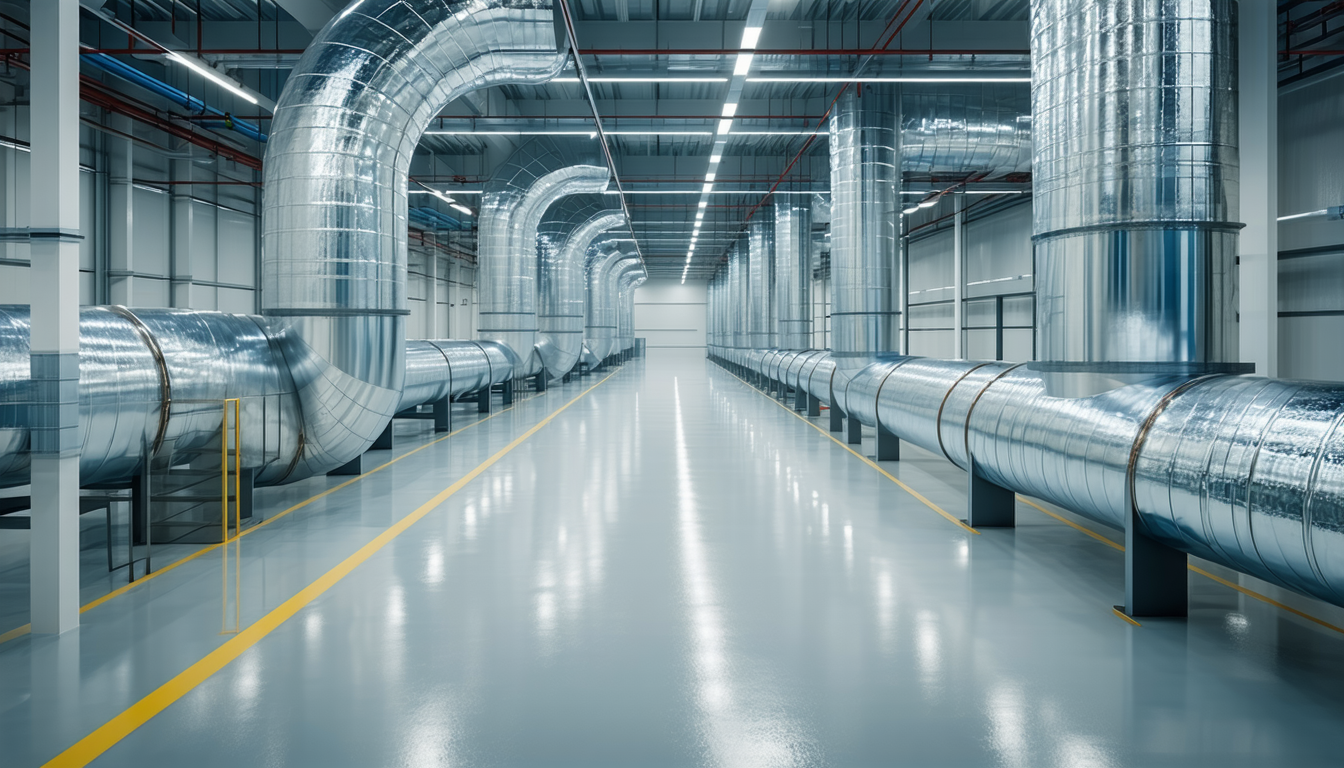
Transport velocity requirements increase ductwork material costs by 25-40% compared to standard dust collection installations. Installation typically runs 30-50% of equipment cost, with combustible dust requirements driving the higher end of that range.
Transport velocity compliance – NFPA 660 requires minimum 4,000 FPM transport velocity for most combustible dusts, forcing larger duct diameters that increase material and support structure costs by $3,000-$8,000 per 100 feet of ductwork.
Electrical installation complexity – Class II hazardous location wiring requires explosion-proof conduit, sealed fittings, and certified installers, adding $12,000-$30,000 to standard electrical work depending on system complexity and distance from power sources.
Structural requirements – Explosion venting forces concrete pad reinforcement and building modifications to handle vent discharge, typically costing $8,000-$20,000 for pad work and $5,000-$15,000 for building modifications.
Specialized labor – Combustible dust installations require certified contractors familiar with NFPA standards, commanding 20-40% higher labor rates than standard ductwork installation, adding $5,000-$15,000 to typical projects.
Ductwork for a combustible dust collection system runs $15-$25 per CFM compared to $8-$15 per CFM for standard applications. The transport velocity requirement forces larger diameters that use more material and require heavier support structures.
Hidden Costs Most Dust Collector Quotes Miss
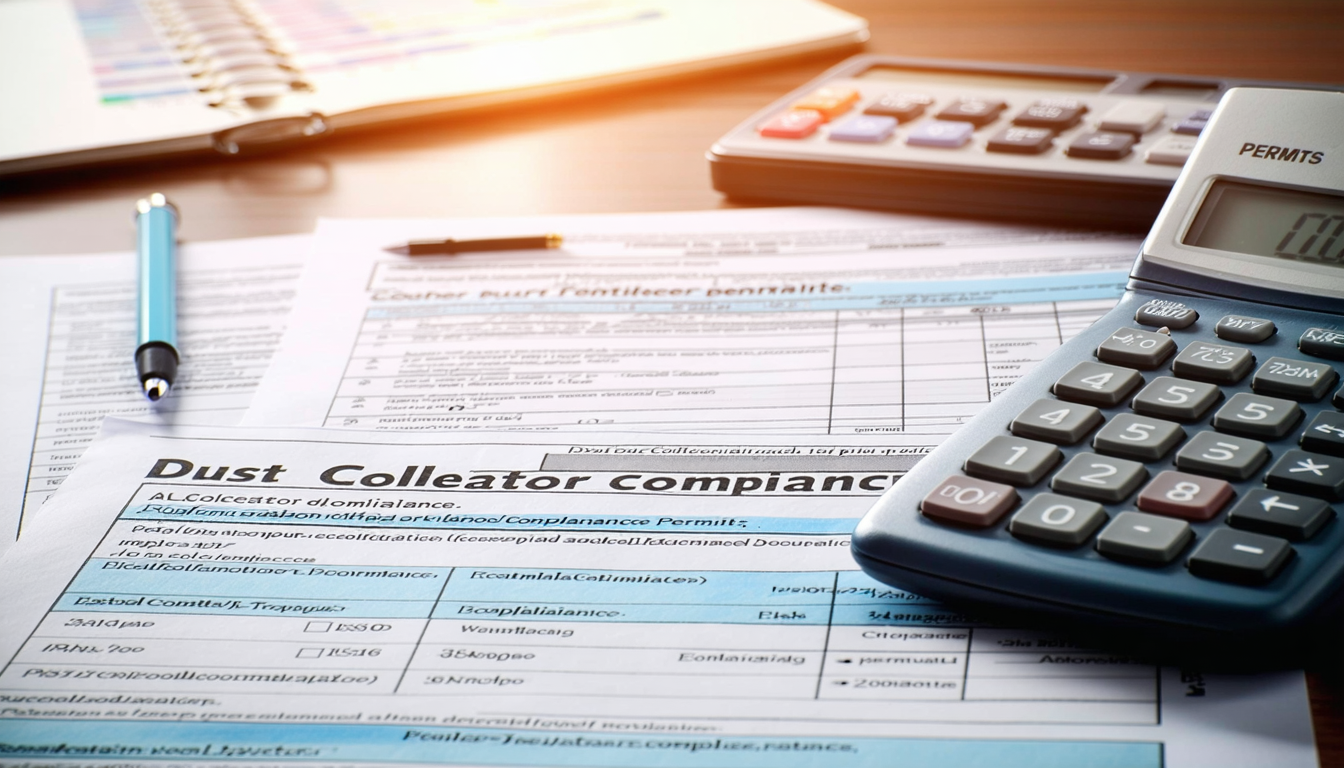
Hidden costs include permitting, testing, and ongoing compliance expenses that add $15,000-$35,000 to initial project budgets and $8,000-$25,000 annually for compliance maintenance. Most equipment quotes focus on hardware and skip these regulatory requirements.
Pre-installation testing – Combustible dust testing costs $3,000-$8,000 to determine Kst values, MEC levels, and MIT data that drive explosion protection sizing requirements before you can finalize equipment specifications.
Permitting and inspection fees – Building permits for explosion venting modifications run $1,500-$5,000, plus fire marshal inspections ($500-$2,000) and electrical permits for Class II installations ($800-$2,500).
Commissioning and startup – Professional commissioning to verify transport velocities, explosion protection response times, and control system integration costs $5,000-$15,000 but prevents expensive rework and compliance failures.
Insurance impact – Installing compliant combustible dust systems can reduce insurance premiums by 15-30%, but non-compliant systems can void coverage entirely, creating liability exposure that exceeds equipment costs.
Documentation requirements – NFPA 660 compliance requires ongoing maintenance records, inspection logs, and system performance documentation that costs $2,000-$5,000 annually in administrative time and third-party inspections.
The dust hazard analysis cost alone runs $8,000-$25,000 for most facilities but provides the technical foundation for all equipment sizing and protection system selection decisions.
What Are the Ongoing Operating Costs for Compliant Dust Collectors?
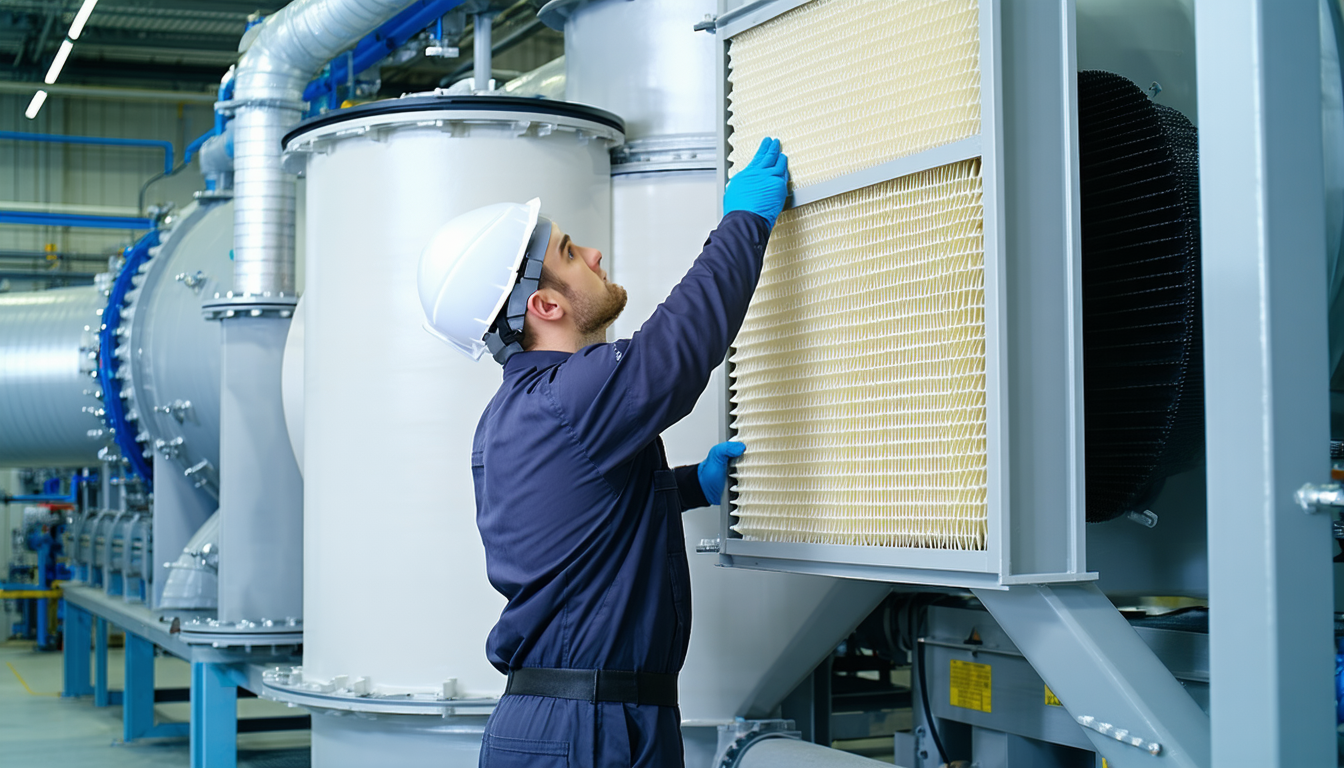
Filter replacement costs $2,000-$15,000 annually per system depending on dust loading, filter media selection, and cleaning cycle efficiency. Total annual operating costs range $7,000-$40,000 including filters, maintenance, energy, and compliance testing.
| Operating Cost | Baghouse Collector | Cartridge Collector |
|---|---|---|
| Filter Replacement | $1,500-$8,000 annual | $2,000-$12,000 annual |
| Energy Consumption | $2,500-$8,000 annual | $1,800-$6,000 annual |
| Compressed Air | $500-$2,000 annual | $1,200-$4,000 annual |
| Maintenance Labor | $1,500-$5,000 annual | $2,000-$8,000 annual |
| Compliance Testing | $3,000-$8,000 annual | $3,000-$8,000 annual |
Baghouse collectors use less expensive filter media but require more frequent cleaning cycles that increase energy consumption. Cartridge collectors need premium filter media that costs more upfront but typically lasts 12-18 months compared to 6-12 months for baghouse filters.
Explosion protection maintenance adds $5,000-$20,000 annually for system testing, sensor calibration, and isolation valve inspection. NFPA 660 requires quarterly functional testing of explosion venting systems and annual performance verification of suppression systems.
Compressed air consumption for pulse cleaning ranges from minimal in baghouse systems to $1,200-$4,000 annually for high-frequency cartridge collector cleaning cycles. Energy costs depend on fan horsepower and operating hours but typically range $1,800-$8,000 annually for systems running 16+ hours daily.
Compliance testing includes annual combustible dust vacuum verification, transport velocity measurements, and explosion protection system certification that costs $3,000-$8,000 per year depending on system complexity and testing lab rates.
Frequently Asked Questions
Why do combustible dust collectors cost so much more than regular industrial dust collectors?
Combustible dust collectors require explosion protection systems like venting and isolation, electrical equipment rated for Class II hazardous locations, and specialized construction materials. These safety requirements typically double the total project cost compared to standard dust collection.
Can I add explosion protection to an existing dust collector to save money?
Most existing collectors cannot be retrofitted for combustible dust compliance because they lack proper electrical ratings, structural reinforcement for explosion venting, and safe construction materials. Retrofitting typically costs 80-90% of a new compliant system.
What happens if I skip the explosion protection to reduce costs?
Operating a dust collector for combustible dust without proper explosion protection violates NFPA 660 and creates serious liability exposure. Insurance claims may be denied, and OSHA can cite facilities under the General Duty Clause for willful safety violations.