Enclosureless dust collector systems promise simplified compliance, but NFPA 660 Chapter 24 restricts their use to such narrow conditions that most facilities can’t legally use them for combustible dust applications.
Key Takeaways:
- NFPA 660 permits enclosureless collectors only for wood dust with weight limits of 1,000 pounds and volume limits of 500 cubic feet
- DHA analysis is required to determine enclosureless collector suitability, you cannot self-certify compliance
- 87% of combustible dust applications require enclosed collectors with explosion protection per NFPA 660 requirements
What Is an Enclosureless Dust Collector?
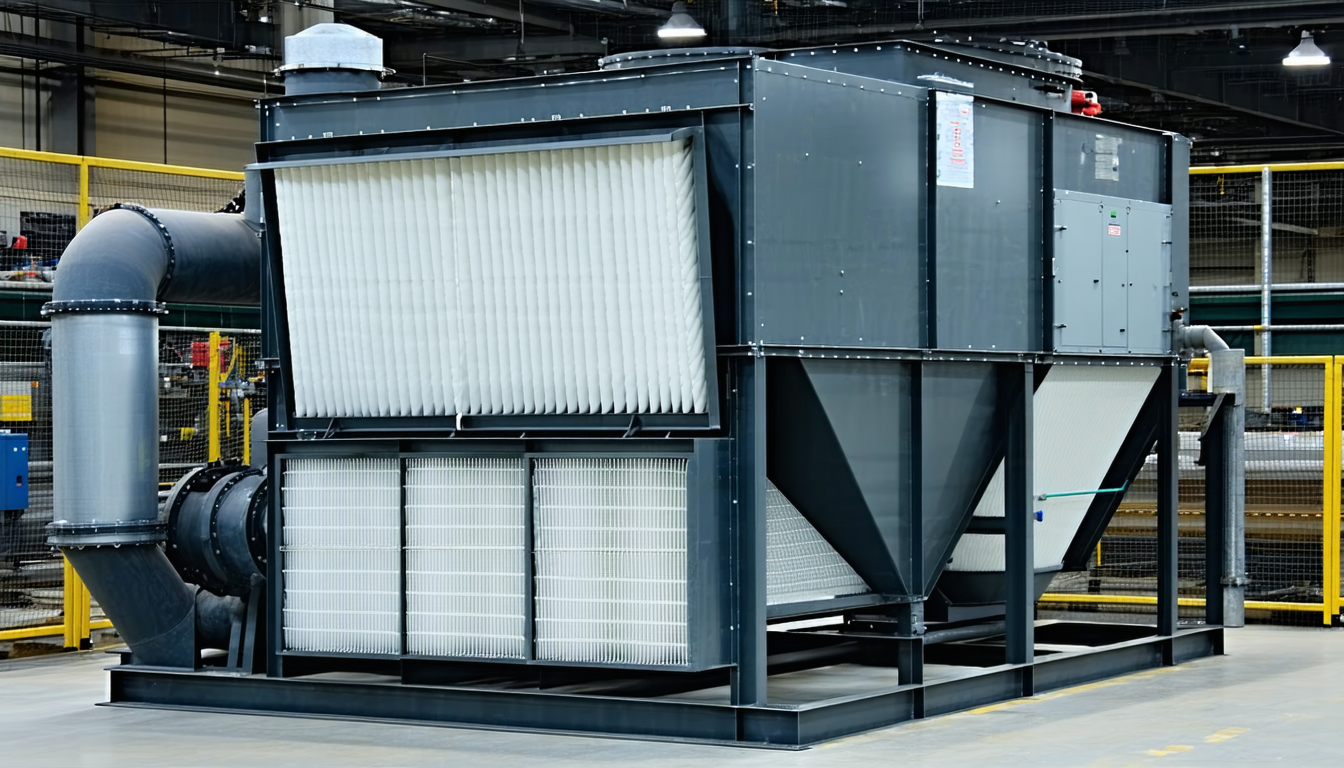
An enclosureless dust collector is a dust collection system that operates without an enclosed housing structure around the filter elements. This means the baghouse collector or cartridge collector filters are exposed to the ambient environment rather than contained within a sealed vessel or cabinet.
The basic operational principle mirrors standard dust collection systems. A fan pulls dust-laden air through filter media, capturing particles while allowing clean air to pass through. The key difference lies in the physical configuration, no enclosed housing surrounds the filter elements, eliminating the need for explosion venting or suppression systems in qualifying applications.
Facilities find enclosureless systems attractive because they appear to offer simplified compliance. Without an enclosed housing, there’s no confined space where dust explosions can develop pressure. This design characteristic eliminates explosion protection equipment requirements for applications that meet NFPA 660’s strict criteria.
The catch? Those criteria are so restrictive that most industrial operations can’t use them. You’re looking at wood dust only, with weight and volume thresholds that disqualify typical production environments. Most facilities handling combustible dust still need enclosed collectors with full explosion protection systems.
NFPA 660 Chapter 24 Requirements for Enclosureless Collectors

NFPA 660 Chapter 24 restricts enclosureless collector applications through specific material, weight, and volume provisions. You can’t self-certify compliance, a dust hazard analysis must determine suitability for your facility.
| Requirement | NFPA 660 Specification |
|---|---|
| Material Type | Wood dust only (Section 24.1.1) |
| Maximum Weight | 1,000 pounds total system capacity (Section 24.1.2) |
| Maximum Volume | 500 cubic feet total system volume (Section 24.1.2) |
| DHA Requirement | Mandatory analysis for suitability determination (Section 24.2) |
| Electrical Classification | Class II compliance still required (Section 24.3) |
| Housekeeping | Enhanced cleaning protocols mandatory (Section 24.4) |
The 1,000 pound maximum dust weight covers your entire system, not just the collector vessel. This includes dust in the filters, hoppers, ductwork, and any connected equipment. The 500 cubic feet maximum volume applies to the complete dust handling system, including filter chambers, ductwork, and dust storage areas.
Chapter 24 requires a qualified person to perform the dust hazard analysis. You must document that your specific application meets every enclosureless criterion. The DHA must verify wood dust only, confirm weight and volume limits, and establish ongoing monitoring procedures to maintain compliance.
If your facility generates dust from materials other than wood, or if your dust handling capacity exceeds the weight and volume thresholds, NFPA 660 prohibits enclosureless operation. You need enclosed collectors with explosion protection systems.
Wood Dust Only: Why Other Materials Are Prohibited

NFPA 660 enclosureless provisions apply exclusively to wood dust applications because wood dust exhibits predictable combustion characteristics that make open filter configurations manageable under controlled conditions.
Wood dust typically has Kst values under 200 bar-m/s, qualifying for less restrictive protection requirements compared to metal, food, or chemical dusts. The relatively low explosion pressure and moderate flame speed allow enclosureless systems to operate safely within NFPA’s prescribed limits.
Metal dust, food processing dust, and chemical dusts are prohibited from enclosureless collectors because they present higher explosion risks. Metal dusts often have Kst values exceeding 300 bar-m/s with rapid flame propagation rates. Food dusts like flour and sugar create severe explosions with Kst values reaching 400+ bar-m/s. Chemical dusts vary widely but frequently exceed wood dust’s combustion parameters.
Baghouse collector and cartridge collector systems handling these prohibited materials must use enclosed designs with explosion venting, suppression, or isolation systems. The open configuration of enclosureless collectors cannot contain or redirect the explosion pressures these materials generate.
Even within wood dust applications, certain wood species and processing methods can disqualify enclosureless use. Treated lumber dust, composite materials containing adhesives, and wood dust mixed with other materials require enclosed collection systems regardless of the base wood dust classification.
Weight and Volume Limits That Disqualify Most Applications

Enclosureless collector limits restrict facility dust handling capacity to levels that most production environments exceed during normal operations.
Production Scale Reality: Average woodworking facility generates 2,500-4,000 pounds of dust weekly from normal production operations, far exceeding the 1,000 pound system capacity limit.
System Volume Calculations: Most industrial baghouse systems exceed 500 cubic feet when you include filter chambers, ductwork, hoppers, and cyclone separators in the total volume measurement.
Transport Velocity Requirements: Maintaining proper transport velocity in ductwork requires larger diameter ducts for higher airflows, pushing system volumes above enclosureless thresholds even in modest facilities.
Dust Storage Accumulation: The 1,000 pound limit includes dust stored in hoppers and containers connected to the collection system, not just airborne dust being filtered.
Multi-Machine Operations: Facilities with multiple woodworking machines typically require dust collection systems handling 3,000-8,000 CFM airflows, necessitating collector designs that exceed both weight and volume restrictions.
These thresholds mean enclosureless collectors work only for small shops with single machines or very limited production schedules. Most industrial woodworking operations need enclosed dust collection systems with explosion protection to handle their actual dust generation volumes.
When Must You Use Enclosed Collectors Instead?

Enclosed collectors become mandatory when enclosureless limits are exceeded or when handling non-wood materials. Here’s the decision process:
Identify your dust type through laboratory testing or material safety data sheets. Any material other than pure wood dust requires enclosed collection with explosion protection.
Calculate total system capacity by measuring all dust storage areas, filter chambers, ductwork, and hoppers. Systems exceeding 1,000 pounds capacity or 500 cubic feet volume need enclosed collectors.
Assess production requirements against weight and volume thresholds. Facilities generating more than 1,000 pounds of dust storage capacity need enclosed systems regardless of daily generation rates.
Commission a dust hazard analysis to document compliance requirements. DHA findings override any presumed enclosureless eligibility, if the analysis identifies explosion risks, you must use enclosed protection.
Evaluate long-term operations including seasonal peaks and future expansion. If you’ll exceed enclosureless limits within two years, install enclosed collectors initially rather than retrofitting later.
Baghouse collector and cartridge collector systems with enclosed designs require explosion protection through venting, suppression, or isolation systems. This adds equipment cost but enables handling of any combustible dust type at industrial production volumes. Most facilities find enclosed systems provide operational flexibility that enclosureless restrictions eliminate.
Frequently Asked Questions
Can I convert my existing dust collector to enclosureless operation?
No, you cannot convert an existing enclosed dust collector to enclosureless operation. NFPA 660 Chapter 24 specifies that enclosureless collectors must be designed and manufactured as open systems from the start, not retrofitted enclosed units.
Do enclosureless dust collectors need electrical classification compliance?
Yes, enclosureless dust collectors still require Class II electrical classification compliance even though they don’t need explosion protection systems. The electrical equipment and motors must be rated for the hazardous location classification determined by your facility’s dust hazard analysis.
How do you calculate if your dust volume exceeds the 500 cubic foot enclosureless limit?
Calculate total dust volume by measuring your collector’s filter chamber volume plus any connected ductwork and hoppers where dust accumulates. Most industrial baghouse and cartridge collectors exceed 500 cubic feet when you include the complete dust handling system volume.