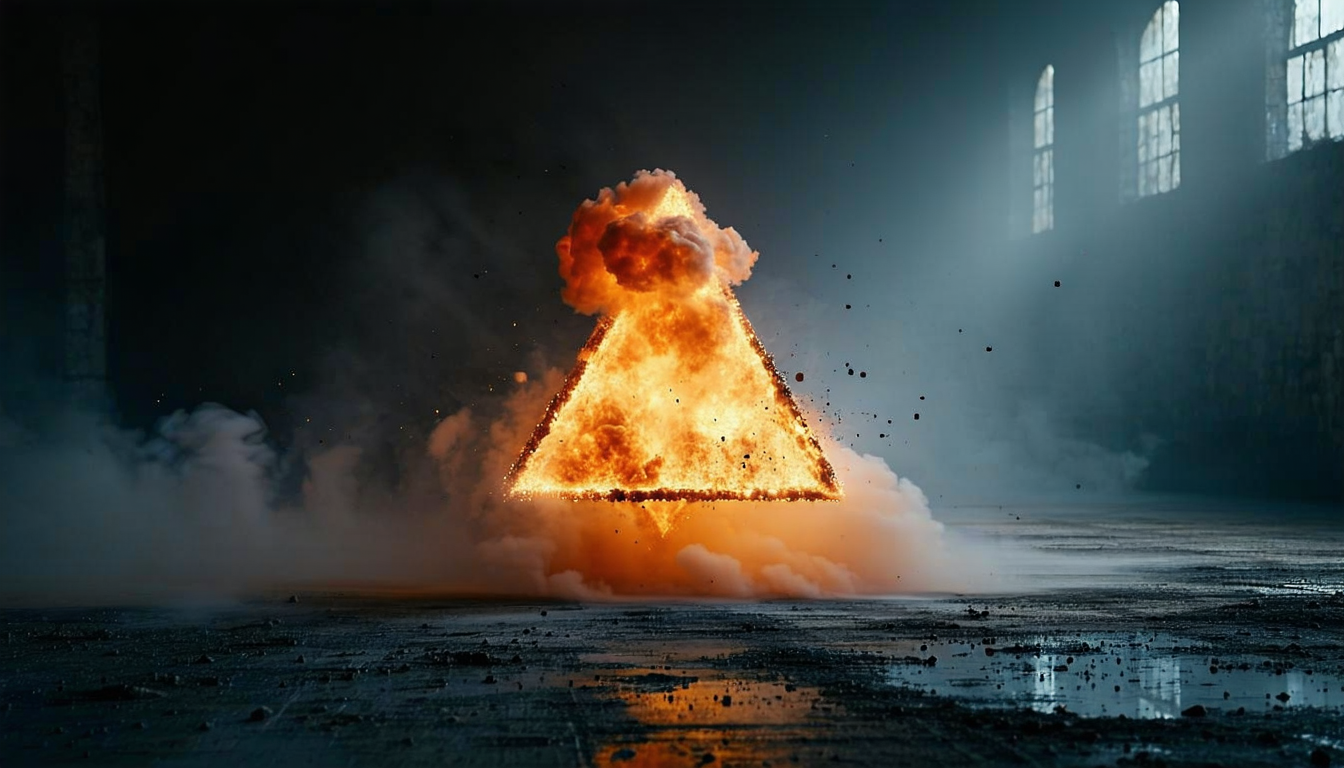
Combustible dust pentagon models show five specific conditions that create deadly explosions, unlike the fire triangle’s three elements. The fire triangle only explains three elements of combustion, but dust explosions need five specific conditions to kill workers.
Key Takeaways:
- The dust explosion pentagon requires fuel, oxygen, ignition, dispersion, and confinement, two more elements than fire
- You can control 4 of the 5 pentagon elements through engineering controls and housekeeping practices
- Removing any single pentagon element prevents explosion, oxygen removal is typically impractical in manufacturing
What Is the Dust Explosion Pentagon?
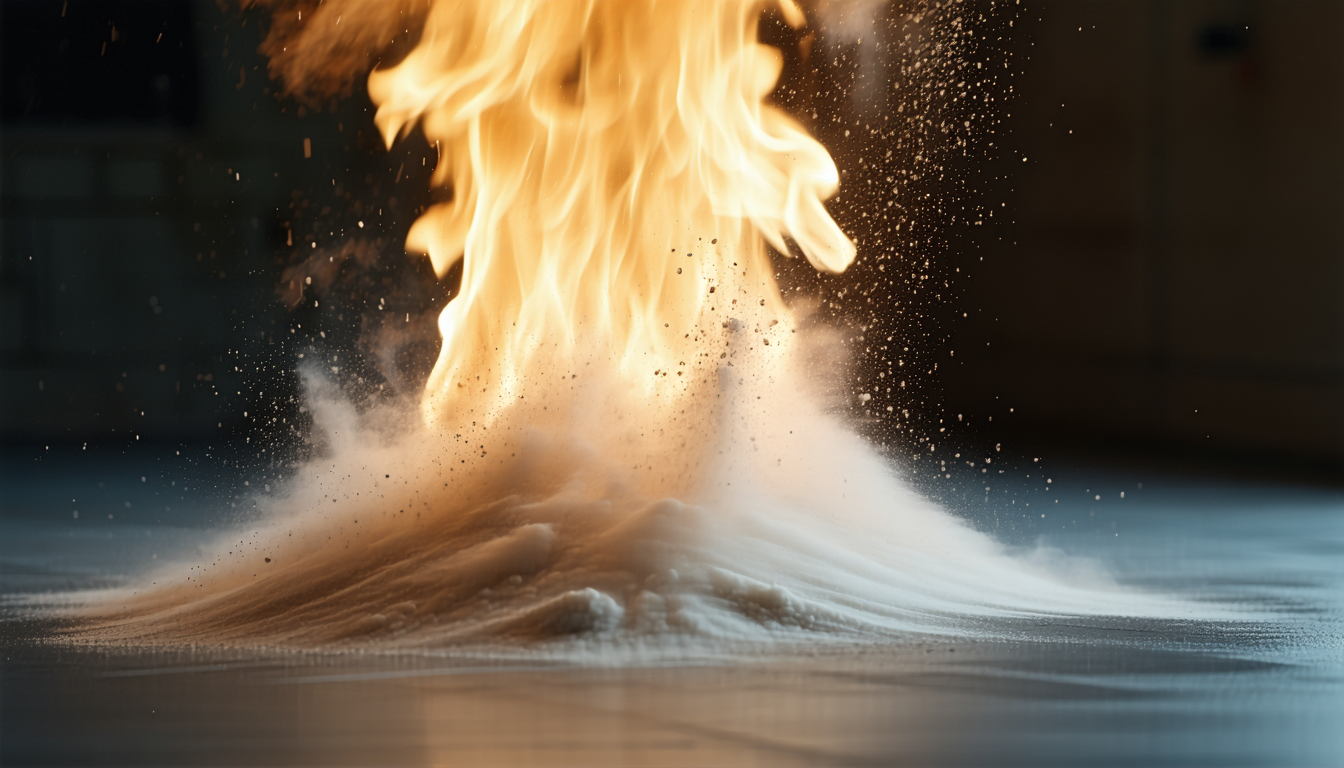
Dust explosion pentagon is a five-element model that identifies all conditions required for combustible dust deflagration. This means you need fuel particles, oxygen, ignition source, dispersion mechanism, and confinement simultaneously for an explosion to occur.
The fire triangle covers only three elements: fuel, oxygen, and ignition. Dust explosions demand two additional elements that make them far more complex than simple fires. Dispersion creates the fuel-air mixture that burns rapidly. Confinement builds the pressure that turns deflagration into destructive force.
You can prevent every dust explosion by eliminating any single pentagon element. OSHA data shows over 140 combustible dust incidents since 1980, but facilities that understand what is combustible dust and apply the pentagon model systematically avoid these incidents. The pentagon framework gives you five distinct prevention pathways instead of the three offered by traditional fire prevention.
Most facilities focus on ignition control alone. This misses four other prevention opportunities. The pentagon model shows why comprehensive combustible dust safety requires multiple prevention layers working together.
The Five Elements of a Dust Explosion

Each pentagon element contributes a specific explosion mechanism. Remove any element and the pentagon collapses, preventing explosion regardless of the other four conditions.
| Element | Facility Example | Control Method |
|---|---|---|
| Fuel (combustible particles) | Wood dust, metal filings, grain | Housekeeping, collection systems |
| Oxygen (oxidizer) | Normal air (21% O2) | Inert gas (costly, limited use) |
| Ignition source | Hot work, static electricity | Permits, grounding, equipment |
| Dispersion | Fan startup, compressed air | Controlled operations, interlocks |
| Confinement | Buildings, ducts, vessels | Explosion vents, open design |
Fuel means particles fine enough to stay airborne and burn rapidly. Particles under 420 microns create explosion risk per NFPA 660 standards. Your facility generates these particles through normal operations like cutting, grinding, or material handling.
Oxygen exists everywhere in manufacturing environments at 21% concentration. You cannot eliminate oxygen without creating worker safety hazards or stopping production entirely.
Ignition sources include static electricity, hot work, mechanical sparks, and overheated equipment. Even small energy sources can trigger dust clouds. A static discharge as low as 1 millijoule can ignite some dust types.
Dispersion creates the fuel-air mixture that enables rapid combustion. Minimum explosive concentration varies from 20-60 g/m³ depending on material properties and particle size distribution.
Confinement contains the expanding gases that create destructive pressure waves. Buildings, dust collectors, and process equipment all provide confinement that turns deflagration into explosion damage.
How Does Fuel Concentration Create Explosion Risk?
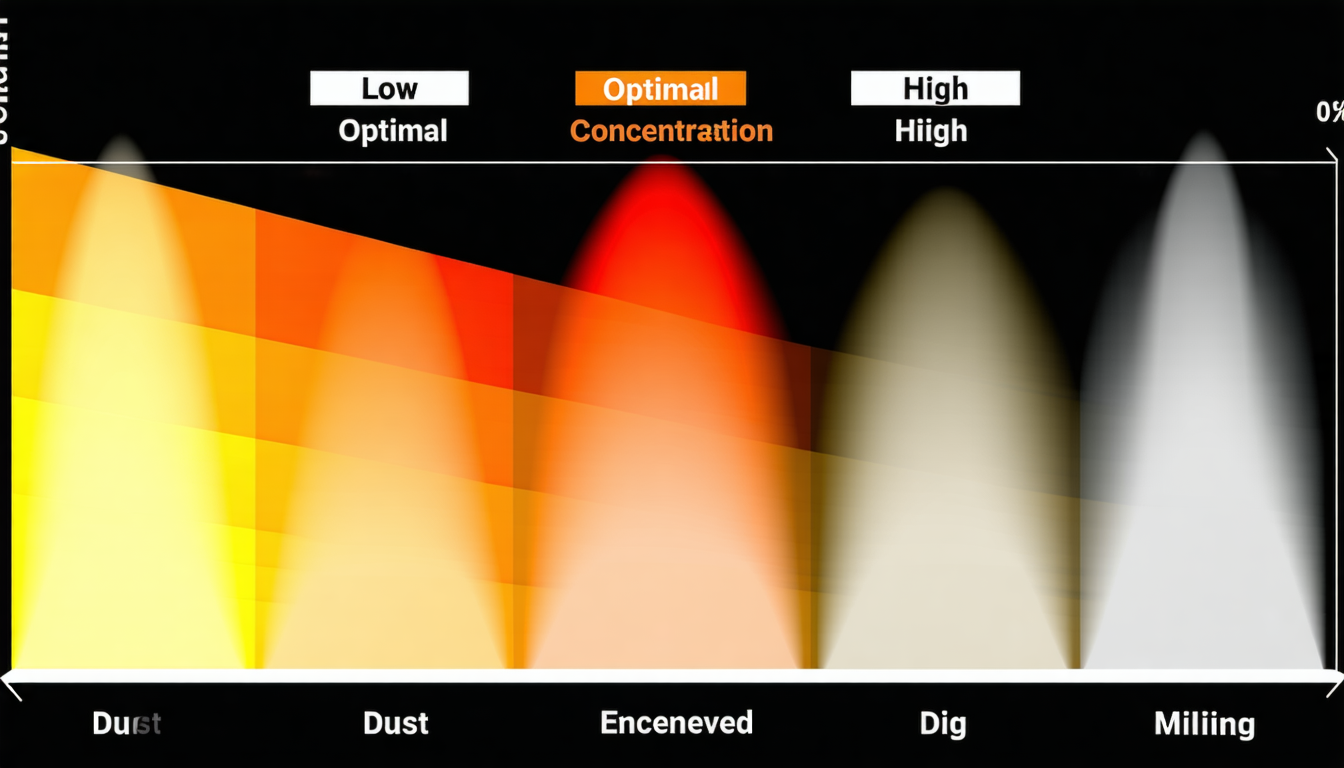
Particle concentration determines explosion severity potential through the relationship between available fuel and combustion rate. Too little dust creates no explosion. Too much dust can suppress combustion by limiting oxygen access to individual particles.
Minimum explosive concentration represents the lowest dust loading that supports self-sustaining combustion. Most organic dusts require 20-60 g/m³ airborne concentration to reach this threshold. Metal dusts typically need higher concentrations due to their combustion characteristics.
Particle size affects fuel availability by controlling surface area exposed to oxygen. Smaller particles have higher surface-to-volume ratios, making more combustible material available for rapid reaction. Particles under 420 microns create explosion risk per NFPA 660, but particles under 75 microns pose the highest risk.
Kst value measures how quickly pressure rises during dust combustion. Higher Kst values indicate faster pressure rise rates and more severe explosion potential. This measurement helps determine what combustible dust classification applies to your specific materials and guides explosion protection system design.
Maximum explosive concentration exists where dust loading becomes so heavy that oxygen cannot reach particle surfaces efficiently. This creates an upper limit where dust clouds become too rich to explode, similar to gasoline vapor behavior.
Which Pentagon Elements Can You Actually Control?

Four pentagon elements allow practical elimination methods, ranked from easiest to most difficult to control in manufacturing environments.
Ignition source elimination works through hot work permits, electrical grounding, and equipment maintenance. Hot work permits reduce ignition sources by 75% when properly implemented by controlling when and where spark-producing activities occur.
Fuel reduction uses housekeeping programs, dust collection systems, and process modifications. You cannot eliminate all dust in manufacturing, but you can keep accumulations below dangerous levels through scheduled cleaning and capture systems.
Confinement modification employs explosion vents, open building design, and pressure relief systems. Many facilities can eliminate confinement in specific areas where dust handling occurs, particularly in building design and dust collector installations.
Dispersion control manages air movement, equipment startup procedures, and compressed air usage. Controlled operations and equipment interlocks prevent sudden dust cloud formation during normal operations.
Oxygen control remains impractical in most manufacturing because workers need breathable air and production processes require normal atmospheric conditions. Inert gas systems work in specific enclosed equipment but cannot protect entire facility areas where people work.
Combining multiple control methods creates the most effective prevention strategy. NFPA 660 combustible dust standards require multiple protection layers because single-point failures can still create all five pentagon conditions simultaneously.
Why Fire Triangle Knowledge Fails for Dust Hazards
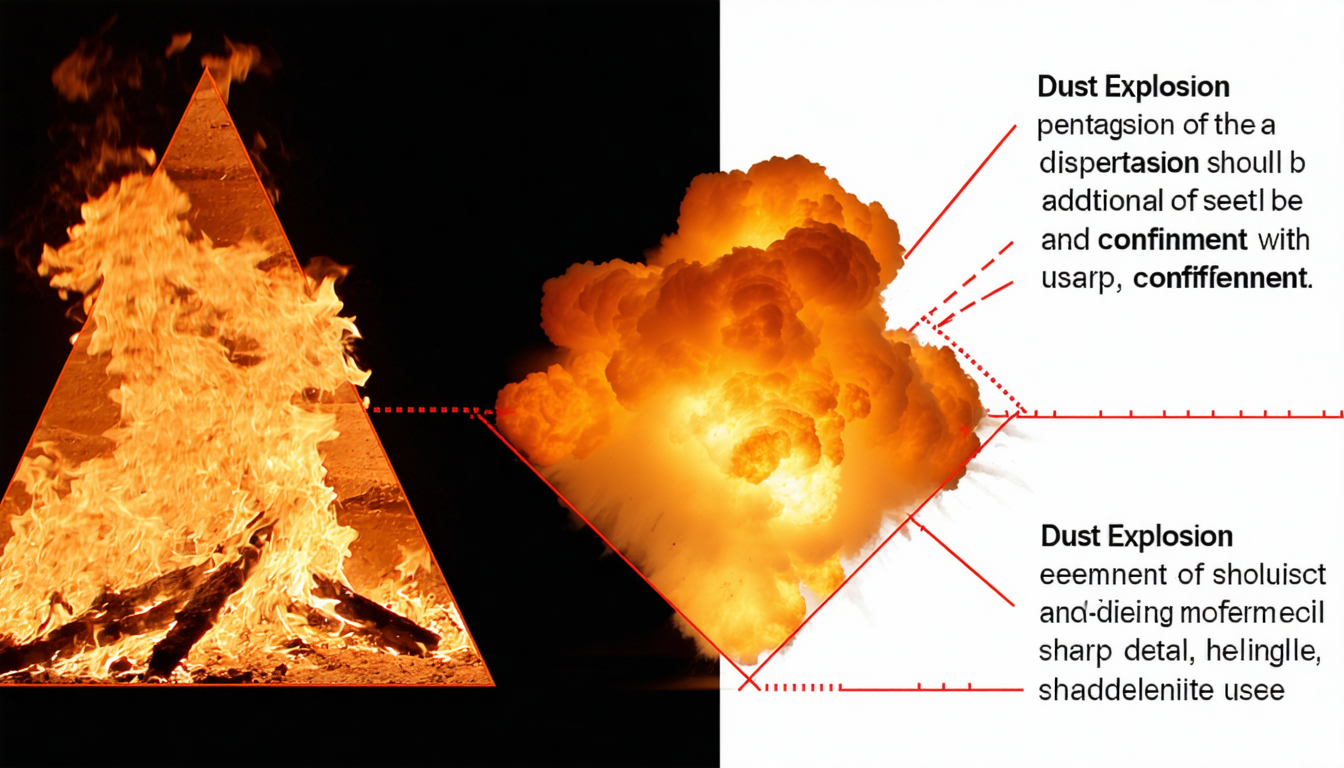
Fire triangle lacks dispersion and confinement elements that make dust explosions far more dangerous than ordinary fires.
| Feature | Fire Triangle | Dust Explosion Pentagon |
|---|---|---|
| Required elements | 3 (fuel, oxygen, ignition) | 5 (adds dispersion, confinement) |
| Pressure generation | Minimal (combustion products vent) | Up to 150 psi in confined spaces |
| Prevention focus | Remove heat/fuel/oxygen | Control dust cloud formation |
Traditional fire prevention focuses on fuel removal, oxygen exclusion, or cooling below ignition temperature. These methods miss dust-specific hazards that create explosive conditions.
Dust cloud formation requires dispersion mechanisms that do not exist in ordinary fires. A pile of combustible dust burns slowly like any solid fuel. The same dust dispersed in air burns thousands of times faster, creating pressure waves that destroy buildings.
Pressure buildup distinguishes dust explosions from fires through confinement effects. Dust explosions generate pressures up to 150 psi compared to 14.7 psi atmospheric pressure. This pressure differential creates the destructive force that kills workers and destroys facilities.
Facility scenarios demonstrate the difference. A wood fire in a sawmill burns hot but vents heat and smoke to atmosphere. Wood dust dispersed inside the same building creates a fuel-air mixture that explodes when ignited, generating pressure waves that collapse walls and roofs.
Understanding both models helps you identify when fire prevention methods work and when you need combustible dust testing labs near me to evaluate explosion risks. Fire triangle thinking protects against ordinary combustion. Pentagon analysis prevents dust explosions.
Explosion isolation valve dust collector systems address confinement by venting pressure safely or stopping flame propagation between connected equipment. These systems recognize that dust explosions need different protection than fires.
Frequently Asked Questions
Can you have a dust explosion without all five pentagon elements?
No. All five pentagon elements must be present simultaneously for a dust explosion to occur. Remove any single element and the explosion cannot happen, which is the foundation of prevention strategies.
What’s the most common ignition source in dust explosions?
Static electricity and hot work operations cause the majority of dust explosions. Grinding, welding, and cutting operations create both sparks and heat that can ignite suspended dust clouds.
Do you need special equipment to measure dust concentration?
Yes. Measuring airborne dust concentration requires calibrated particle counters or gravimetric sampling equipment. Visual assessment cannot determine if dust levels reach minimum explosive concentration limits.