Combustible dust classification determines whether your dust collector needs basic venting or a $150,000 explosion isolation system. Your sizing calculation depends on a number most EHS managers can’t find in their documentation, the Kst value that determines whether your material explodes like flour or aluminum powder.
Key Takeaways:
- Kst values range from 0-300+ bar·m/s, with St-3 dusts (>300) requiring explosion isolation systems that St-1 dusts (<200) don’t need
- Pmax testing costs $1,500-3,000 per sample but determines whether your facility needs $15,000 or $150,000 worth of protection equipment
- ASTM E1226 standardized testing produces both Kst and Pmax values, the two numbers that drive every explosion protection calculation in NFPA 660
What is combustible dust covers the basic definition of materials that can explode when suspended in air. The complete combustible dust guide explains NFPA 660 requirements. But classification goes deeper, it determines which protection systems you actually need.
What Is Kst Value and How Does It Measure Explosion Severity?

Kst value is the deflagration index of combustible dust measured in bar·meters per second. This means it quantifies how fast pressure builds when your dust explodes in a confined space.
ASTM E1226 test uses a 20-liter sphere with ignition energy of 10 kilojoules. The test measures maximum rate of pressure rise during deflagration. Higher Kst values mean faster pressure buildup and more violent explosions.
Kst value determines your protection system requirements in NFPA 660. A wood dust with Kst of 150 needs different venting calculations than aluminum dust with Kst of 400. The number drives vent sizing, isolation valve response times, and detection system sensitivity.
The test procedure injects dust into the sphere, creates turbulence, then ignites with chemical igniters. Pressure sensors record the explosion curve. The steepest part of that curve becomes your Kst value.
Deflagration differs from detonation. Deflagration burns through the dust cloud at subsonic speeds. Detonation would be supersonic shock waves. Industrial dust explosions are deflagrations, which is why we measure deflagration index.
St-1, St-2, St-3: The Three Dust Classification Thresholds
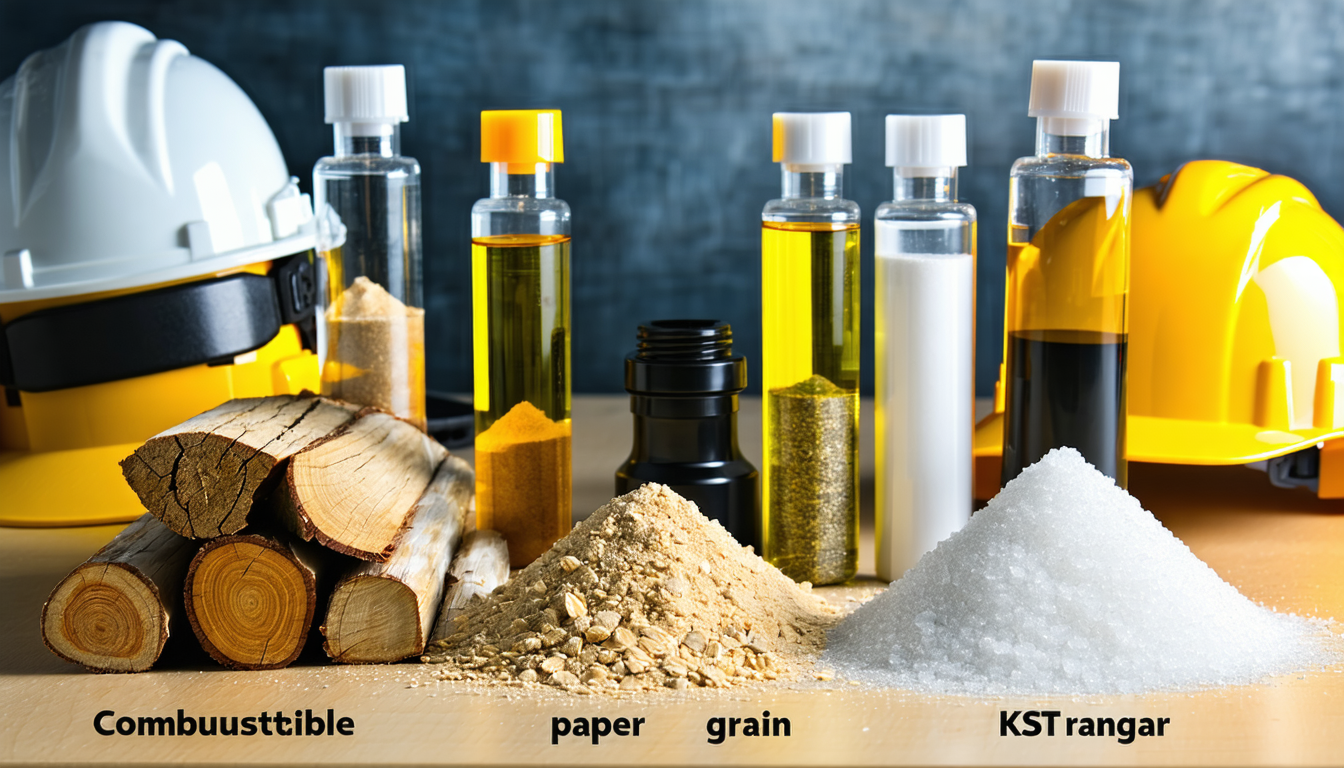
NFPA 660 defines three dust classes based on Kst ranges. Each classification triggers different protection requirements.
| Dust Class | Kst Range (bar·m/s) | Typical Materials | Protection Requirements |
|---|---|---|---|
| St-1 | 0-200 | Wood, paper, grain, sugar | Basic explosion venting |
| St-2 | 200-300 | Some plastics, chemicals | Enhanced venting + isolation |
| St-3 | >300 | Metals, synthetic polymers | Full isolation systems required |
St-1 includes most organic dusts like wood and grain. These materials burn relatively slowly during explosion. Basic explosion venting often suffices for St-1 dusts in dust collectors.
St-2 dusts burn faster and create higher pressure spikes. Some thermoplastics and chemical powders fall here. You need larger vent areas and faster-acting isolation systems.
St-3 dusts explode violently. Aluminum and magnesium powders typically measure Kst values above 400 bar·m/s. These require explosion isolation systems that can detect and respond within milliseconds.
The classification affects everything from vent panel sizing to building structural requirements. Moving from St-1 to St-3 can multiply your protection system costs by ten times.
Common misconception: Higher Kst always means more dangerous. Not true. A high-Kst dust in a well-designed system with proper isolation can be safer than low-Kst dust with inadequate protection.
How Does Pmax Determine Maximum Explosion Pressure?

Pmax represents maximum explosion pressure in bar gauge measured during ASTM E1226 testing. This means it shows peak pressure your equipment must withstand during explosion.
Most organic dusts produce Pmax values between 6-8 bar gauge pressure. The test measures pressure buildup in the 20-liter sphere until it peaks and starts declining. That peak becomes your Pmax value.
Pmax drives structural calculations for your dust collection system. Ductwork, collector housing, and building walls must withstand this pressure or have explosion venting sized to prevent reaching Pmax.
The number also determines explosion vent panel specifications. Vent panels must open fast enough to prevent pressure from reaching Pmax levels. Higher Pmax requires larger vent areas or faster-opening panels.
Pmax works with Kst to create your complete explosion profile. Kst tells you how fast pressure builds. Pmax tells you where it stops. Both numbers feed into NFPA 660 protection calculations.
Testing labs measure both values simultaneously during the same test. You don’t need separate tests for Kst and Pmax, ASTM E1226 provides both numbers from one sample.
Which Materials Fall Into Each Dust Classification Category?
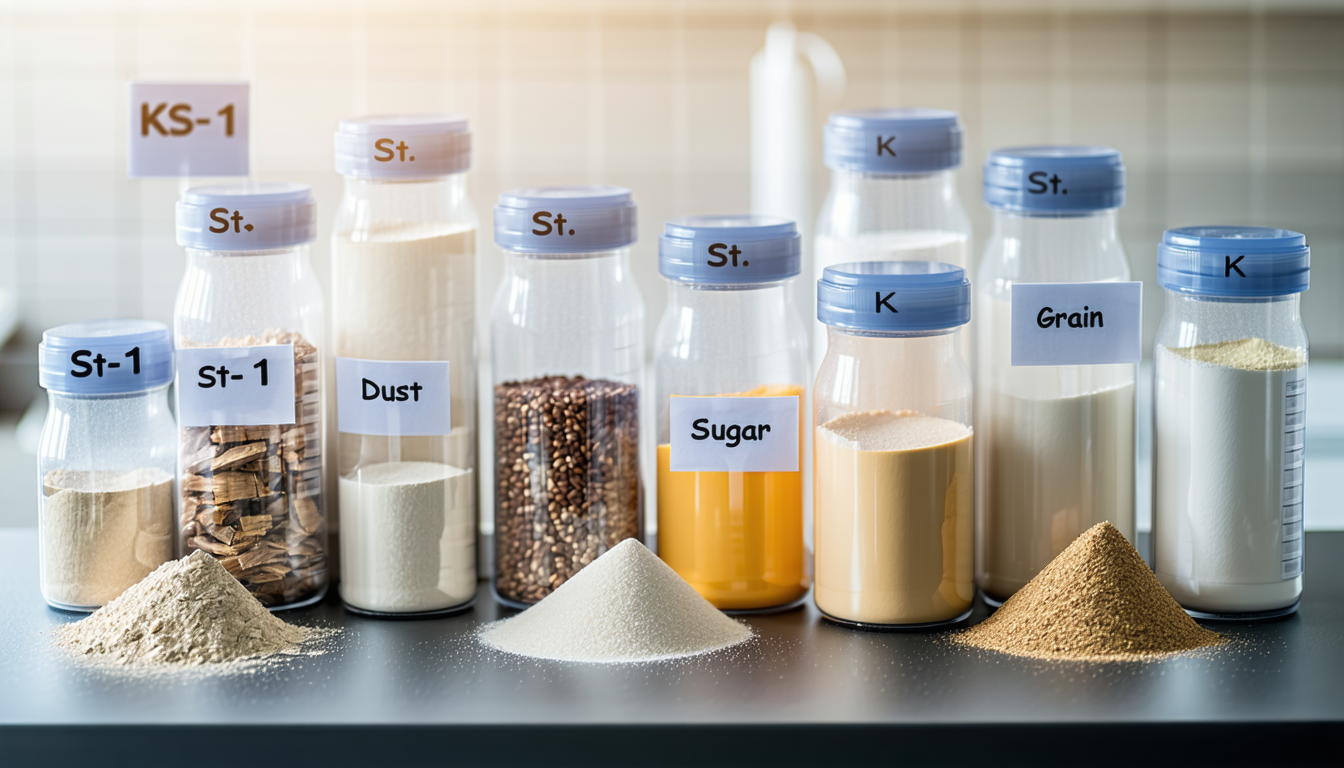
Material type determines dust classification level based on chemical composition and particle structure.
St-1 materials include wood flour, paper dust, grain dust, sugar, and most food processing byproducts. These organic materials burn at moderate rates with Kst values typically between 100-180 bar·m/s.
St-2 materials cover some thermoplastics like polyethylene, certain pharmaceutical powders, and chemical intermediates. Their molecular structure creates faster burning rates than simple organics.
St-3 materials encompass aluminum dust, magnesium powder, synthetic polymers, and fine metal powders. Aluminum dust typically measures Kst values of 400+ bar·m/s, placing it firmly in St-3 category.
Mixed materials require individual testing since combustion properties don’t average out. A 90% wood flour mix with 10% aluminum particles might test as St-3 because the aluminum drives the explosion characteristics.
Particle size affects classification significantly. The same material ground to different mesh sizes produces different Kst values, which is why ASTM E1226 specifies particle size distribution.
The combustible dust pentagon explains why particle size matters, finer particles have more surface area exposed to oxygen. This creates faster flame propagation and higher Kst values.
Material safety data sheets rarely include Kst values. You need actual testing through combustible dust testing labs near me to get classification data.
How Do Kst and Pmax Values Drive Protection System Requirements?
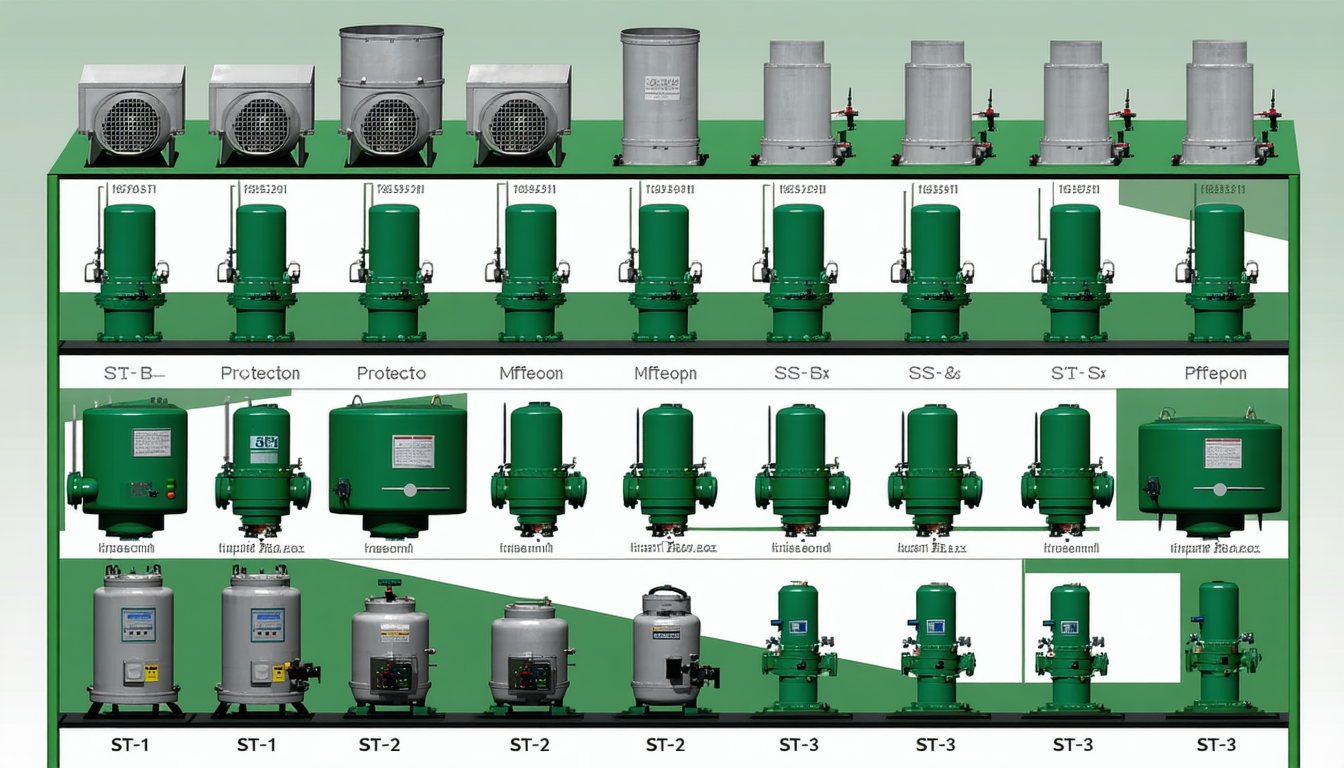
Higher Kst values require more extensive explosion protection systems. The classification determines equipment specifications and installation requirements.
| Protection Feature | St-1 Requirements | St-2 Requirements | St-3 Requirements |
|---|---|---|---|
| Explosion venting | Standard vent panels | Larger vent areas | Fast-acting vents required |
| Isolation systems | Basic isolation acceptable | Isolation recommended | Explosion isolation valve dust collector mandatory |
| Detection speed | Standard flame detectors | Faster response systems | Sub-50ms detection required |
| System cost range | $15,000-30,000 | $50,000-75,000 | $100,000-200,000+ |
St-1 dusts often work with basic explosion venting. Vent panels open when pressure reaches preset levels, releasing explosion pressure safely outdoors. Standard flame detectors provide adequate warning.
St-2 dusts need enhanced systems. Larger vent areas handle faster pressure buildup. Isolation valves help prevent flame propagation between equipment. Detection systems must respond faster.
St-3 dusts require comprehensive protection. Explosion isolation systems must detect flame front and close isolation barriers within 50 milliseconds. This prevents flame from reaching connected equipment.
Enclosureless dust collector systems eliminate explosion risks entirely by avoiding enclosed chambers where pressure can build. These systems work for any dust classification but cost more than traditional collectors.
NFPA 660 specifies calculation methods for each protection approach. Your Kst and Pmax values plug directly into these formulas to determine vent sizing, isolation response times, and structural requirements.
Protection system costs scale dramatically with dust classification. An St-3 facility might spend ten times more on explosion protection than an equivalent St-1 operation.
Frequently Asked Questions
Do I need to test every dust in my facility separately?
You need separate testing for each distinct material that could create airborne dust. Mixtures of materials require their own testing since combustion properties don’t average out, the most reactive component often determines the classification.
Can the same material have different Kst values?
Yes, particle size affects Kst values significantly. The same wood species ground to different mesh sizes will produce different test results, which is why ASTM E1226 specifies particle size distribution for consistent testing.
How often do I need to retest my dust for classification?
NFPA 660 doesn’t specify retesting intervals, but most facilities retest when they change suppliers, processing methods, or if the material composition changes. Insurance companies may require testing every 3-5 years.