
Combustible dust NFPA standards changed overnight when the December 2024 NFPA 660 consolidation made eight industry-specific standards obsolete. Facilities that followed NFPA 654, 484, or 655 for decades now face fresh compliance requirements under a unified framework.
Key Takeaways:
- NFPA 660 replaced eight predecessor standards (652, 654, 664, 484, 655, 61, 120, 651) effective December 2024
- Chapter assignments in NFPA 660 determine requirements by industry: Chapter 5 for woodworking, Chapter 6 for metals, Chapter 7 for food processing
- OSHA cites General Duty Clause violations using NFPA 660 as the recognized standard, with average penalties exceeding $15,000 per citation
Which NFPA Standards Apply to Combustible Dust Facilities?

NFPA 660 consolidates eight predecessor standards. The authority having jurisdiction now references this single standard instead of industry-specific codes that existed since the 1980s.
The consolidation affects every facility handling combustible dust. Where you previously followed NFPA 654 for woodworking or NFPA 484 for metals processing, you now follow NFPA 660 chapters assigned to your industry.
| Former Standard | Industry Coverage | NFPA 660 Chapter | Effective Date |
|---|---|---|---|
| NFPA 654 | Wood processing | Chapter 5 | December 2024 |
| NFPA 484 | Combustible metals | Chapter 6 | December 2024 |
| NFPA 655 | Food processing | Chapter 7 | December 2024 |
| NFPA 664 | Wood processing | Chapter 5 | December 2024 |
| NFPA 61 | Agricultural products | Chapter 8 | December 2024 |
| NFPA 120 | Coal preparation | Chapter 9 | December 2024 |
The timing creates immediate compliance pressure. Fire marshals and insurance auditors stopped accepting references to withdrawn standards in early 2025. Your existing compliance documentation must now cite NFPA 660 sections instead of obsolete standard numbers.
Mixed-operation facilities face the most complex transitions. A facility producing both wood products and metal components follows Chapter 5 requirements in woodworking areas and Chapter 6 requirements in metalworking zones. The authority having jurisdiction expects area-specific compliance documentation.
NFPA 660 maintains most technical requirements from predecessor standards but reorganizes them into a chapter structure that eliminates redundancy. The core dust hazard analysis process remains unchanged, but documentation formats now follow standardized templates across all industries.
NFPA 660 Chapter Structure: Industry-Specific Requirements
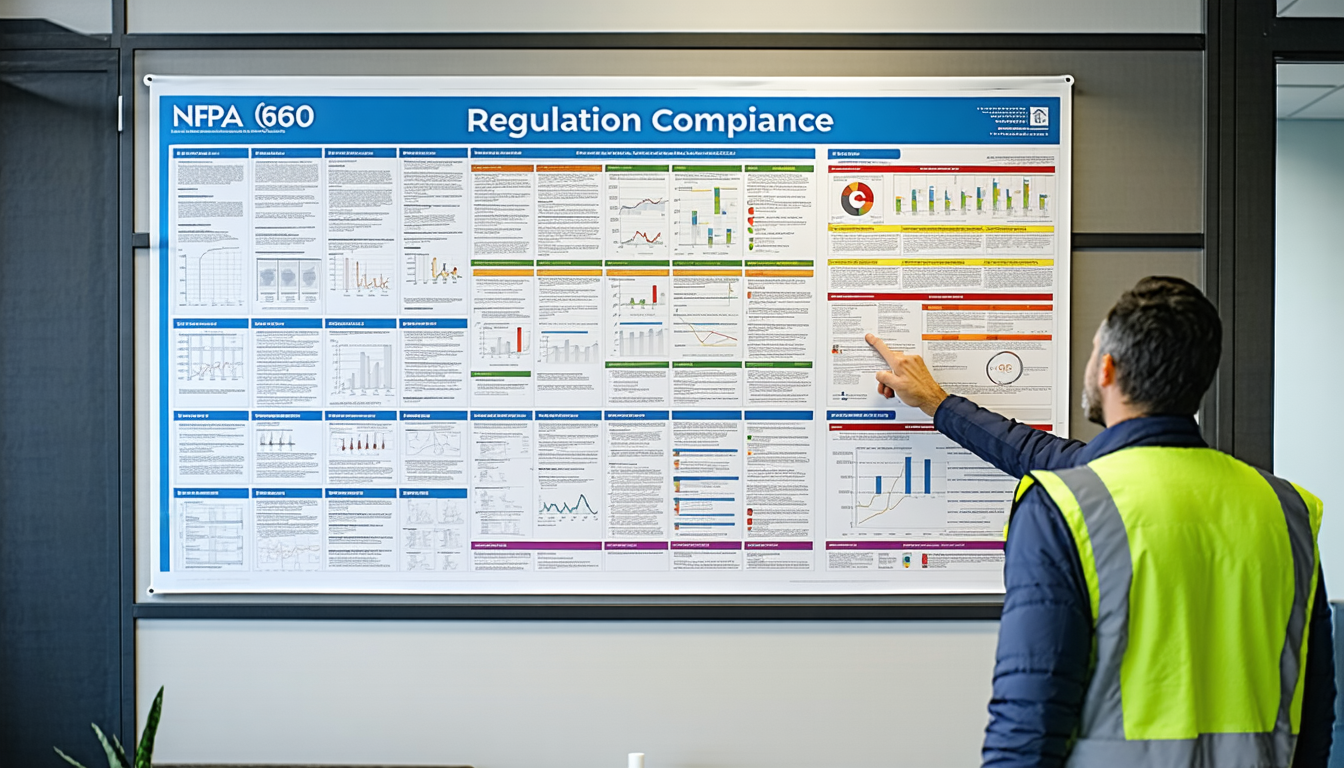
NFPA 660 chapters assign requirements by industry type. Seven industry-specific chapters plus three universal chapters covering general requirements create a framework that applies different protection levels based on dust characteristics and process hazards.
Chapter assignments determine your compliance path:
- Chapter 4 (General Requirements) – Universal housekeeping, training, and documentation requirements that apply to all facilities regardless of industry
- Chapter 5 (Wood Processing) – Covers sawmills, furniture manufacturing, particleboard production, and any facility generating wood dust
- Chapter 6 (Combustible Metals) – Applies to facilities processing aluminum, magnesium, titanium, and other reactive metal powders
- Chapter 7 (Food Processing) – Governs grain handling, spice processing, sugar refining, and food manufacturing operations
- Chapter 8 (Agricultural Products) – Addresses cotton processing, hay operations, and agricultural commodity handling
- Chapter 9 (Coal and Carbon) – Covers coal preparation plants and carbon black manufacturing
- Chapter 10 (Pharmaceutical) – Applies to drug manufacturing facilities handling combustible pharmaceutical powders
Hazardous area classification requirements vary by chapter. Chapter 6 (metals) imposes stricter electrical equipment standards than Chapter 5 (wood) due to the lower ignition energies of metal dusts. Chapter 7 (food) includes specific requirements for pneumatic conveying systems common in grain handling.
The chapter system eliminates previous confusion about which standard applied to multi-industry facilities. A pharmaceutical company that also produces nutritional supplements follows Chapter 10 requirements in drug manufacturing areas and Chapter 7 requirements in food supplement areas.
Universal requirements from Chapter 4 apply regardless of your industry chapter. Every facility must conduct dust hazard analysis, maintain housekeeping programs, and train personnel on combustible dust hazards. These baseline requirements create consistency across all combustible dust operations.
How Does OSHA Enforce NFPA Standards for Combustible Dust?

General Duty Clause is OSHA’s mechanism for enforcing workplace safety standards when no specific regulation exists. This means OSHA references NFPA 660 as the recognized industry standard for combustible dust safety without having a dedicated combustible dust regulation.
OSHA NEP inspectors use NFPA 660 requirements as their enforcement baseline. When they identify combustible dust hazards during inspections, they cite Section 5(a)(1) of the OSH Act and reference specific NFPA 660 clauses as evidence of recognized hazards and feasible abatement methods.
The enforcement pattern follows predictable steps. OSHA identifies accumulation, inadequate housekeeping, or missing explosion protection systems. They then cite the General Duty Clause and reference the applicable NFPA 660 chapter requirement that addresses the observed hazard. Average penalties for combustible dust General Duty Clause violations exceed $15,000 per citation.
Consensus standards like NFPA 660 carry enforcement weight because they represent industry-recognized good practice. Courts have consistently upheld OSHA citations that reference NFPA standards as evidence of what a reasonably prudent employer should know and do.
The authority having jurisdiction extends beyond OSHA. Fire marshals use NFPA 660 for building permit approvals and fire safety inspections. Insurance companies reference NFPA 660 in their loss control audits. This creates multiple enforcement pathways for the same technical requirements.
OSHA NEP focuses on facilities with combustible dust hazards identified through complaint referrals, incident investigations, or programmed inspections in high-risk industries. The National Emphasis Program gives inspectors specific guidance on recognizing combustible dust hazards and applying appropriate citations.
NFPA 68 and 69: When Do You Need Explosion Protection Standards?

NFPA 660 requires explosion protection systems when dust hazard analysis identifies unacceptable risk levels. The decision process follows specific steps that determine whether NFPA 68 venting or NFPA 69 suppression and isolation systems apply to your equipment.
Follow this sequence to determine protection requirements:
- Conduct dust hazard analysis – Evaluate Kst values, minimum ignition energy, and process conditions to quantify explosion severity and probability
- Identify protection zones – Map areas where dust clouds can form and reach concentrations above the minimum explosible concentration
- Calculate protection system capacity – Use NFPA 68 formulas for venting area or NFPA 69 specifications for suppression agent quantities
- Select appropriate protection method – Choose explosion venting for equipment that can withstand reduced pressure, suppression for enclosed systems that cannot vent
- Install isolation systems – Apply NFPA 69 isolation valves or rotary airlocks to prevent flame propagation between connected equipment
- Document protection system design – Create calculations and drawings that demonstrate compliance with applicable protection standard requirements
NFPA 68 covers explosion venting systems that relieve pressure through panels, doors, or fabric rupture discs. NFPA 69 covers suppression systems that detect developing explosions and inject suppressant agents, plus isolation systems that prevent flame transmission.
The protection method depends on equipment design and location. Dust collectors in outdoor locations typically use NFPA 68 venting because pressure relief can discharge safely. Indoor equipment or systems with explosion pressures exceeding structural limits require NFPA 69 suppression.
Hazardous area classification intersects with protection system requirements. Areas classified as Class II Division 1 or Zone 20 need protection systems designed to prevent ignition sources that could trigger the explosion the protection system is meant to contain.
What Changed When NFPA 652, 654, and Other Standards Were Consolidated?
NFPA 660 consolidation changed facility compliance requirements by eliminating inconsistencies between industry-specific standards while maintaining core technical requirements. The December 2024 effective date created an 18-month transition period for existing compliance programs.
Key changes affect documentation, training, and equipment specifications:
| Requirement | Before Consolidation | NFPA 660 | Impact |
|---|---|---|---|
| Standard reference | NFPA 654, 484, 655, etc. | NFPA 660 chapters | Update all compliance documentation |
| DHA documentation | Industry-specific formats | Standardized templates | Revise existing DHA reports |
| Training requirements | Varied by standard | Chapter 4 universal requirements | Standardize training across industries |
| Housekeeping programs | Different inspection frequencies | Unified inspection schedules | Align housekeeping procedures |
| Equipment specifications | Industry-specific requirements | Chapter-based specifications | Verify equipment compliance |
The consolidation preserved most technical requirements while standardizing documentation formats. Dust hazard analysis requirements remain substantively unchanged, but the reporting template now follows consistent formatting across all industries.
Housekeeping programs saw the most significant standardization. Previous industry standards specified different inspection frequencies and accumulation limits. NFPA 660 Chapter 4 establishes universal housekeeping requirements that apply regardless of industry chapter.
Electrical equipment specifications became more consistent. Where NFPA 484 and NFPA 654 had different hazardous area classification approaches, NFPA 660 applies uniform electrical classification combustible dust requirements based on dust properties rather than industry type.
Existing compliance programs need systematic updates. Facilities must replace standard references in their written programs, update training materials to reflect NFPA 660 chapter assignments, and verify that current explosion protection systems meet consolidated requirements.
The transition period ends in June 2026. Authority having jurisdiction expects full NFPA 660 compliance by that date, including updated documentation, revised procedures, and any necessary equipment modifications to meet consolidated standard requirements.
Authority Having Jurisdiction: Who Enforces NFPA Standards?

Authority having jurisdiction enforces NFPA standards locally through building permits, fire safety inspections, and insurance audits. Fire marshals, building officials, and insurance auditors can all serve as authority having jurisdiction depending on the enforcement context.
Local fire marshals typically serve as AHJ for combustible dust compliance during new construction, facility modifications, or incident investigations. They review dust hazard analysis reports, approve explosion protection system designs, and conduct periodic inspections to verify ongoing compliance.
Building officials act as AHJ during permit reviews for facilities handling combustible materials. They verify that proposed designs meet NFPA 660 requirements for hazardous area classification, electrical equipment specifications, and structural considerations for explosion protection systems.
Insurance companies function as de facto AHJ through loss control audits that reference NFPA 660 requirements. Many commercial property policies include combustible dust compliance as a condition of coverage, giving insurers enforcement authority through policy terms.
OSHA NEP inspectors represent federal AHJ authority when they cite General Duty Clause violations using NFPA 660 as the recognized standard. Their enforcement authority extends to all workplace safety aspects of combustible dust operations.
Jurisdiction conflicts arise when multiple authorities reference different requirements or interpretation approaches. The hierarchy typically places federal OSHA requirements above local authorities, but insurance requirements can exceed both when policies specify additional protection measures.
The most effective approach treats all potential AHJs as having valid enforcement authority. Design compliance programs that satisfy OSHA NEP expectations, local fire marshal requirements, and insurance company audit criteria simultaneously rather than trying to meet minimum requirements from any single authority.
Frequently Asked Questions
Do I still need to follow NFPA 654 if my facility was designed to meet it?
No. NFPA 654 was officially withdrawn in December 2024 when NFPA 660 took effect. Your facility must now comply with NFPA 660 Chapter 5 requirements for wood processing operations. The authority having jurisdiction will reference NFPA 660, not the obsolete 654 standard.
Can my insurance company require NFPA standards even if OSHA doesn’t inspect for them?
Yes. Insurance companies commonly reference NFPA 660 in their fire safety audits and can require compliance as a condition of coverage. Many policies specifically reference combustible dust compliance with current NFPA standards regardless of OSHA enforcement.
What happens if multiple NFPA 660 chapters apply to my facility?
Follow the most stringent requirements from each applicable chapter. For example, a facility doing both food processing and metalworking would follow Chapter 7 requirements for the food areas and Chapter 6 requirements for metal operations areas.