
Go no go test combustible dust screening can save you thousands when you need to determine if that sawdust in your collector is actually hazardous. But screening only answers yes or no on combustibility,not how dangerous the dust actually is.
Key Takeaways:
- ASTM E1226 go/no-go screening costs $300-600 and delivers results in 3-5 days versus $2,500-4,000 and 2-3 weeks for full explosibility testing
- Go/no-go tests determine combustibility only,not explosion severity,which means you still need full testing if the screening shows positive combustibility
- Screening fails for 15-20% of borderline materials that require the higher energy ignition sources only available in full testing protocols
What Is a Go/No-Go Test for Combustible Dust?

A go/no-go test is a screening method that determines whether dust samples are combustible under standardized laboratory conditions. This means you get a binary answer: combustible or non-combustible, nothing more.
ASTM E1226 provides the standard methodology for this screening. The test uses a 10kJ ignition energy source inside a modified Hartmann tube to attempt deflagration of your dust sample. If the flame propagates beyond the ignition source, the dust receives a positive combustibility rating. If no sustained flame occurs, the material tests as non-combustible.
This differs from full explosibility testing in scope and detail. Go/no-go testing answers the fundamental question that drives your what is combustible dust determination: does this material burn in a way that creates explosion hazards? Full testing measures how severe those explosions would be and what conditions trigger them.
The 10kJ ignition energy represents moderate ignition conditions. Some combustible dust materials need higher or lower energy sources to ignite, which creates the screening method’s primary limitation.
Go/No-Go Test Requirements: Sample Size and Preparation

ASTM E1226 requires specific sample preparation to produce reliable results:
- Collect minimum 100 grams of representative sample from the actual process where dust accumulates, not from raw materials before processing.
- Screen particles to under 75 microns using laboratory sieves, as larger particles may not ignite properly in the test apparatus.
- Document moisture content and dry samples to specified levels if moisture exceeds the standard’s threshold for your material type.
- Establish chain of custody with sample identification, collection date, and process conditions to ensure test relevance to your actual facility conditions.
- Package in sealed containers to prevent contamination or moisture absorption during shipping to the testing laboratory.
Particle combustibility depends heavily on surface area exposure, which explains the size requirements. Samples from your actual dust collection points matter more than raw material samples because processing changes particle characteristics. Your insurance company and NFPA 660 compliance depend on testing what actually accumulates in your facility, not theoretical materials.
Screening vs Full Laboratory Testing: Cost and Timeline Comparison
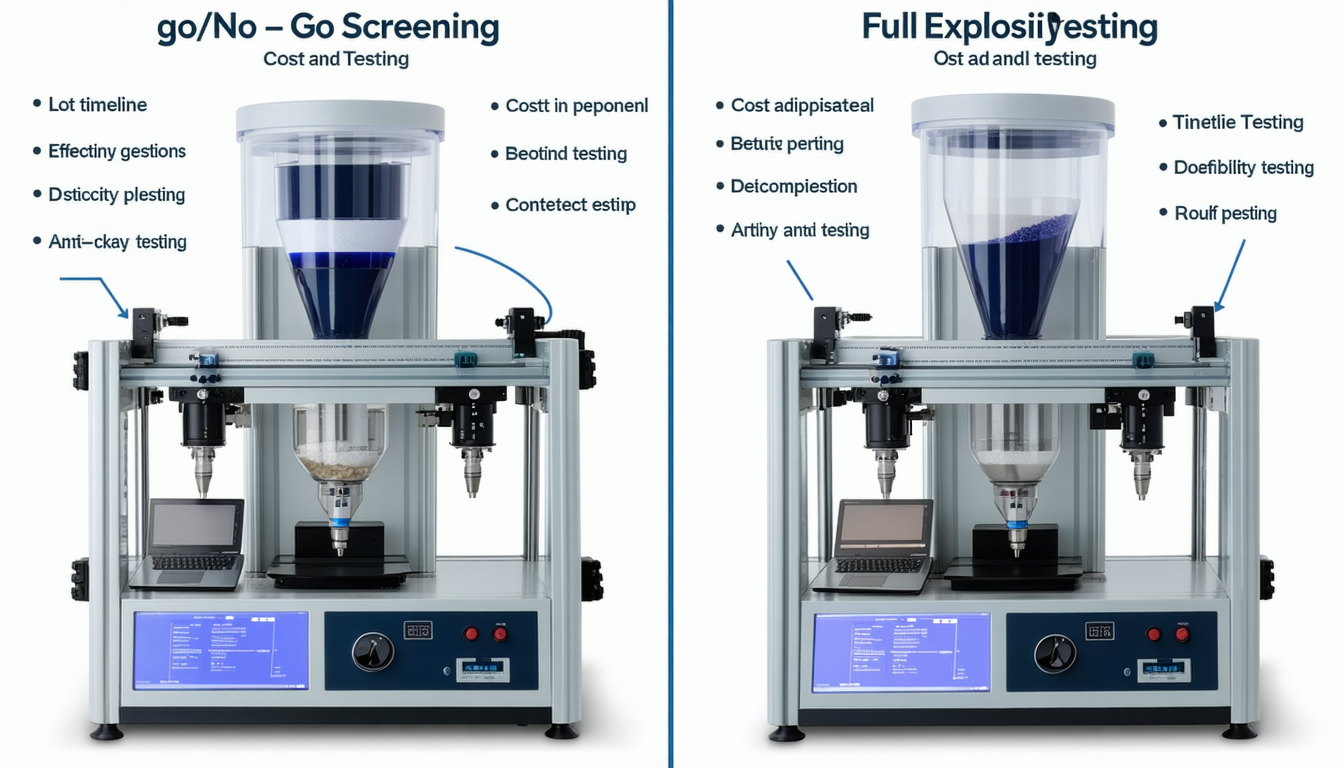
| Feature | Go/No-Go Screening | Full Explosibility Testing |
|---|---|---|
| Cost per sample | $300-600 | $2,500-4,000 |
| Turnaround time | 3-5 business days | 2-3 weeks |
| Parameters measured | Combustible vs non-combustible | Kst value, Pmax, MIE, MEC, ignition temps |
| Regulatory compliance | Identifies hazard presence | Provides design parameters |
| Equipment design data | None | Complete explosion protection specs |
The cost difference reflects the complexity gap between these testing approaches. Screening uses a single apparatus with a binary outcome. Full testing requires multiple specialized instruments measuring different explosion characteristics over several days.
Geographic location affects pricing. Laboratories on the East and West coasts typically charge 15-20% more than Midwest facilities. International shipping for samples adds $200-400 to total costs but doesn’t change the fundamental price difference between testing levels.
Turnaround time matters when insurance audits or OSHA inspections create deadline pressure. However, the faster screening result only helps if the answer is “non-combustible.” Positive screening results still require full testing for most compliance scenarios, which puts you back to the longer timeline anyway.
When Is Screening Sufficient vs When Do You Need Full Testing?

| Scenario | Screening Sufficient | Full Testing Required |
|---|---|---|
| Insurance audit documentation | If result is non-combustible | If combustible dust detected |
| NFPA 660 explosion protection design | Never | Always for Kst values |
| Dust Hazard Analysis requirements | Initial material identification | Engineering control specifications |
| OSHA NEP inspection preparation | Non-combustible determination | Combustible material characterization |
| New equipment specifications | Not applicable | Required for vendor proposals |
NFPA 660 requires Kst values for explosion protection system design, which screening cannot provide. The dust explosion pentagon shows five elements needed for an explosion, but knowing those elements exist doesn’t tell you how severe the explosion would be or what protection systems you need.
Screening results determine your next steps. Non-combustible results typically satisfy most compliance requirements and eliminate the need for expensive protection systems. Positive combustibility results trigger additional testing requirements under most regulatory frameworks.
Insurance companies increasingly require full explosibility data for combustible materials, not just combustibility confirmation. Your policy language determines which testing level satisfies your coverage requirements, but the trend moves toward complete characterization.
What Full Explosibility Testing Covers That Screening Misses
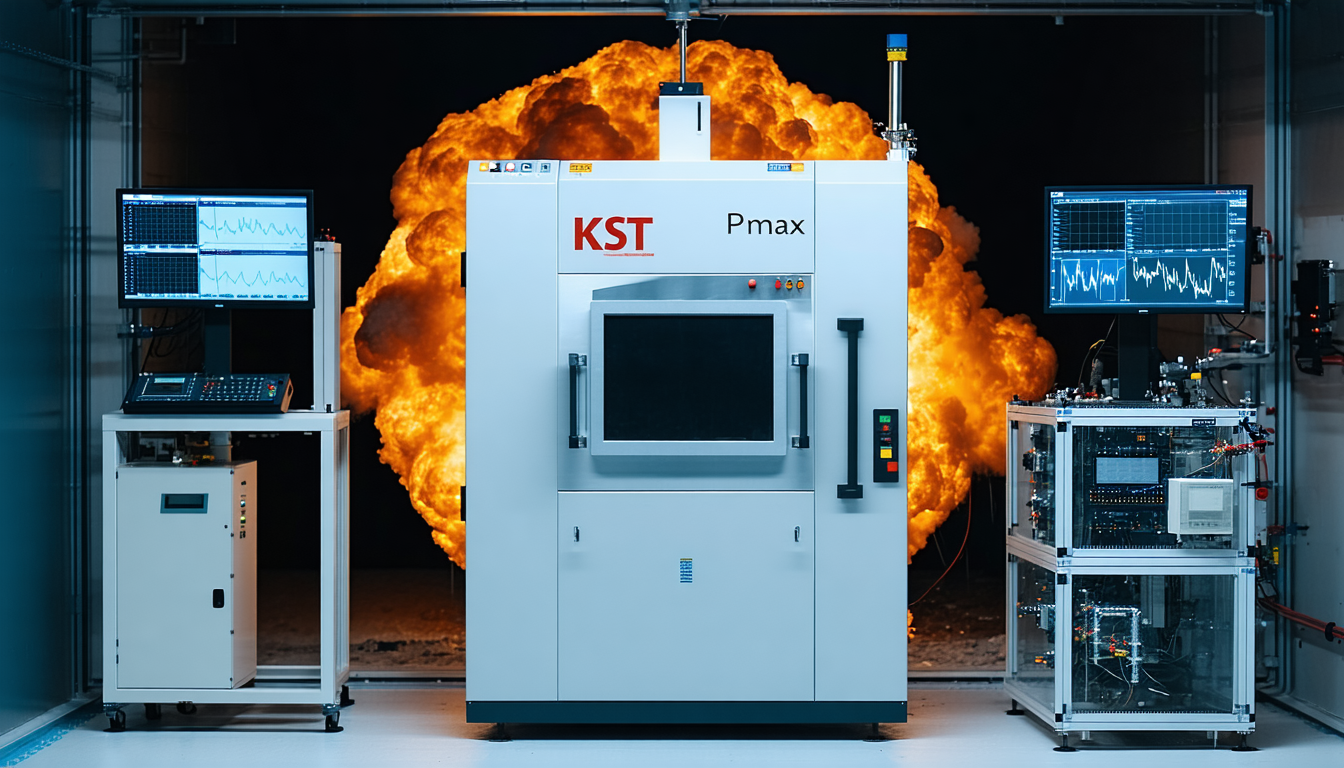
Full explosibility testing measures explosion severity parameters that screening cannot determine:
- Kst value measurement quantifies deflagration index for explosion venting calculations and protection system sizing
- Maximum explosion pressure (Pmax) determines structural requirements for equipment and buildings exposed to dust explosion forces
- Minimum ignition energy (MIE) identifies the lowest spark energy that can trigger explosions, critical for electrical equipment selection
- Minimum explosive concentration (MEC) establishes the dust-to-air ratio threshold below which explosions cannot occur
- Layer ignition temperature measures the heat level that ignites dust accumulations on hot surfaces like motors or heaters
- Cloud ignition temperature determines the air suspension temperature that causes explosive ignition in dust clouds
- Limiting oxygen concentration identifies the oxygen level below which explosions become impossible, useful for inerting system design
- Particle combustibility across size ranges tests how particle size distribution affects explosion characteristics in your specific material
This data becomes the foundation for engineering decisions about dust collectors, explosion venting, suppression systems, and electrical equipment ratings. Screening tells you whether you have a problem. Full testing tells you how to solve it.
The eight to twelve separate measurements in full testing provide the technical specifications engineers need to design protection systems. Your dust explosion cost calculations depend on having accurate explosion parameters, not just knowing that explosions are possible.
Frequently Asked Questions
Can a go/no-go test give false negative results?
Yes, go/no-go tests can miss combustible materials that require higher ignition energies than the standard 10kJ source provides. Materials with high moisture content or larger particle sizes may test negative in screening but positive under full testing conditions. This happens with 15-20% of borderline materials that sit near the combustibility threshold.
Do I need to screen every dust type separately?
Each distinct material requires separate testing since combustibility varies dramatically between different dusts. However, identical materials from the same process typically don’t require retesting unless particle size or composition changes significantly. Your pharmaceutical dust combustibility or wood dust characteristics stay consistent until processing changes occur.
How long are go/no-go test results valid?
Test results remain valid as long as the material composition and particle size distribution remain consistent. Most facilities retest every 2-3 years or when process changes occur that could affect dust characteristics. Changes in raw materials, grinding equipment, or moisture control systems trigger retesting requirements since these factors directly impact particle combustibility.