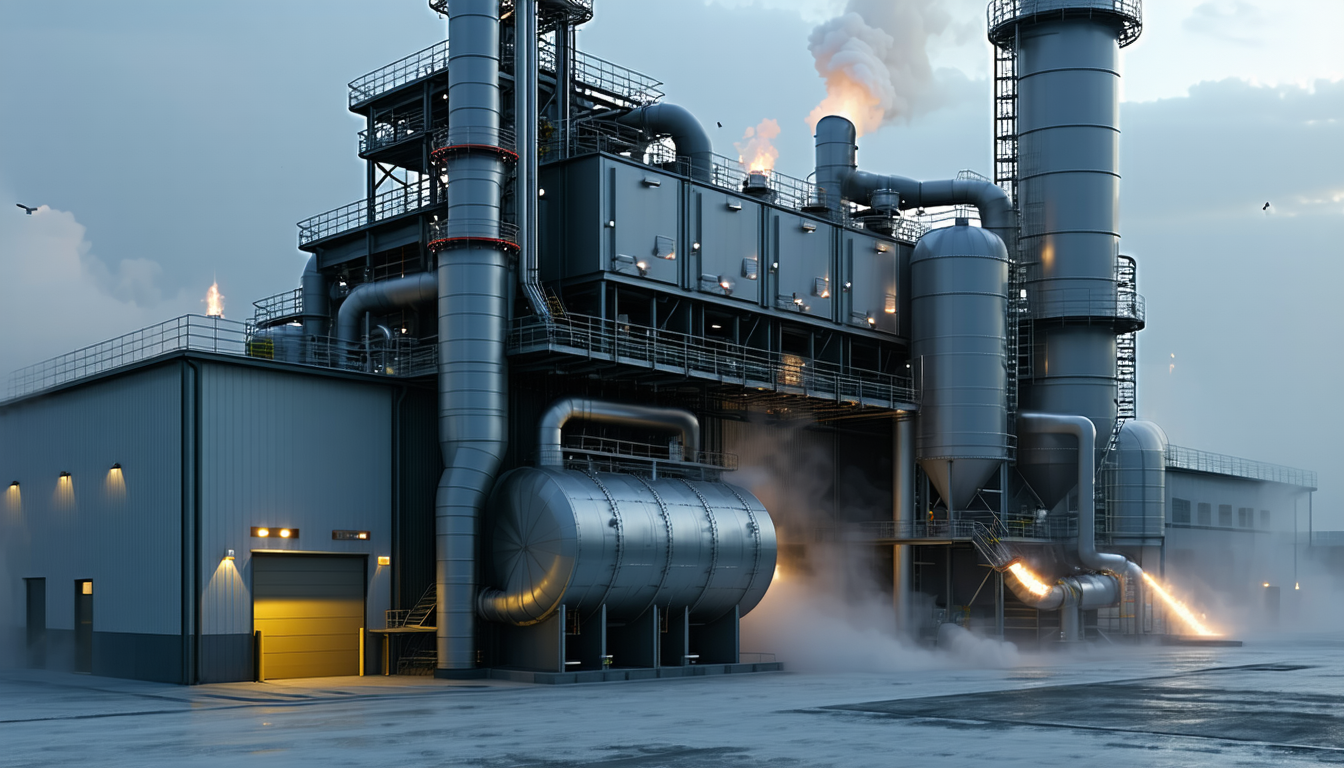
Flameless explosion venting solves the problem of standard explosion vents shooting flames 30+ feet from discharge points. This creates major clearance issues when your dust collector sits indoors next to combustible materials or personnel work areas.
Key Takeaways:
- Flameless vents combine a flame arrestor with standard vent panels, stopping external flame projection while maintaining deflagration protection
- NFPA 68 restricts flameless venting to St-1 dusts with Kst values under 200 bar-m/s due to quenching limitations
- Cost premium runs 3-5x over standard venting but eliminates the need for 30+ foot clearance zones around vent discharge points
What Is Flameless Explosion Venting?
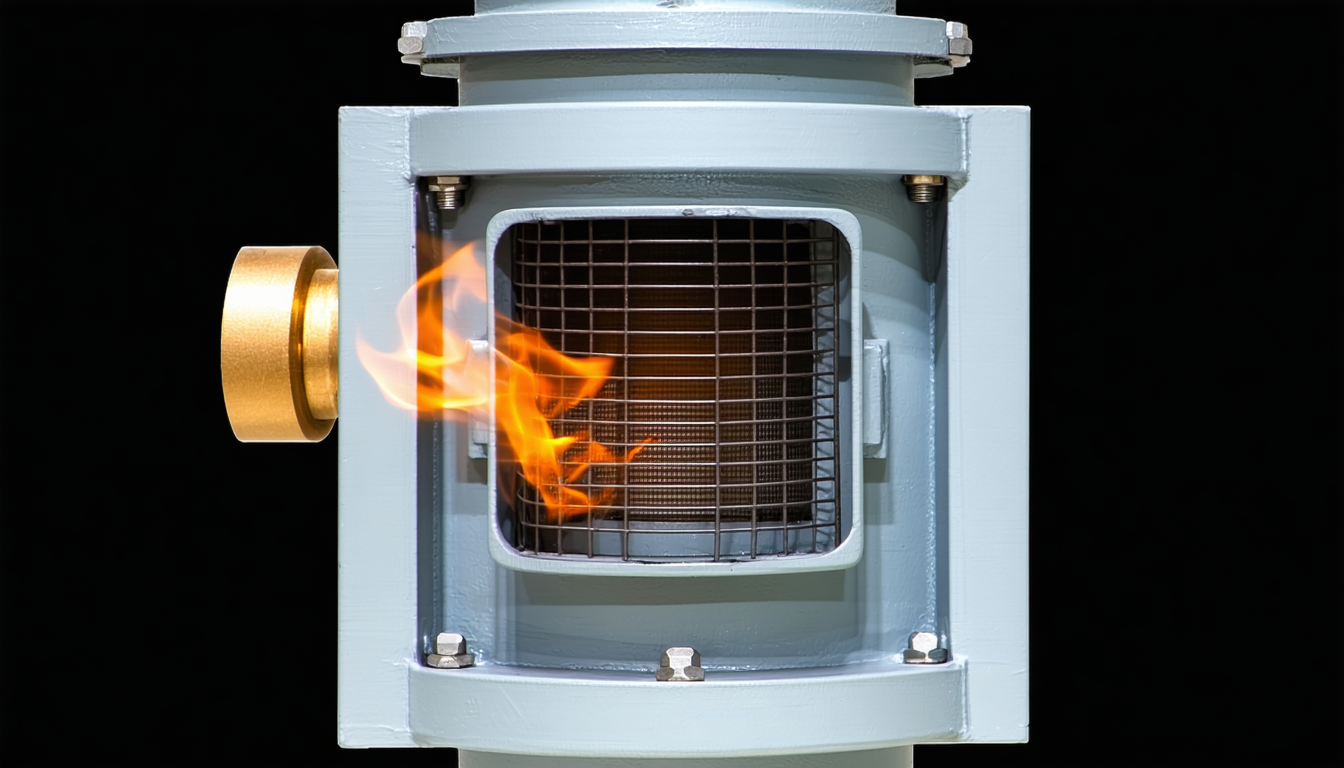
Flameless explosion venting is a dust explosion protection system that combines a flame arrestor with a standard explosion vent panel. This means you get the pressure relief of normal venting without flames shooting out of the discharge opening.
The system works by passing explosion gases through a flame arrestor before they exit the building. The arrestor contains specialized quenching media that cools the hot gases below their ignition temperature. When a deflagration occurs inside your dust collector, the explosion vent panel opens normally to relieve pressure. But instead of projecting flames 30+ feet like standard vents, the gases pass through the flame arrestor first.
The quenching mechanism uses heat absorption to drop gas temperatures from over 3,000°F down to safe levels within milliseconds. Metal mesh, ceramic beads, or other heat-sink materials absorb thermal energy from the expanding gases. This prevents external flame projection while maintaining the rapid pressure relief needed to protect equipment.
Standard explosion vent panels alone cannot prevent flame projection. They’re designed purely for pressure relief, not flame containment. The flame arrestor component makes flameless venting possible by addressing the thermal hazard that standard venting creates.
When Is Flameless Venting Required Instead of Standard Venting?
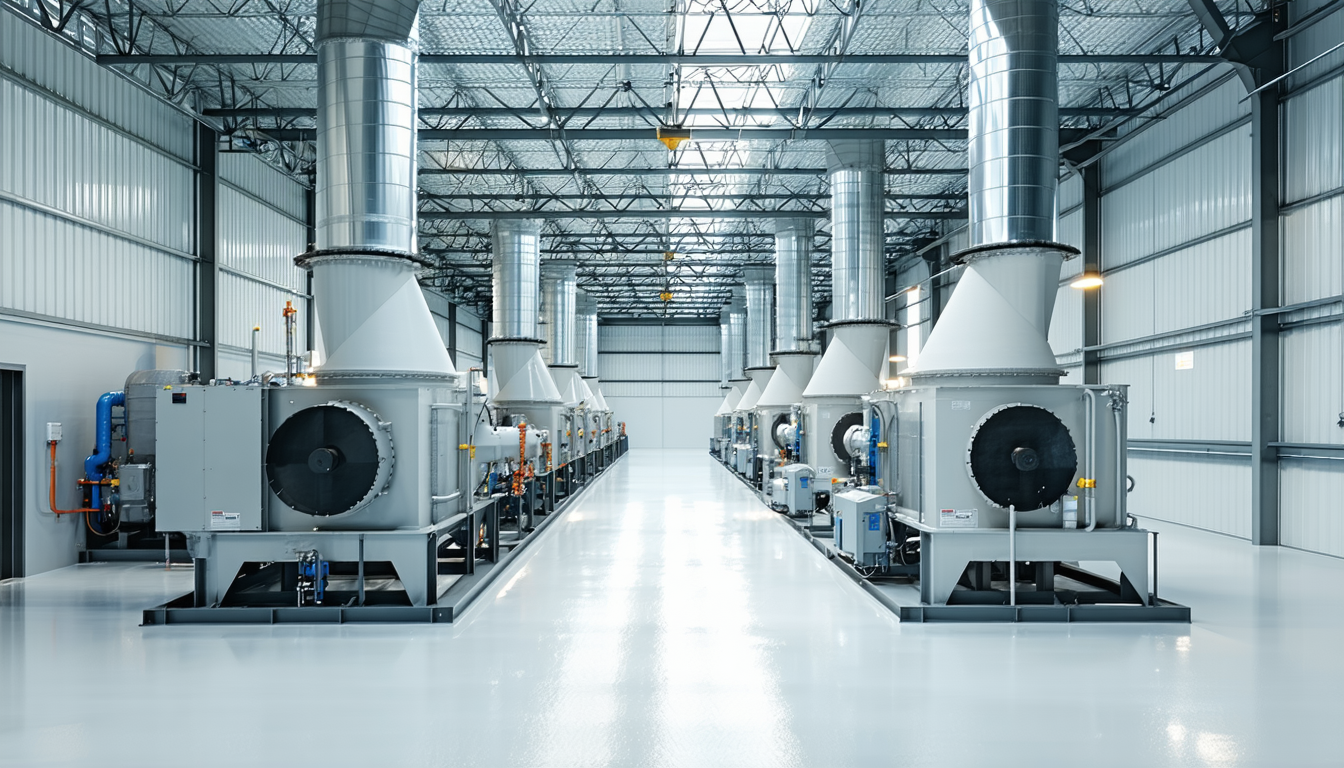
Flameless venting becomes necessary when standard explosion vents cannot meet NFPA 68 clearance requirements. Indoor dust collectors require flameless venting for clearance compliance in most installations.
Specific scenarios requiring flameless vents include:
Indoor installations without adequate clearance zones – NFPA 68 requires 30-foot clearance zones in all directions from standard vent discharge points. Most indoor facilities cannot provide this space.
Dust collectors near combustible materials – Warehouses, production areas, and storage facilities often have combustible inventory within the flame projection zone of standard vents.
Personnel work areas adjacent to equipment – Standard venting creates burn hazards for workers who might be present during an explosion event. Flameless venting eliminates this risk.
Confined building spaces – Manufacturing facilities with low ceilings, tight equipment spacing, or structural constraints that prevent proper vent orientation toward safe discharge areas.
Multi-story buildings – Upper floors cannot discharge explosion vents safely without creating hazards for lower levels or adjacent structures.
The osha combustible dust standard references NFPA 68 as the benchmark for explosion protection compliance. When your dust hazard analysis cost evaluation identifies explosion venting as the preferred protection method, clearance constraints often force you toward flameless technology.
NFPA 68 Section 4.4.2 specifically addresses when flameless venting may be substituted for standard venting based on installation constraints and dust properties.
Flameless Vent vs Standard Explosion Vent Panel: Key Differences
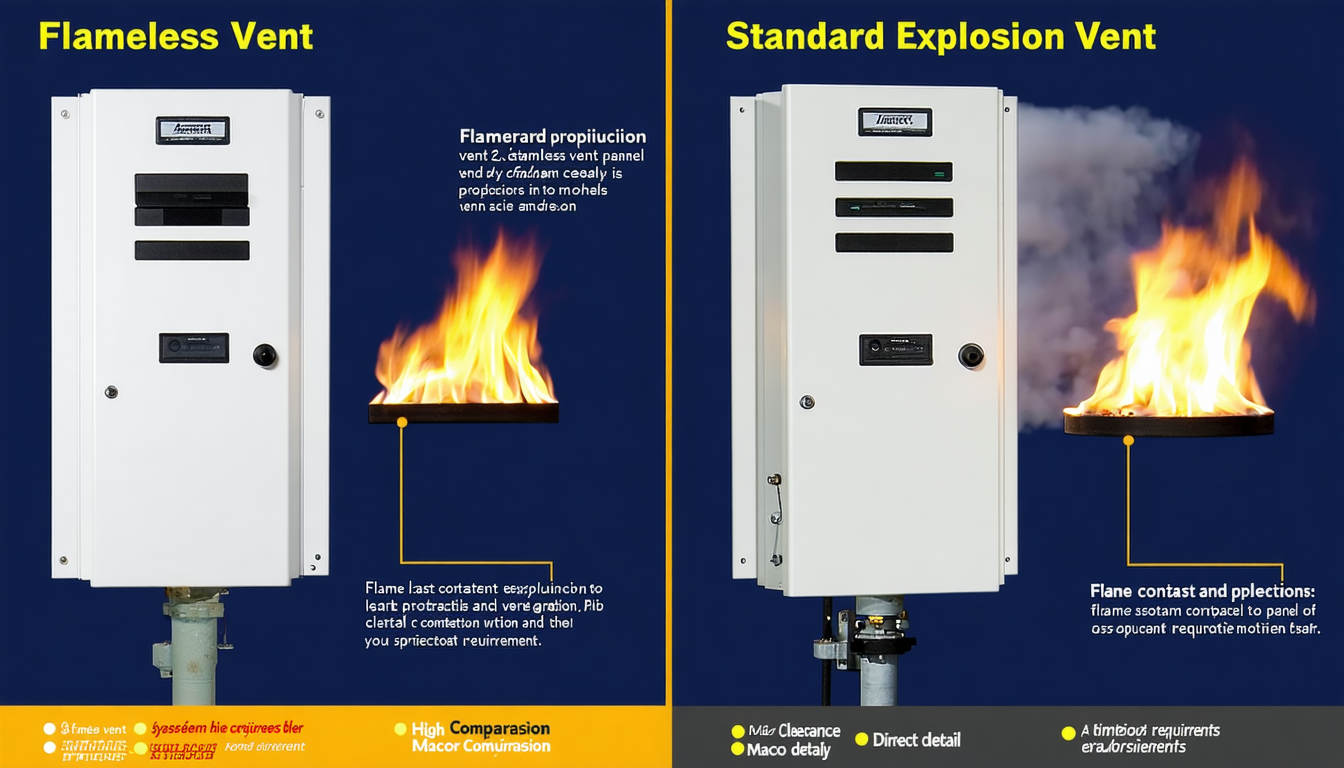
The cost and performance differences between flameless and standard venting systems affect your protection strategy selection:
| Feature | Flameless Vent | Standard Vent Panel |
|---|---|---|
| Flame projection | None | 30+ feet |
| Clearance requirement | Minimal | 30 feet all directions |
| Dust Kst limitation | Under 200 bar-m/s | No limit |
| Equipment cost | $8,000-15,000 | $2,000-4,000 |
| Installation complexity | Higher | Standard |
| Post-event replacement | Panel + arrestor | Panel only |
| Maintenance frequency | Higher | Lower |
Flameless vents cost 3-5x more than standard vent panels due to the integrated flame arrestor system. The flame arrestor mechanism adds complexity, specialized materials, and higher manufacturing costs. But this premium eliminates clearance zone requirements that might otherwise make installation impossible.
Standard explosion vent panels work for any dust type and energy level. They provide simple, reliable pressure relief without restrictions on combustible dust classification. Flameless systems only work with lower-energy dusts that the arrestor can effectively quench.
Maintenance costs differ significantly after activation. Standard vents require only panel replacement after an explosion event. Flameless systems need both panel and arrestor replacement since the quenching media becomes contaminated with explosion byproducts.
Installation complexity increases with flameless venting due to ducting requirements, arrestor positioning, and structural mounting considerations. Some enclosureless dust collector designs cannot accommodate flameless venting without major modifications.
Can I Use Flameless Venting for Indoor Dust Collectors?

Kst values determine flameless vent compatibility for indoor applications. You must verify your dust meets NFPA 68 requirements before selecting flameless technology.
Follow this evaluation process:
Check your dust’s Kst value against NFPA 68 limits – Flameless venting works only with dusts having Kst values under 200 bar-m/s. Higher values exceed the flame arrestor’s quenching capacity.
Verify St-1 dust classification – NFPA 68 restricts flameless venting to St-1 classified materials. St-2 and St-3 dusts generate too much energy for effective flame quenching.
Confirm indoor installation compliance – Review building codes, fire marshal requirements, and insurance carrier policies for indoor explosion protection systems.
Evaluate alternative protection methods – If your dust exceeds flameless venting limits, consider explosion suppression systems or isolation valves instead of venting.
Many common industrial dusts fall within flameless venting limits. Wood dust, most food powders, and pharmaceutical materials typically qualify. But metal dusts like aluminum or magnesium exceed the 200 bar-m/s threshold.
The dust collector explosion vent sizing calculations remain the same regardless of flameless or standard technology. Vent area requirements depend on vessel volume and maximum explosion pressure, not flame projection characteristics.
What NFPA 68 Says About Flameless Venting Limitations
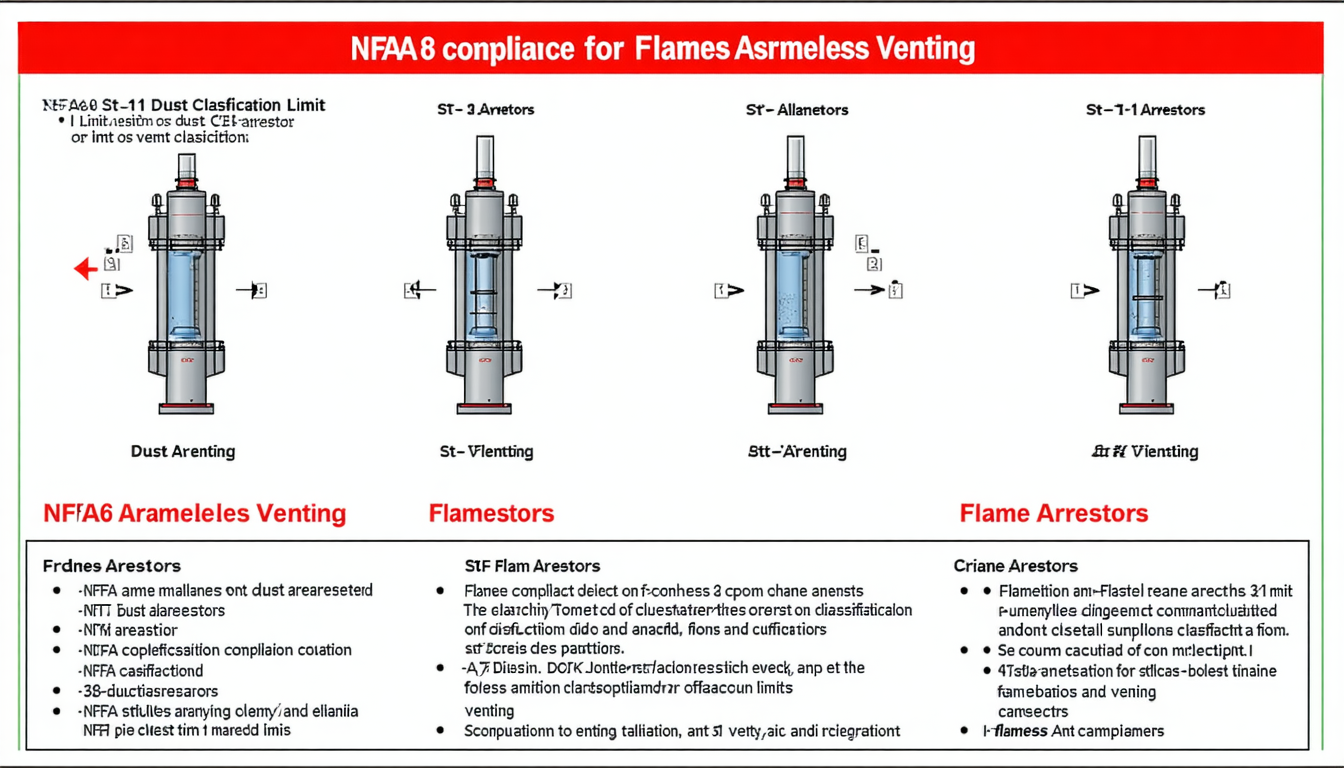
NFPA 68 Section 7.5.3 restricts flameless venting to St-1 dust classifications with specific testing validation requirements. The standard recognizes that flame arrestors have physical limits on the explosion energy they can safely quench.
The 200 bar-m/s Kst limit exists because higher-energy explosions generate temperatures and pressures that overwhelm quenching media. Testing data shows flame arrestors fail to prevent external ignition when explosion energy exceeds this threshold.
NFPA 68 requires flame arrestor systems to undergo validation testing with the specific dust being protected. Generic approval is insufficient – you need test data proving the arrestor works with your material at your process conditions.
Suppression systems and isolation valves offer alternatives when dust properties exceed flameless venting limits. Suppression systems inject chemical suppressants to halt the explosion reaction. Isolation valves prevent explosion propagation between connected vessels.
The standard allows combining flameless venting with other protection methods in some configurations. But each system must be designed and tested as an integrated protection strategy, not independent components.
Facilities using flameless venting must document compliance through testing reports, installation drawings, and maintenance records. This documentation becomes critical during insurance audits and OSHA inspections.
Frequently Asked Questions
Do flameless vents work with all types of combustible dust?
No, flameless vents only work with St-1 classified dusts having Kst values under 200 bar-m/s. Higher energy dusts like aluminum or magnesium exceed the flame arrestor’s quenching capacity and require standard venting with proper clearance zones.
How much more do flameless vents cost than regular explosion panels?
Flameless vents cost 3-5 times more than standard vent panels, ranging from $8,000-15,000 versus $2,000-4,000 for equivalent vent area. The premium pays for the integrated flame arrestor and specialized quenching media that prevents external flame projection.
What maintenance do flameless vents require after activation?
After activation, both the vent panel and flame arrestor require replacement since the quenching media becomes contaminated with explosion byproducts. Standard vent panels only require panel replacement, making flameless systems more expensive to restore after an event.