
Aluminum dust explosion events don’t just burn, they explode with three times the severity of wood dust and can react violently with water-based suppression systems that work fine for organic materials.
Key Takeaways:
- Aluminum dust reaches Kst values of 400+ bar-m/s versus wood dust at 150-200 bar-m/s
- Water suppression creates hydrogen gas when it contacts hot aluminum, potentially feeding the explosion
- NFPA 660 Chapter 22 prohibits mixing metal dust collection with other materials
Is Aluminum Dust Actually Combustible and Explosive?
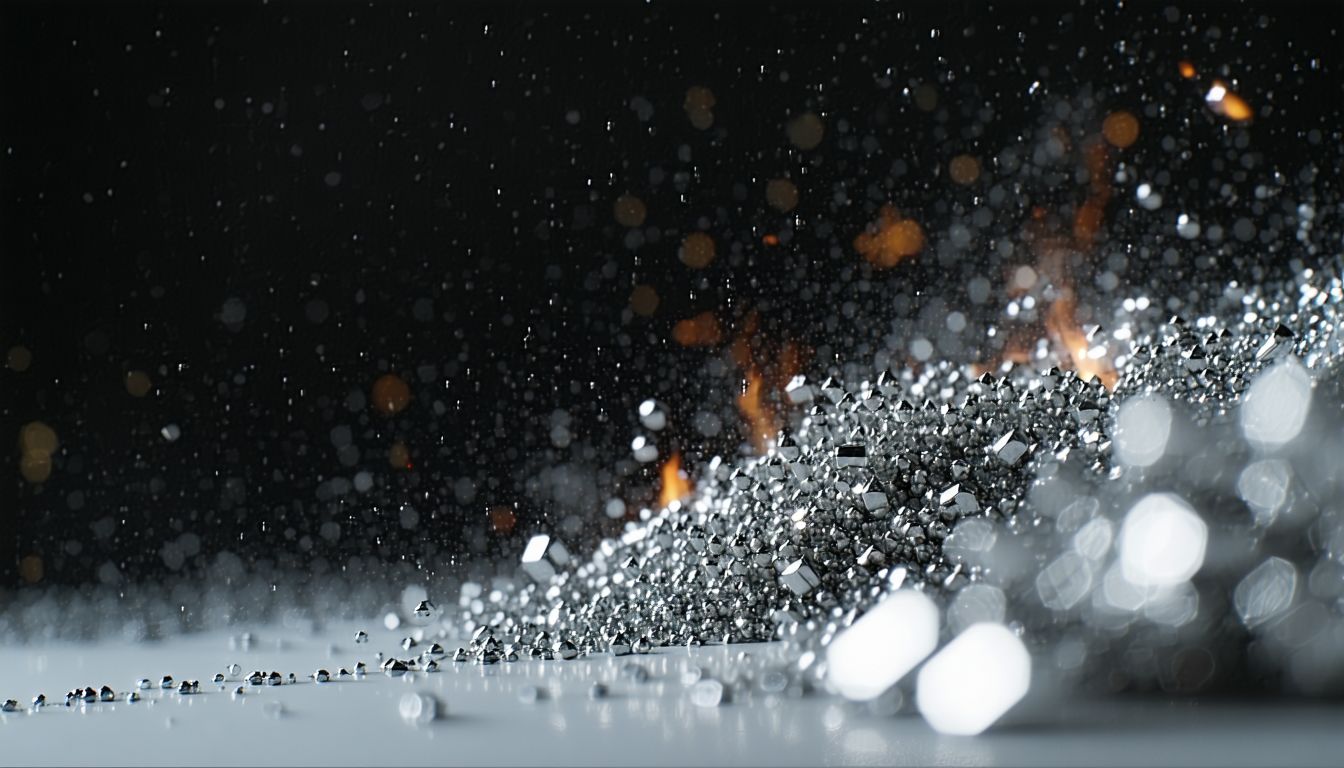
Aluminum dust is combustible when particle size drops below 420 microns and creates explosive atmospheres under specific conditions. This means microscopic aluminum particles suspended in air can ignite and propagate flame front through the entire dust cloud.
The combustible dust classification for aluminum follows ASTM E1226 testing protocols. Particles must pass through a 420-mesh screen to qualify for combustibility testing. Larger particles burn but don’t create the suspension dynamics required for explosion propagation.
Aluminum’s material Kst profile places it in the ST-2 dust class with explosion severity indices between 200-300 bar-m/s for most industrial grades. However, fine aluminum powders used in pyrotechnics or metal injection molding can exceed 400 bar-m/s. The particle morphology affects reactivity, flaked aluminum burns faster than spherical powder due to increased surface area exposure.
Testing labs measure aluminum dust explosibility using the 20-liter sphere test per ASTM E1515. The minimum ignition energy for aluminum dust ranges from 15-50 millijoules depending on particle size distribution. This low ignition threshold means static electricity, hot surfaces, or mechanical sparks can trigger explosions in dust clouds.
Why Metal Dust Creates Higher Explosion Severity Than Wood or Organic Dusts

Metal dust produces higher Kst values than organic materials because aluminum oxidation releases approximately 31 megajoules per kilogram versus cellulose combustion at 17 megajoules per kilogram. The excess energy translates directly to higher explosion pressures and faster flame speeds.
| Material Type | Typical Kst Range (bar-m/s) | Energy Release (MJ/kg) | ST Class |
|---|---|---|---|
| Wood dust | 150-200 | 17-19 | ST-1 |
| Grain dust | 200-300 | 16-18 | ST-2 |
| Aluminum dust | 400+ | 31 | ST-2/ST-3 |
| Magnesium dust | 600+ | 25 | ST-3 |
Aluminum particles react with oxygen to form aluminum oxide in an exothermic reaction. The combustion temperature reaches 2000°C compared to wood dust at 800°C. Higher temperatures create greater thermal expansion of combustion gases, driving up explosion pressure.
The oxidation reaction kinetics differ between metal and organic dust. Aluminum particles burn from the surface inward, maintaining combustion as long as unreacted metal core remains. Wood particles gasify and burn as volatile compounds, consuming the particle completely but at lower energy density.
Metal dust explosions propagate faster because the high-temperature combustion products preheat unburned dust ahead of the flame front. This thermal feedback loop accelerates flame speed beyond what organic dust can sustain.
Water Suppression Systems Fail on Metal Dust, Here’s Why

Water contact creates hydrogen gas from aluminum reaction above 573°C, the exact temperature range encountered during dust explosions. The chemical reaction follows this pathway:
- Hot aluminum particles contact water droplets from suppression nozzles
- Steam breaks down into hydrogen and oxygen at aluminum surface temperatures above 573°C
- Liberated hydrogen mixes with explosion atmosphere, adding fuel to the fire
- Oxygen release accelerates aluminum oxidation, increasing burn rate
The aluminum-water reaction becomes self-sustaining once initiated. Each gram of aluminum can generate 1,200 milliliters of hydrogen gas. In enclosed dust collection systems, hydrogen accumulation can trigger secondary explosions after the primary dust event.
Water suppression timing makes the problem worse. Suppression systems activate within 50-100 milliseconds of explosion detection. At this point, aluminum particles are already burning at peak temperature, creating ideal conditions for hydrogen generation.
Dry chemical suppression using sodium bicarbonate or potassium bicarbonate interrupts combustion without chemical reaction risks. These agents absorb heat and release carbon dioxide, diluting the combustible atmosphere without generating additional fuel.
NFPA 660 Chapter 22: Metal Dust Collection and Separation Requirements

NFPA 660 Chapter 22 requires material separation for metal dust systems because mixed materials create unpredictable explosion characteristics and potential thermite reactions. The standard mandates specific isolation measures:
- Metal dust collection systems cannot share ductwork with organic dust streams per Section 22.4.2
- Separation distances of minimum 50 feet between metal and organic dust collectors prevent cross-contamination
- Dedicated electrical systems prevent ignition sources from affecting multiple dust types
- Independent explosion protection systems sized for the specific metal dust hazard profile
Chapter 22.4.2 prohibits mixing metal dust with any organic material in collection systems. The restriction applies to shared ductwork, common plenums, and combined filter chambers. Even trace amounts of organic contamination can alter explosion characteristics unpredictably.
The vertical compliance requirement means facilities must demonstrate separation at system design, installation, and operational levels. Design drawings must show dedicated metal dust collection paths. Installation verification confirms no cross-connections exist. Operational procedures prevent accidental mixing through cleaning or maintenance activities.
Industry-specific chapter provisions require written procedures for preventing material cross-contamination. Maintenance staff must use separate tools for metal and organic dust systems. Replacement filters cannot be interchanged between system types.
How Mixed Metal Oxides Create Thermite Reactions in Dust Systems

Mixed metal oxides create thermite reaction potential when iron oxide contamination exceeds 5% in aluminum dust. Thermite reactions produce temperatures above 2500°C, hot enough to melt steel dust collection components and propagate through connected systems.
The thermite reaction requires aluminum powder and iron oxide in roughly 3:1 mass ratio. Industrial facilities generate iron oxide through steel grinding, cutting, or corrosion processes. When aluminum and iron oxide particles mix in shared collection systems, the combination becomes a potential thermite charge.
Thermite ignition requires temperatures around 1200°C, easily reached during initial dust explosions. Once started, thermite reactions are self-sustaining and cannot be suppressed with conventional agents. The molten iron produced burns through standard dust collector housings and structural supports.
Material separation requirements prevent thermite formation by keeping aluminum particles isolated from iron-containing dust streams. Dedicated aluminum dust collection systems eliminate the iron oxide contamination source. Regular testing verifies iron content stays below 1% in collected aluminum dust.
This drives collection system separation requirements beyond just explosion protection. Even if explosion risks were manageable, thermite potential makes mixed metal collection unacceptable from structural integrity standpoints.
What Protection Systems Actually Work for Metal Dust Collectors

Explosion protection systems require different specifications for metal dust because higher Kst values demand larger vent areas, faster suppression response, and stronger isolation barriers. Standard organic dust protection sizing will underprotect metal dust applications.
| Protection Method | Organic Dust Sizing | Metal Dust Sizing | Key Difference |
|---|---|---|---|
| Explosion venting | 0.1 m²/m³ enclosure | 0.14 m²/m³ enclosure | 40% larger vent area |
| Suppression detection | 100ms response | 50ms response | 2x faster activation |
| Isolation valves | Standard pneumatic | High-speed pneumatic | Faster closure required |
| Vent panel design | 0.1 bar opening | 0.05 bar opening | Lower activation pressure |
Vent area calculations for metal dust use the higher Kst values in the vent sizing equation. A dust collector protecting wood dust at Kst 200 needs smaller vents than the same enclosure protecting aluminum dust at Kst 400. The relationship is not linear, vent area increases roughly with the square root of Kst ratio.
Suppression systems must detect and activate within 50 milliseconds for metal dust compared to 100 milliseconds for organic materials. The faster flame speed of metal dust explosions leaves less time for suppression agent injection. Detection sensitivity must increase to trigger on smaller pressure rises.
Isolation valve response times become critical for preventing deflagration propagation through ductwork. Metal dust explosions generate higher pressures that can overwhelm standard isolation barriers. Fast-acting valves with closure times under 20 milliseconds prevent flame transmission to connected equipment.
Frequently Asked Questions
Can you mix aluminum dust with wood dust in the same collection system?
No. NFPA 660 Chapter 22 explicitly prohibits mixing metal dust with any organic material in collection systems. Mixed materials create unpredictable explosion characteristics and potential thermite reactions.
What makes magnesium dust more dangerous than aluminum?
Magnesium reaches Kst values above 600 bar-m/s compared to aluminum’s 400+ range. Magnesium also ignites at lower temperatures and burns hotter, requiring even more aggressive explosion protection systems.
Do you need different electrical equipment ratings for metal dust areas?
Yes. Metal dust creates Class II Division 1 or 2 electrical classifications depending on accumulation patterns. The higher explosion severity of metal dust often drives more conservative electrical area classification decisions.