Combustible dust ghs classification confuses most EHS managers because 73% incorrectly label their materials under hazard communication requirements. The standard actually assigns all combustible dusts to physical hazard class H228 with the flame pictogram, no dust-specific symbol exists.
Key Takeaways:
- GHS uses physical hazard class H228 for all combustible dusts with the flame pictogram, no explosion pictogram exists
- Category 1 combustible dust has minimum ignition energy ≤10 mJ while Category 2 requires >10 mJ but ≤1000 mJ
- SDS Section 2 must include H228 hazard statement and P210/P280 precautionary statements for combustible dust materials
What GHS Pictogram Is Used for Combustible Dust?
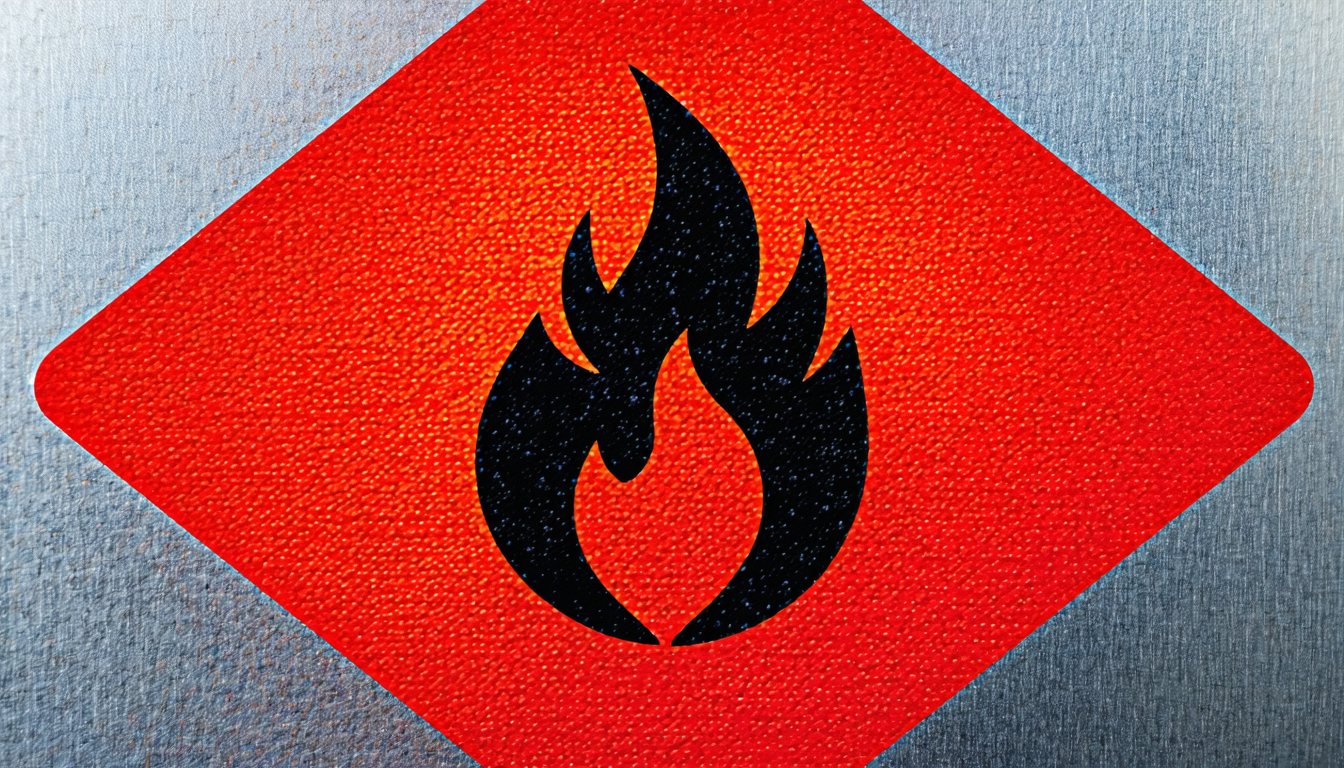
GHS pictogram GHS02 is the flame symbol required on all combustible dust labels. This means every material classified as combustible dust gets the same red diamond with a flame image, regardless of explosion severity or dust type.
No explosion pictogram exists for combustible dust under the current GHS framework. The exploding bomb pictogram (GHS01) applies only to explosive substances and mixtures, not materials that create explosion hazards when dispersed as dust clouds. This creates confusion because dust explosions are more destructive than many materials carrying the explosion symbol.
Manufacturers often misapply pictograms because they assume explosion risk equals explosion pictogram. Wood flour, metal powders, and pharmaceutical dusts all get the same flame symbol as flammable solids, despite vastly different explosion characteristics. The UN Purple Book Revision 9 confirms GHS02 flame symbol applies to all materials meeting combustible dust criteria.
Common misconception: facilities expect a dust-specific pictogram that doesn’t exist. GHS treats combustible dust as a physical hazard class within flammable solids, not a separate category requiring unique symbols. Authority having jurisdiction inspectors know this distinction and flag incorrect pictogram usage during combustible dust nfpa compliance audits.
Combustible Dust Category 1 vs Category 2: What’s the Difference?
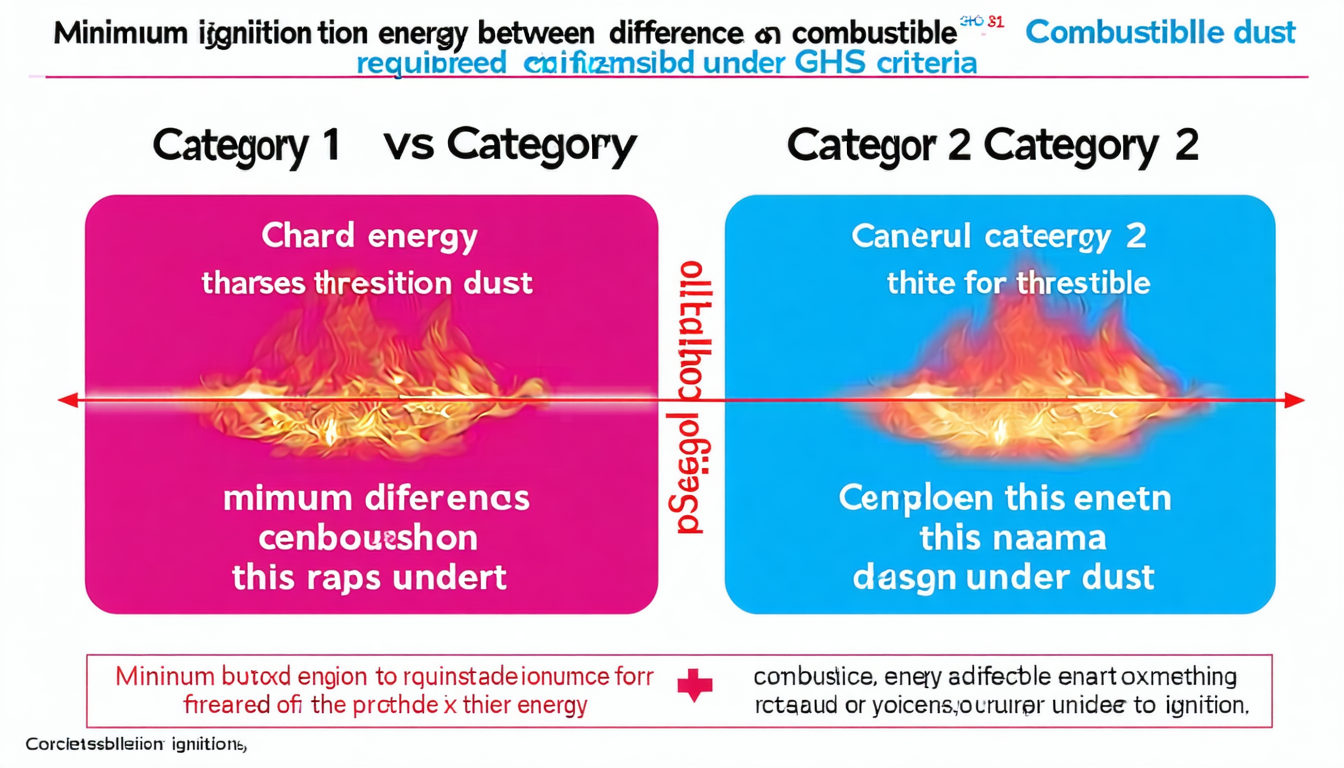
Minimum ignition energy determines combustible dust category classification under GHS physical hazard criteria. Category 1 materials ignite with ≤10 millijoules while Category 2 requires 10-1000 millijoules of energy to create sustained combustion.
| Feature | Category 1 | Category 2 |
|---|---|---|
| Minimum Ignition Energy | ≤10 mJ | >10 mJ but ≤1000 mJ |
| Signal Word | Warning | Warning |
| Hazard Statement | H228 Flammable solid | H228 Flammable solid |
| Typical Materials | Aluminum powder, magnesium dust | Wood flour, sugar, corn starch |
| Precautionary Focus | Stricter ignition source control | Standard ignition source control |
Both categories require identical hazard statements and pictograms, but Category 1 demands more restrictive workplace controls. Testing laboratories measure minimum ignition energy using standardized equipment to determine which category applies to your specific material and particle size distribution.
Category classification affects more than labeling. Insurance auditors reference category levels when evaluating facility risk, and NFPA 660 housekeeping frequencies often correlate with ignition sensitivity. Category 1 dusts typically require more frequent cleaning cycles and stricter hot work permits than Category 2 materials.
Particle size changes can shift categories. The same material ground to different mesh sizes may cross the 10 mJ threshold, requiring separate testing and classification. Wood dust from the same species can span both categories depending on processing equipment and collection system particle size distribution.
SDS Section 2 Requirements for Combustible Dust Materials
SDS Section 2 hazard identification must include specific elements for combustible dust classification compliance. Here’s what you’re required to include:
Include H228 hazard statement in Section 2.2. The exact text ‘Flammable solid’ appears in the hazard statement field for all combustible dust categories.
Add signal word ‘Warning’ in Section 2.1. Both Category 1 and Category 2 combustible dusts require the same signal word level under current GHS criteria.
List flame pictogram GHS02 in Section 2.2. Reference the pictogram by number and include the flame symbol description for workplace label creation.
Specify precautionary statements P210 and P280. P210 covers ignition source control while P280 addresses personal protective equipment requirements during handling.
Document category level in Section 2.2. State whether the material qualifies as Category 1 or Category 2 based on minimum ignition energy testing results.
Reference supporting test data in Section 11. Include minimum ignition energy values, test method used, and particle size range tested to support the classification.
Section 2 errors create compliance gaps during General Duty Clause inspections. OSHA expects accurate hazard identification that reflects actual combustible dust properties, not generic powder classifications. Missing H228 statements or incorrect category assignments trigger citations under hazard communication violations.
How Does WHMIS Align with GHS Combustible Dust Classification?

WHMIS 2015 adopts GHS combustible dust classification directly with identical technical criteria. This means Canadian facilities use the same category thresholds, pictograms, and hazard statements as U.S. operations following GHS protocols.
| Feature | WHMIS 1988 | WHMIS 2015 | GHS Classification |
|---|---|---|---|
| Combustible Dust Coverage | Class D3 combustible | Physical hazard H228 | Physical hazard H228 |
| Category System | Single combustible class | Category 1 and 2 | Category 1 and 2 |
| Pictogram | Flame symbol | GHS02 flame | GHS02 flame |
| Implementation Date | 1988 original | February 1, 2018 | Ongoing global adoption |
| Bilingual Requirements | English/French symbols | English/French text | Single language acceptable |
WHMIS 2015 implementation created alignment between Canadian and international combustible dust labeling. The February 1, 2018 deadline required all combustible dust SDSs to convert from old WHMIS 1988 Class D3 designation to new H228 physical hazard classification.
Canadian workplace labels mirror GHS requirements with bilingual text additions. You must include both English and French precautionary statements on labels, but the pictogram and hazard class remain identical to U.S. GHS applications.
Cross-border facilities benefit from this alignment. The same combustible dust material gets consistent classification whether shipped to Ontario or Ohio, reducing confusion in multi-location operations. WHMIS 2015 eliminated the regulatory arbitrage that previously existed between Canadian and U.S. dust labeling systems.
Which Precautionary Statements Apply to Combustible Dust Labels?
Precautionary statements specify required safety measures for combustible dust handling and storage. The mandatory statements apply to all categories while optional statements depend on workplace-specific hazards.
P210 ‘Keep away from heat/sparks/open flames/hot surfaces – No smoking’ applies to all combustible dust categories. This covers ignition source control during normal handling operations.
P280 ‘Wear protective gloves/protective clothing/eye protection/face protection’ addresses personal protective equipment requirements. Specify equipment types based on your workplace exposure assessment.
P370+P378 ‘In case of fire: Use water spray, alcohol-resistant foam, dry chemical or carbon dioxide to extinguish’ provides emergency response guidance. This combination statement applies when combustible dust fires require specific extinguishing methods.
P235 ‘Keep cool’ and P410+P412 ‘Protect from sunlight. Do not expose to temperatures exceeding 50°C/122°F’ address storage conditions. Use these when temperature control affects dust stability or ignition risk.
P501 ‘Dispose of contents/container to hazardous waste facility’ covers waste disposal requirements. Include when combustible dust waste needs special handling beyond normal solid waste streams.
Optional precautionary statements let you address site-specific risks without changing the base H228 classification. Facilities with electrical classification combustible dust areas often add statements about static electricity control or grounding requirements for their specific workplace conditions.
Frequently Asked Questions
Do I need different SDSs for the same material with different particle sizes?
Yes, if particle size affects combustible dust classification. The same wood species ground to 100 mesh vs 40 mesh can have different minimum ignition energies and require separate SDSs with different GHS categories. Testing determines if reclassification is needed.
Can a material be both combustible dust and flammable liquid under GHS?
Yes, materials can have multiple hazard classifications. Solvents that dry to combustible residue or wet materials that become combustible when dried require multiple pictograms and hazard statements on the same SDS. Each hazard class gets independent treatment.
What happens if my supplier’s SDS doesn’t include combustible dust classification?
You’re responsible for accurate classification regardless of supplier SDS errors. If your material testing shows combustible properties not reflected in the supplier SDS, you must create your own workplace label with correct GHS elements or request SDS correction from the supplier.