
Dust explosion venting protective systems fail most often because facility managers calculate vent areas using equipment catalogs instead of actual explosion characteristics. Most dust collectors don’t meet NFPA 68 requirements for this exact reason.
Key Takeaways:
- NFPA 68 requires Pstat ratings below 1.5 psi for most dust applications, standard commercial venting panels burst at 1.0-2.0 psi
- Vent area calculations require three facility-specific inputs: Kst value, enclosure volume, and acceptable Pred pressure
- Indoor venting installations must include flame diverters and meet structural loading requirements that can triple project costs
Every facility handling combustible dust faces the same protection decision. You can suppress explosions, build explosion-resistant equipment, or vent the pressure safely away. Most choose venting because it costs less upfront. But NFPA 68 compliance isn’t as simple as bolting a panel to your dust collector. The standard demands specific calculations based on your dust’s explosion characteristics, not generic equipment specs.
The authority having jurisdiction reviews your protection method during plan approval. They don’t care if your equipment vendor said the vents were “properly sized.” They want calculations that prove your system meets NFPA 68 requirements for your specific dust and facility configuration.
What Is NFPA 68 Deflagration Venting?

NFPA 68 is the standard that defines deflagration venting requirements for explosion protection systems. This means facilities using pressure relief venting must follow its calculations, installation methods, and component specifications.
Deflagration venting allows explosion pressure to escape through designated openings before destructive levels build up inside equipment. The vent panels burst at predetermined pressures, creating a controlled release path. This differs from suppression systems that inject chemicals to stop the combustion reaction.
NFPA 68 applies specifically to deflagration events, not detonations. Combustible dust creates deflagrations under normal conditions. The standard covers vessels up to 50,000 cubic feet volume, which includes most industrial dust collectors and process equipment.
You use NFPA 68 when your Dust Hazard Analysis selects venting as the protection method. The standard doesn’t mandate venting over other protection options. It just tells you how to design venting systems correctly if that’s your chosen approach.
The deflagration venting design standard applies to both new installations and retrofits. Equipment built before the current standard still needs compliant venting if you’re adding protection or modifying the system.
What Does NFPA 68 Require for Dust Collector Venting Systems?
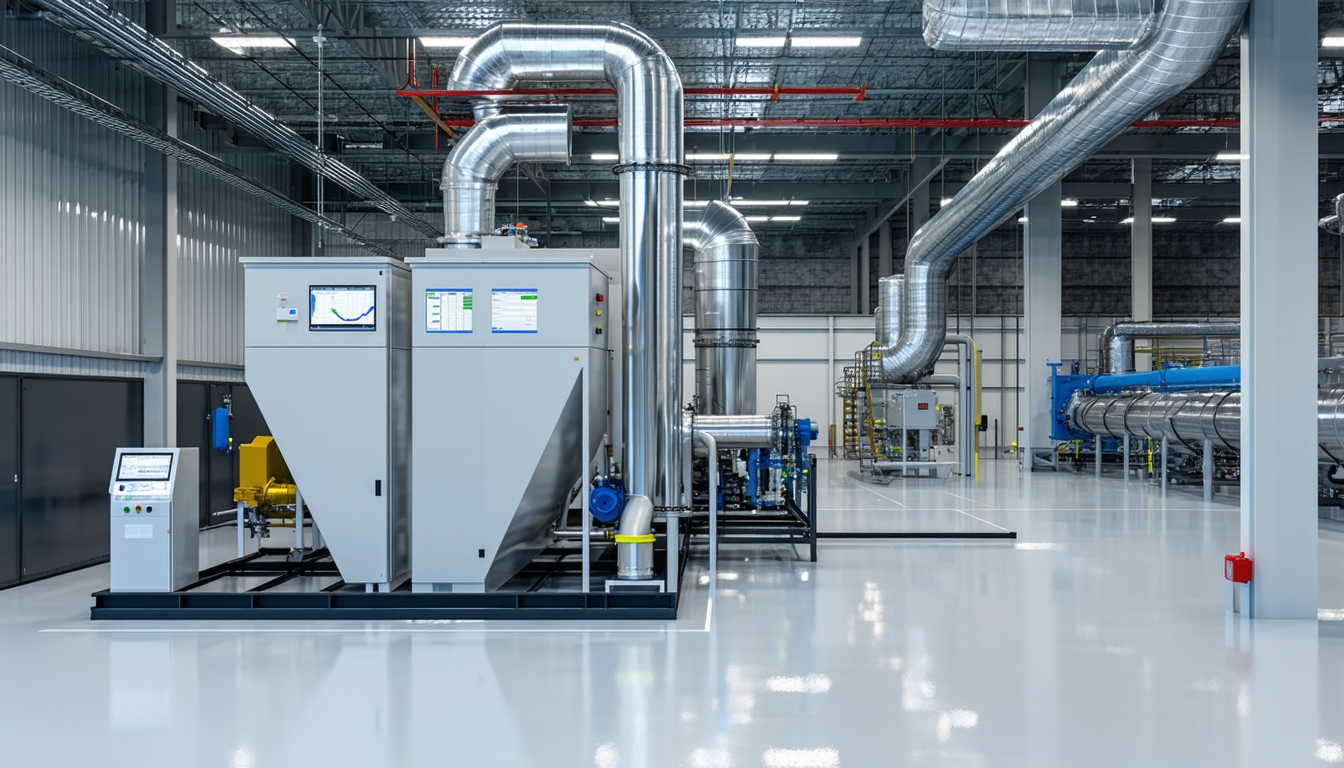
NFPA 68 requires specific venting components for dust collectors. Chapter 8 addresses dust deflagration venting with Kst-based calculations that account for your specific material’s explosion characteristics.
The standard mandates these elements for dust collection equipment:
Vent panels sized using facility-specific Kst values, Generic “dust collector vents” don’t meet the requirement because wood dust and aluminum dust need different vent areas based on their explosion severity.
Proper vent panel construction rated for the calculated Pstat pressure, The panels must burst at pressures below your equipment’s structural limits but high enough to prevent false activation from normal operations.
Duct length restrictions between the protected equipment and vent discharge, Long ductwork changes pressure dynamics and requires larger vent areas or intermediate relief points.
Flame arrestance for indoor installations, Vented flames and burning particles need containment to protect personnel and adjacent equipment.
Structural mounting capable of withstanding explosion forces, Vent panels experience massive dynamic loads during activation that can exceed 150 psi.
Dust collectors need venting when they handle combustible materials and your facility’s risk assessment selects pressure relief over suppression or containment. The OSHA combustible dust standard doesn’t specify which protection method to use, but it requires some form of explosion protection for equipment handling combustible dust.
Not every dust collector needs NFPA 68 venting. Small collectors handling non-combustible materials or equipment protected by suppression systems follow different requirements.
How Do Pstat and Pred Pressures Determine Vent Sizing?
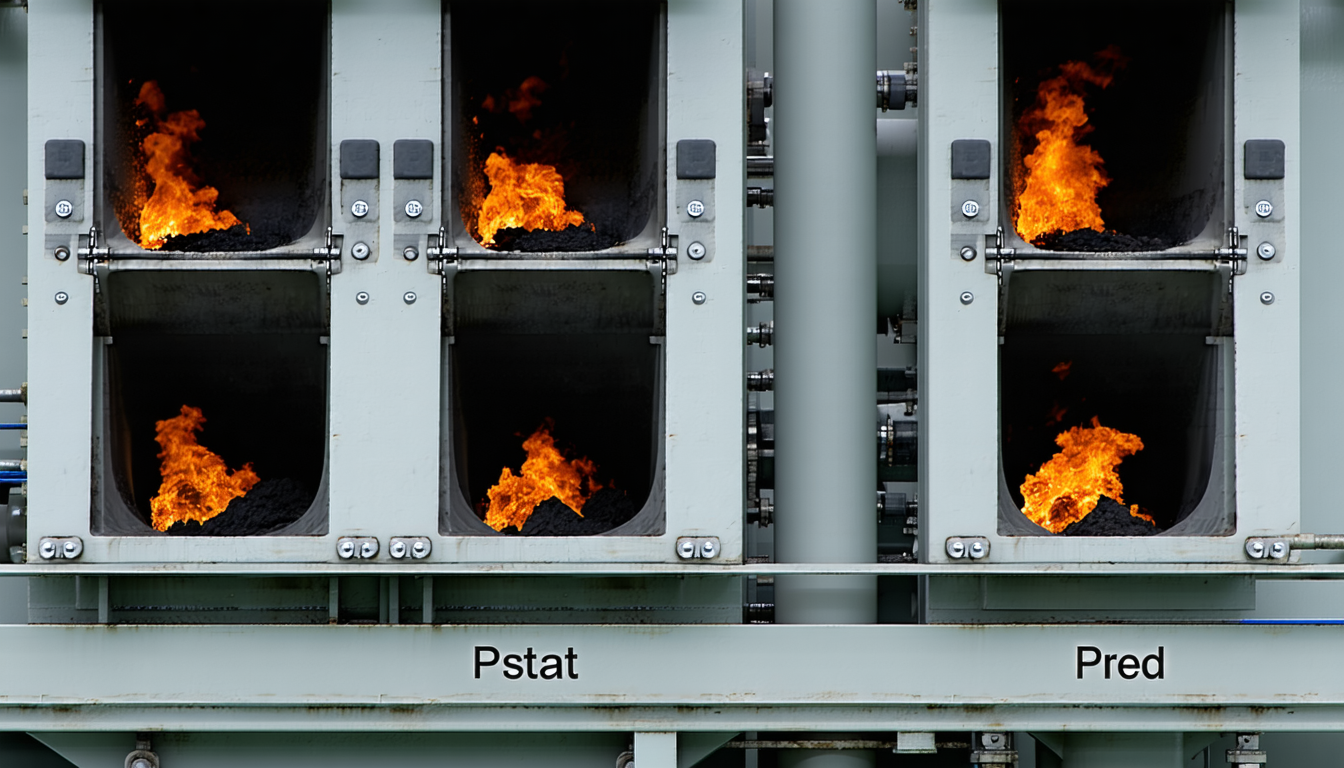
Pstat is the pressure at which explosion vent panels burst open during a deflagration event. This means your vent panels must activate before pressure builds to levels that damage your equipment or building structure.
Pred is the maximum pressure reached inside the protected enclosure after the vents open and begin relieving pressure. The venting system must limit Pred to levels your equipment can withstand structurally.
The relationship between these pressures drives vent sizing calculations. Lower Pstat values require larger vent areas because the panels open earlier in the pressure rise, when less driving force exists to push gases through the openings. Higher acceptable Pred values allow smaller vent areas because you can tolerate more pressure inside the protected space.
Typical Pstat ranges from 0.5 to 2.0 psi depending on vent panel construction. Rupture discs burst at precise pressures but cost more than hinged panels that open at variable pressures based on manufacturing tolerances.
Your equipment’s structural rating sets the maximum acceptable Pred value. Standard dust collector housings typically withstand 2-5 psi internal pressure. Explosion-resistant construction can handle higher pressures but costs significantly more.
The pressure differential between Pstat and Pred determines how much pressure relief the venting system must provide. Larger differentials need bigger vent areas or multiple vent locations to achieve adequate relief capacity.
Facilities often undersize vents by selecting Pstat values that seem reasonable without calculating the resulting Pred pressures. The standard requires both values in your sizing calculations, not just the burst pressure of available vent panels.
NFPA 68 Vent Area Calculation: Required Inputs and Sizing Formula
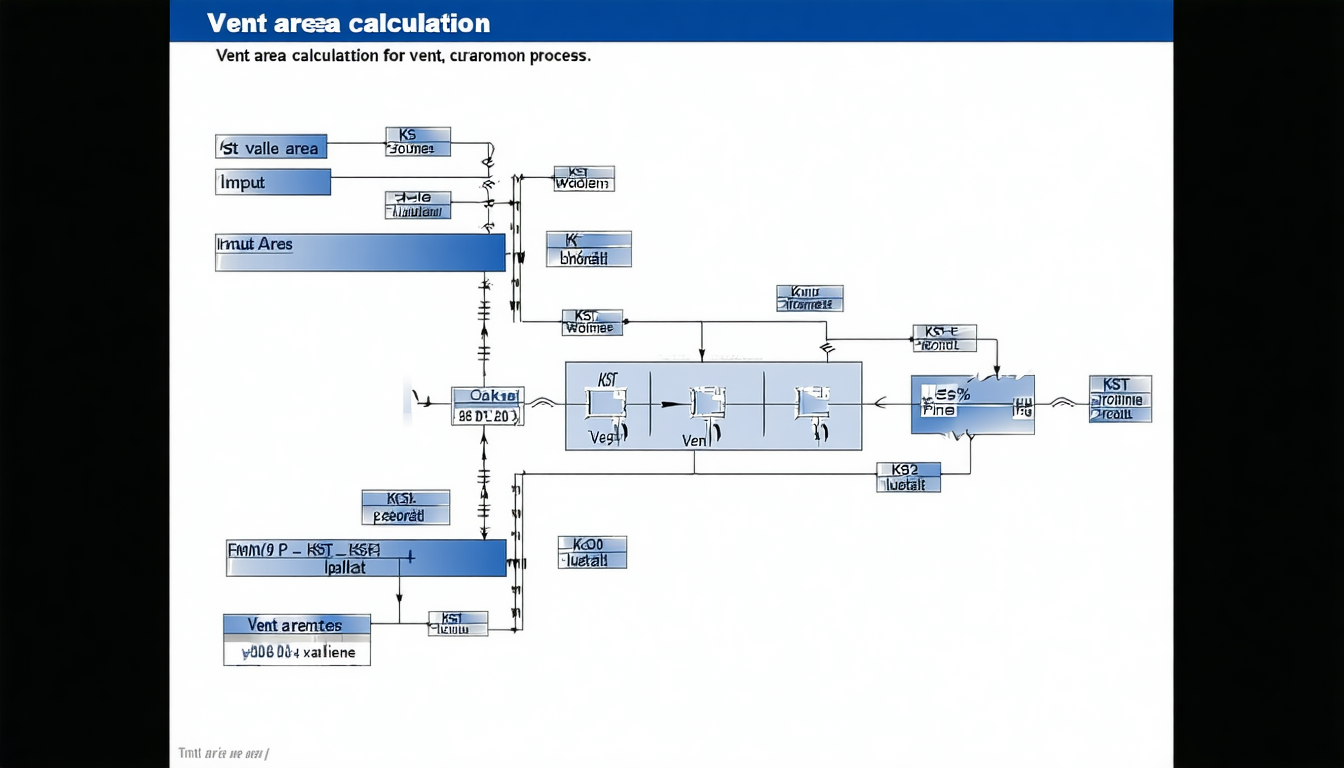
Vent area calculations require three critical facility inputs. Each value comes from different sources and affects your final vent sizing requirements differently.
| Input Parameter | Where to Find It | Impact on Vent Area |
|---|---|---|
| Kst value | Laboratory testing of your actual dust sample | Higher Kst requires larger vent areas exponentially |
| Enclosure volume | Equipment drawings or field measurements | Larger volumes need proportionally more vent area |
| Acceptable Pred | Equipment structural rating or engineering analysis | Lower Pred tolerance requires larger vents |
The basic NFPA 68 sizing relationship shows that vent area increases with both Kst value and enclosure volume while decreasing as acceptable Pred pressure rises. The actual formula includes correction factors for duct length, vent discharge conditions, and turbulence effects.
Kst values drive the calculation most heavily. Wood dust typically measures 50-200 bar-m/s while aluminum dust can exceed 400 bar-m/s. This difference means aluminum dust applications need vent areas three to four times larger than wood dust in the same equipment.
Enclosure volume includes all connected spaces that communicate during an explosion. A dust collector connected to 100 feet of ductwork has a much larger effective volume than the collector housing alone.
Vent areas typically range from 1-15% of enclosure surface area depending on Kst classification. High Kst materials like metals and pharmaceuticals push toward the upper end of this range. Lower Kst materials like wood and food products need smaller percentages.
You can’t use generic vent sizing tables from equipment catalogs because they don’t account for your specific dust characteristics or facility configuration. The standard requires calculations based on actual measured parameters.
Indoor vs Outdoor Venting: Installation Requirements That Drive Costs
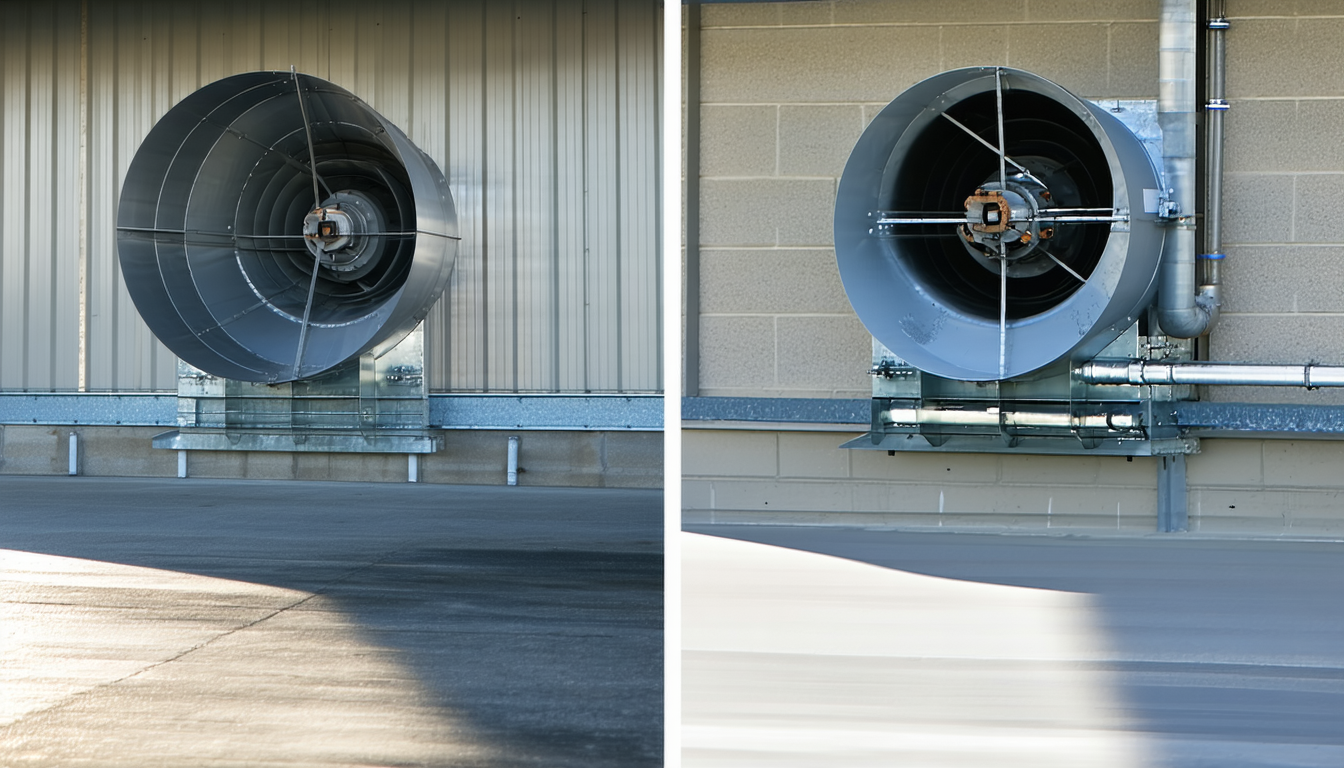
Indoor venting requires additional structural and safety components that outdoor installations avoid. These requirements protect personnel and adjacent equipment from flame and pressure effects during vent activation.
| Installation Factor | Indoor Requirements | Outdoor Requirements |
|---|---|---|
| Flame diversion | Mandatory flame diverters rated for 150 psi dynamic pressure | Direct discharge to atmosphere acceptable |
| Structural reinforcement | Building structure must handle reaction forces and flame loading | Minimal structural impact on facility |
| Personnel protection | Exclusion zones and blast-resistant barriers around vent discharge | Natural separation distance adequate |
| Maintenance access | Protected access for vent inspection and replacement | Standard equipment access sufficient |
Indoor installations require flame diverters capable of withstanding 150 psi dynamic pressure loads per Section 7.4. These aren’t simple deflector plates. They need engineered mounting systems and structural reinforcement to handle explosion forces without failing.
Flame diverters add 200-300% to installation costs compared to outdoor venting. The diverter itself costs as much as the vent panels, and structural modifications for proper mounting often exceed the equipment costs.
Outdoor venting allows direct discharge to atmosphere without flame containment. You still need adequate separation distances from property lines, personnel areas, and ignition sources, but no special flame handling equipment.
Building codes often restrict indoor venting in occupied areas or near critical equipment. Check with your authority having jurisdiction before designing indoor vent systems. Some jurisdictions prohibit indoor venting entirely for high Kst materials.
Reaction forces from vent activation can exceed 50,000 pounds instantaneous load on mounting structures. Indoor installations need structural analysis to verify building components can handle these forces without damage.
Duct Length Limitations and Enclosure Design Rules
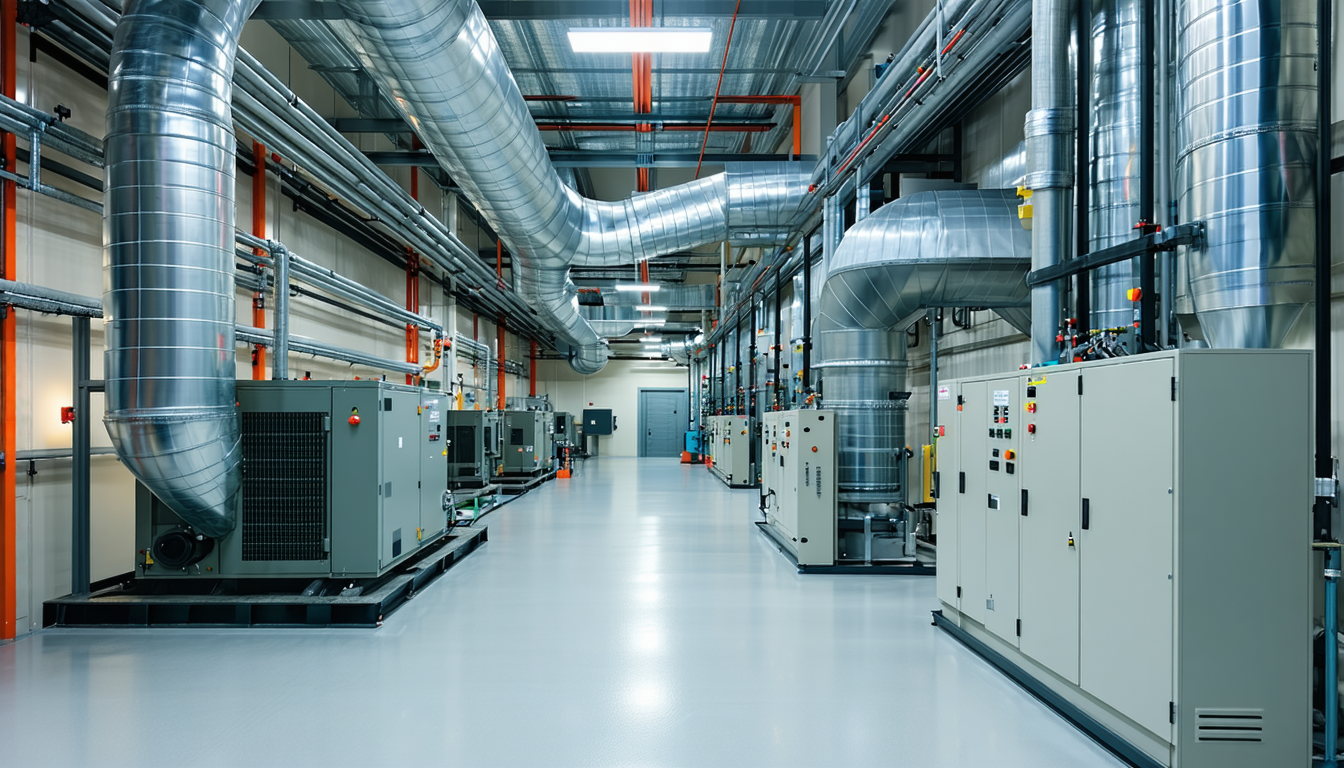
NFPA 68 limits connecting duct length between protected equipment and vent discharge points because long ductwork changes explosion pressure dynamics. Pressure waves reflect off duct walls and create turbulence that affects vent performance.
Maximum duct length-to-diameter ratio of 6:1 applies to most dust applications per Section 8.3. A 20-inch diameter duct can extend 120 inches (10 feet) from the protected equipment to the vent discharge point without requiring sizing corrections.
Duct runs longer than the L/D ratio limits need larger vent areas or intermediate pressure relief points. The standard provides correction factors that typically increase required vent area by 25-50% for each additional L/D ratio increment.
Straight ductwork performs better than runs with elbows or area changes. Each 90-degree elbow counts as 3-4 diameters of straight duct length for pressure loss calculations. Complex ductwork configurations may need computational fluid dynamics analysis to determine effective vent sizing.
Facility layout affects compliance because dust collectors often sit inside buildings with limited straight-line discharge paths to the exterior. You can’t snake ductwork through multiple direction changes and expect standard vent sizing to work correctly.
Enclosure design rules require vent placement on surfaces that experience maximum pressure during deflagration events. This typically means the top surface for vertical vessels and end caps for horizontal equipment. Side-mounted vents work less effectively because pressure concentrates away from the mounting location.
The deflagration venting design standard assumes turbulent flame propagation inside the protected space. Enclosures with internal obstructions like filter elements or heat exchangers create additional turbulence that requires larger vent areas than empty vessels of the same volume.
Frequently Asked Questions
Do all dust collectors need explosion venting under NFPA 68?
No. NFPA 68 venting applies only when a Dust Hazard Analysis identifies deflagration venting as the chosen protection method. Facilities can use suppression systems, explosion-resistant construction, or other NFPA 69 methods instead.
Can I use the same vent area calculation for all types of combustible dust?
No. Each dust material has a different Kst value that directly affects required vent area. Wood dust typically requires smaller vents than metal dust due to lower Kst values.
What happens if my facility exceeds NFPA 68 duct length limits?
Duct runs longer than the L/D ratio limits require larger vent areas or intermediate pressure relief points. The standard provides correction factors for longer duct installations in Section 8.3.