Combustible dust signage documentation gaps become obvious when your insurance auditor starts asking specific questions. Those generic ‘Danger’ signs scattered around your facility don’t meet any actual standard, and you’re about to discover what compliant signage actually requires.
Key Takeaways:
- OSHA requires signage at combustible dust areas but references ANSI Z535.4 for specific content and design requirements
- Warning signs must be posted within 25 feet of areas where dust accumulation exceeds 1/32 inch depth
- GHS Category 1 combustible dust materials require flame pictograms and specific hazard statements on container labels
What Combustible Dust Signs Does OSHA Actually Require?
Combustible dust warning signage is any visual communication that alerts workers to explosion hazards from dust accumulations. This means facilities must post signs wherever dust creates an ignition risk, not just where it looks dangerous.
OSHA doesn’t specify exact sign content in their combustible dust enforcement. The OSHA NEP targets facilities with dust accumulations exceeding 1/32 inch depth, but citations come through the General Duty Clause (Section 5(a)(1)) for failing to protect workers from recognized hazards. The agency references ANSI Z535.4 and 29 CFR 1910.1200 hazard communication requirements to determine what counts as adequate warning.
Your combustible dust safety program must include signage as part of worker protection. OSHA inspectors look for posted warnings at dust collectors, elevated surfaces above production equipment, and areas where housekeeping procedures can’t prevent accumulation. Missing signs trigger General Duty Clause violations with penalties starting at $15,625 per instance.
The enforcement pattern shows OSHA expects facilities to identify hazardous areas and warn workers before they enter. Generic ‘Danger’ or ‘Caution’ signs don’t meet this standard because they don’t communicate the specific hazard or required precautions.
ANSI Z535 Signage Standards: Content and Design Requirements
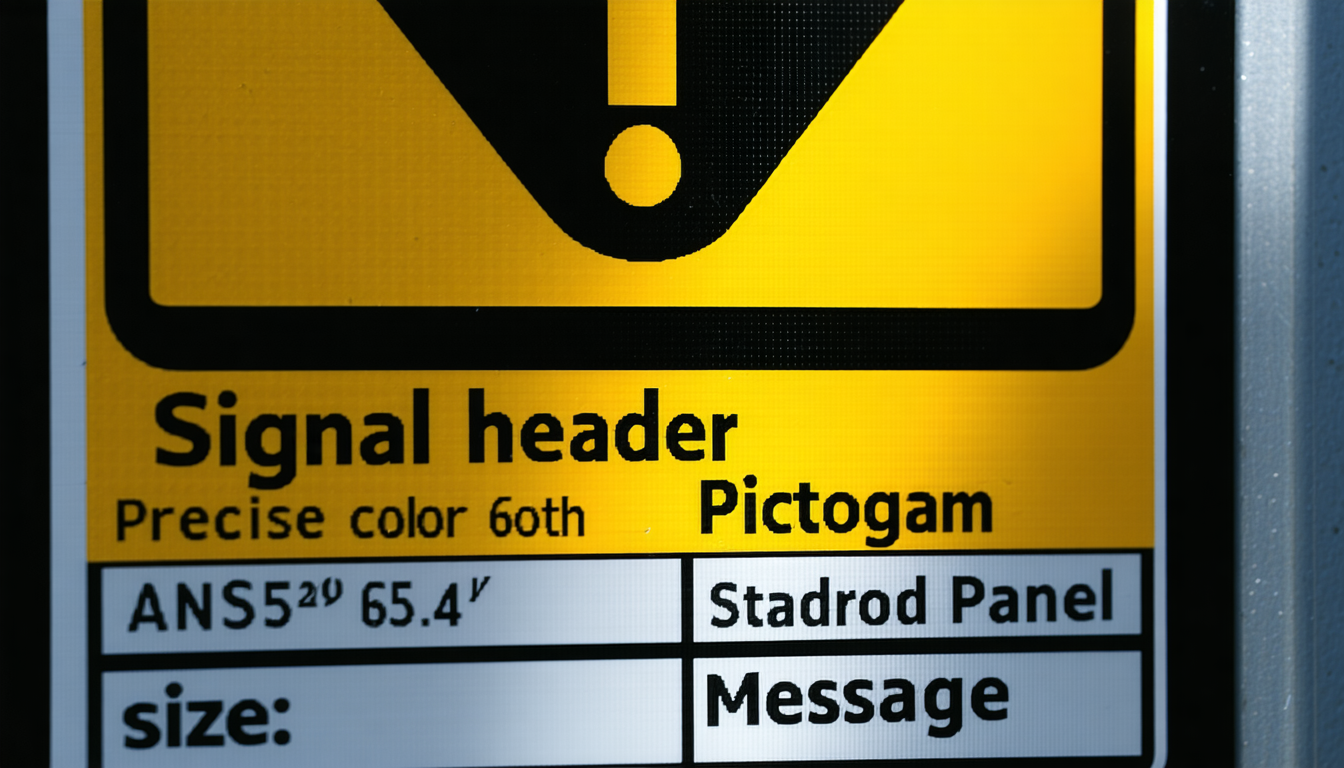
ANSI Z535.4 specifies warning sign design requirements for combustible dust hazards. The standard breaks signs into three components: signal word header, pictogram, and message panel. Each element must meet specific color, size, and content criteria.
| Feature | ANSI Z535.4 Requirement | Combustible Dust Application |
|---|---|---|
| Header Word | DANGER (immediate death/injury) or WARNING (serious injury) | WARNING for most dust accumulation areas |
| Background Color | Red (Danger) or Orange (Warning) | Orange for combustible dust warnings |
| Pictogram | Explosion symbol or flame symbol | Explosion burst preferred for dust hazards |
| Message Panel | Specific hazard and consequence | “Combustible dust explosion hazard” |
| Text Requirements | Action to avoid hazard | “Keep area clean” or “No ignition sources” |
The message panel must identify the specific hazard (combustible dust), potential consequence (explosion/fire), and action required (housekeeping, no smoking, etc.). Vague messages like “Danger – Stay Alert” don’t meet the standard because they don’t tell workers what to avoid or how to stay safe.
ANSI Z535.4 requires orange backgrounds for warning-level combustible dust hazards. Red backgrounds are reserved for immediate death situations, which applies only to active explosion suppression systems or deflagration venting areas during an event.
Sign durability must match the environment. Indoor signs need UV-resistant inks and materials rated for temperature extremes. Outdoor signs require weather-resistant substrates and fade-resistant graphics that remain legible for the sign’s intended life.
Where Must You Post Combustible Dust Warning Signs?
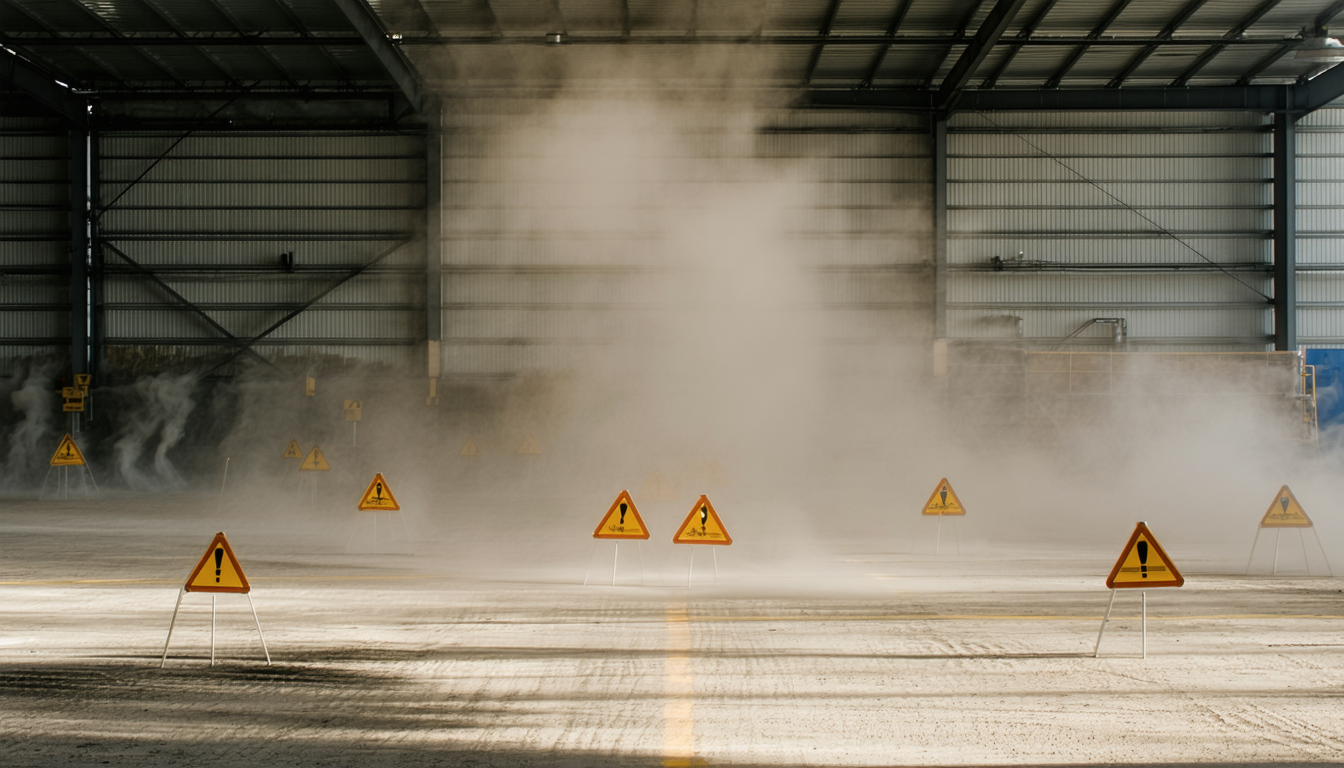
Warning signs must be posted at dust accumulation areas where the 1/32 inch threshold creates explosion risk. Placement follows visibility and access patterns, not just where dust collects.
Dust collector areas – Post signs on equipment housings and within 25 feet of collector inlets, outlets, and maintenance access points.
Elevated surfaces above production – Install signs on platforms, catwalks, and mezzanines where dust settles and housekeeping access is limited.
Building entrances to dust areas – Place signs at doorways entering production spaces where combustible dust operations occur.
Contractor notification points – Post signs at temporary work areas where outside personnel might introduce ignition sources during maintenance.
Employee break areas adjacent to production – Install signs where workers might smoke or use personal electronics near dust-generating processes.
Signs must remain visible from 25 feet in normal lighting conditions. This means 6-inch minimum letter height for header words and adequate contrast between text and background colors. Corner mounting or angled placement works better than flat wall mounting in many industrial environments.
Permanent mounting prevents sign removal during cleaning or maintenance. Magnetic backing fails in dusty environments, and adhesive mounting degrades with temperature cycling and chemical exposure.
GHS Label Requirements for Combustible Dust Materials
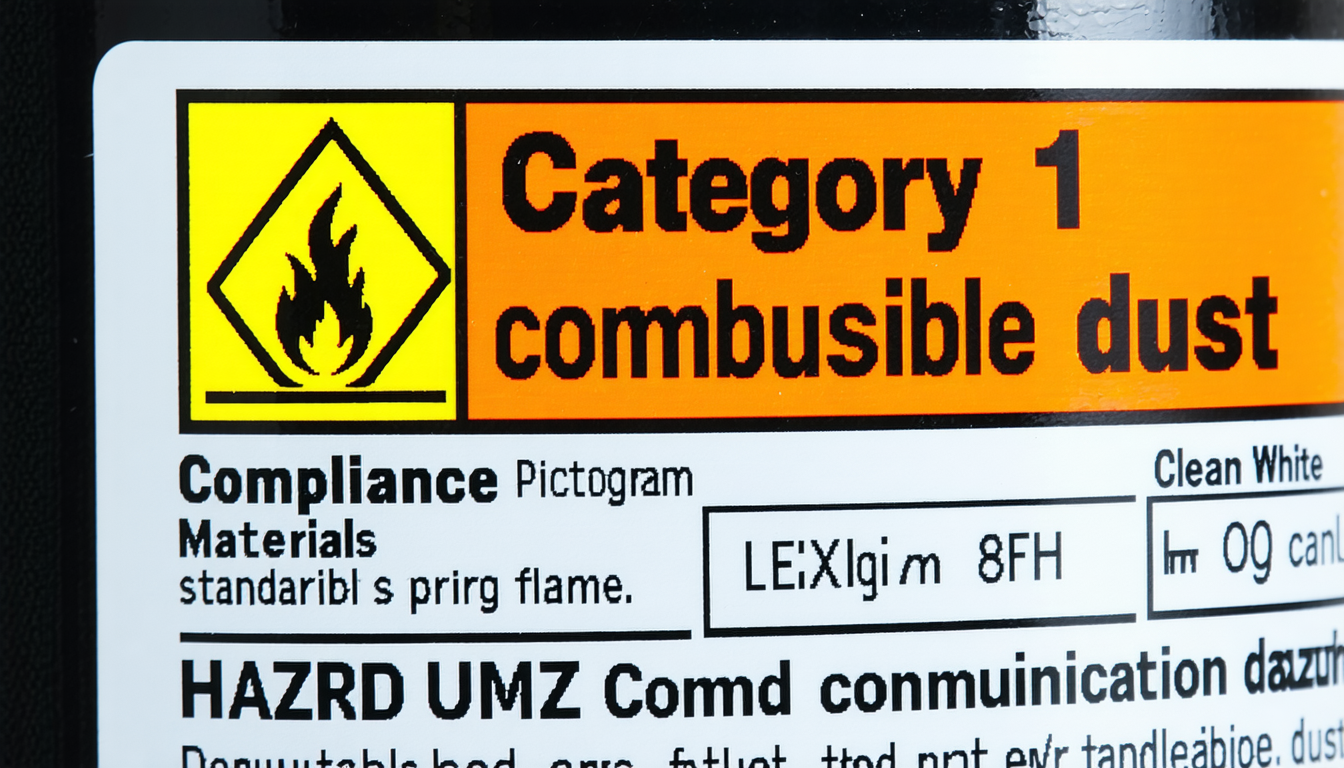
GHS labels require flame pictogram for combustible dust materials classified as Category 1 flammable solids. The labeling process follows specific steps for compliant hazard communication.
Classify your dust material – Test results determine Category 1 (burning time less than 45 seconds) or Category 2 (burning time 45 seconds to 4 minutes) classification.
Select required pictogram – Category 1 combustible dusts require the flame pictogram (GHS02) on all containers and intermediate packaging.
Add hazard statements – Include H228 “Flammable solid” for Category 1 materials, and H228 may apply to Category 2 depending on burning characteristics.
Include precautionary statements – Add P210 “Keep away from heat, hot surfaces, sparks, open flames” and P280 “Wear protective gloves/clothing/eye protection.”
Provide supplier identification – List manufacturer name, address, and emergency contact number on every label.
Specify storage requirements – Include P403+P235 “Store in a well-ventilated place. Keep cool” for temperature-sensitive combustible dusts.
Category 1 combustible dusts require H228 hazard statement: ‘Flammable solid.’ The flame pictogram must appear on primary containers, secondary packaging, and intermediate bulk containers. Small packages under 100ml may use reduced-size pictograms but cannot eliminate required elements.
Precautionary statements must match your facility’s actual control measures. Don’t copy generic text if your dust handling procedures differ from standard recommendations.
How to Select Compliant Signage for Your Facility
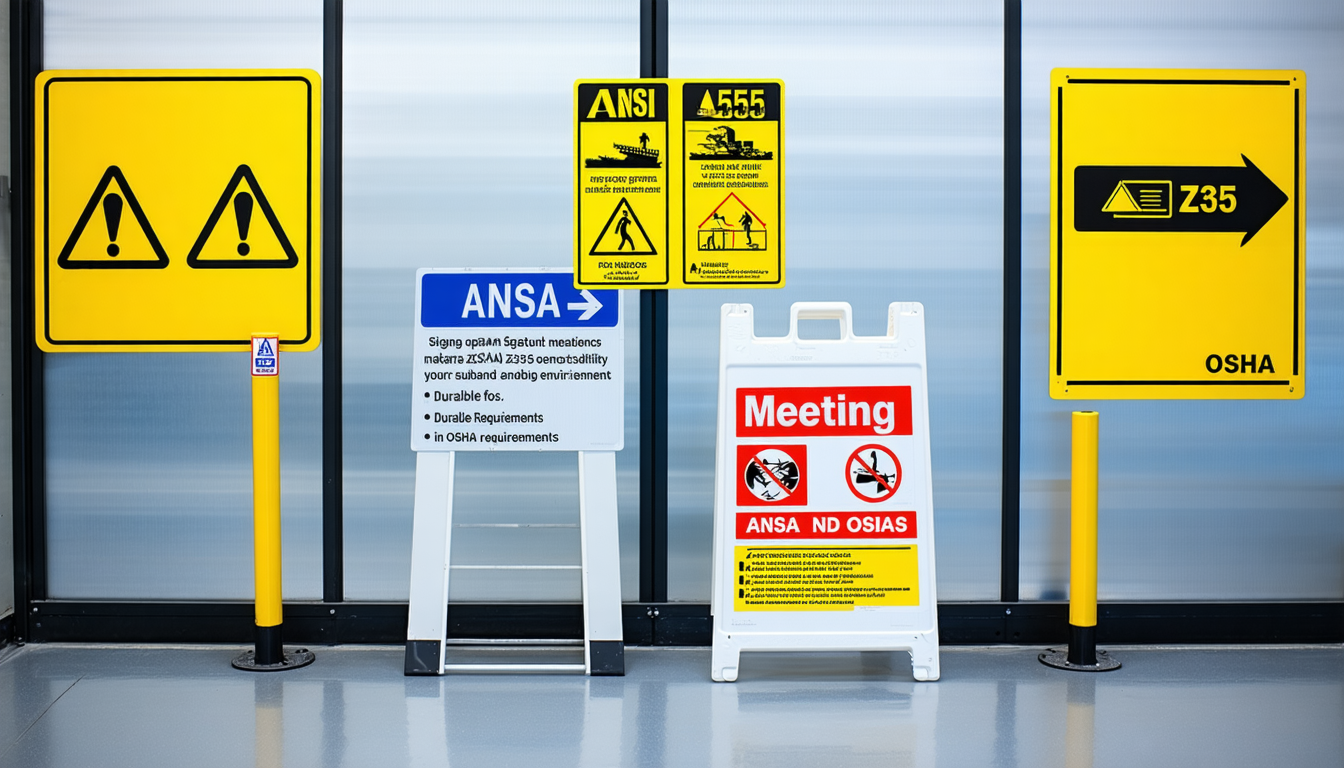
Compliant signage meets ANSI Z535 and OSHA requirements while surviving your facility’s environmental conditions. Vendor selection and material choices determine long-term compliance and replacement costs.
| Feature | Standard Option | Premium Option |
|---|---|---|
| Material | Aluminum substrate | Polycarbonate laminate |
| Mounting | Pre-drilled holes | Magnetic or adhesive backing |
| Durability | 5-year outdoor rating | 10-year UV resistance |
| Customization | Standard ANSI messages | Facility-specific content |
| Cost per sign | $15-25 | $35-45 |
| Lead time | Stock items ship same day | Custom orders 7-14 days |
Standard ANSI Z535.4 compliant signs work for most combustible dust applications. Custom signage makes sense when your facility has unique hazards (like pharmaceutical dust combustibility variations) or needs bilingual text for worker comprehension.
Vendor selection criteria include ANSI Z535.4 certification, material testing data, and replacement warranty terms. Industrial suppliers understand environmental requirements better than general sign shops that focus on office or retail applications.
Dust collector grounding and electrical safety signs often require coordination with combustible dust warnings. Plan sign placement to avoid conflicting messages or overcrowded mounting areas.
Bulk pricing reduces per-unit costs for facilities needing multiple signs. Order extras for new equipment installations and replacement inventory since emergency orders carry premium pricing.
Frequently Asked Questions
Do I need different signs for different types of combustible dust?
No, ANSI Z535.4 warning signs work for all combustible dust types since the hazard (explosion risk) is the same. However, GHS container labels must specify the actual material name and may require different precautionary statements based on the specific dust’s properties.
Can I make my own combustible dust warning signs?
Yes, but they must meet ANSI Z535.4 specifications for header words, colors, pictograms, and message content. Most facilities find it more cost-effective to buy compliant signs from industrial suppliers rather than ensuring in-house designs meet all technical requirements.
How often do combustible dust warning signs need to be replaced?
OSHA and ANSI don’t specify replacement schedules, but signs must remain legible and visible. Most industrial facilities replace exterior signs every 3-5 years and interior signs every 5-7 years depending on environmental conditions and wear.