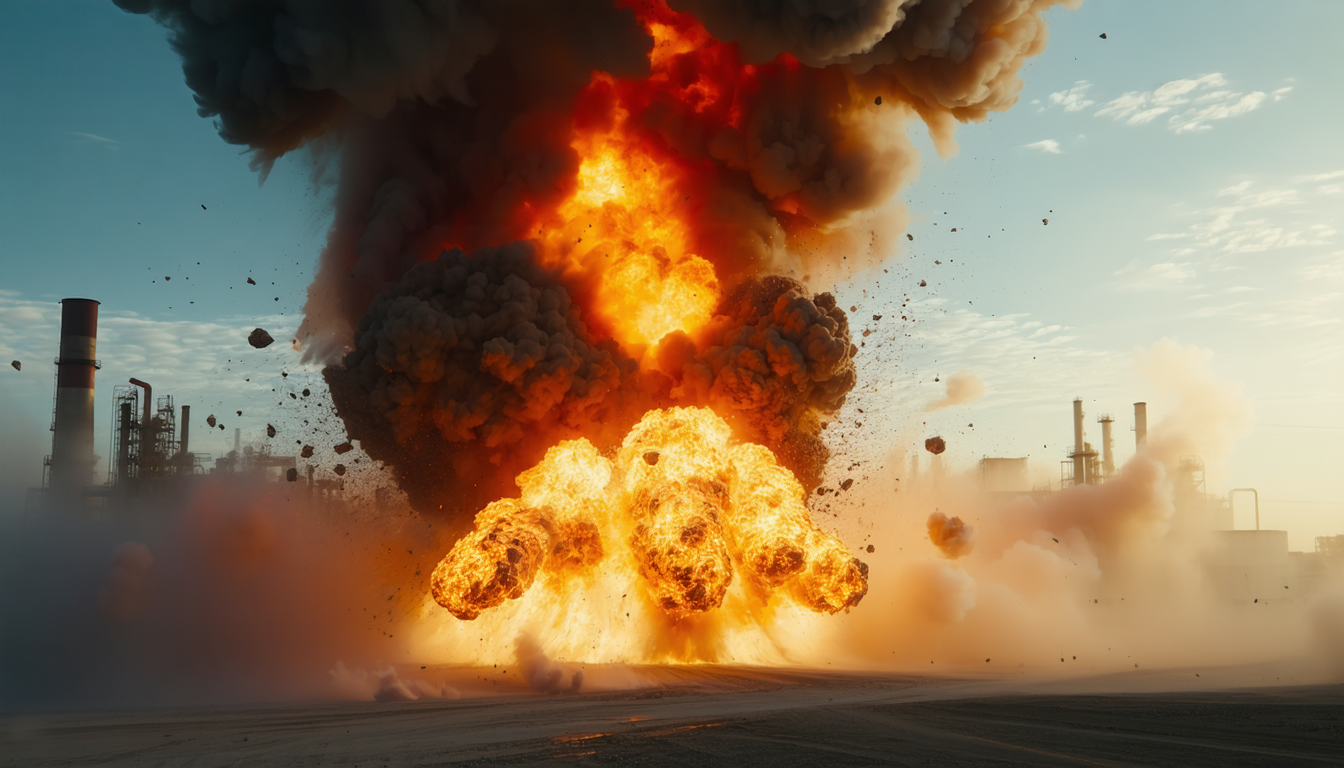
Dust explosion incidents cost companies an average of $800,000 in direct damages. That number excludes insurance cancellations, regulatory fines, and wrongful death lawsuits that follow. The real financial impact compounds over years as carriers restrict coverage and OSHA maintains enforcement focus on facilities with combustible dust hazards.
Key Takeaways:
- Over 60% of dust explosions involve secondary explosions that cause 80% of the fatalities and property damage
- Insurance companies audit combustible dust facilities within 90 days after any reportable incident, typically resulting in coverage restrictions or cancellation
- OSHA citations from dust explosion investigations average $125,000 per facility, with willful violations reaching $400,000+
What Are the Most Devastating Dust Explosion Incidents in U.S. History?
The Imperial Sugar explosion killed 14 workers and injured 42 others in February 2008. The incident investigation revealed classic patterns that appear in most fatal dust explosions: primary deflagration followed by devastating secondary blasts that propagated through connected spaces.
Washburn Mills in Minneapolis holds the record as America’s deadliest flour dust explosion. The 1878 incident killed 18 workers when grain dust ignited in the mill’s basement and secondary explosions destroyed multiple buildings. West Pharmaceutical Services lost six workers in 2003 when polyethylene dust exploded in their North Carolina facility.
| Incident Feature | Primary Deflagration | Secondary Explosion |
|---|---|---|
| Ignition source | Single point ignition | Pressure wave dispersion |
| Dust involvement | Limited accumulated dust | Facility-wide dust layers |
| Casualty pattern | Equipment operators | Workers throughout facility |
| Property damage | Localized to ignition area | Multiple connected spaces |
| Investigation focus | Immediate cause determination | Housekeeping and prevention failures |
CTA Acoustics in Kentucky killed seven workers in 2003. The incident investigation found the company knew about combustible dust hazards but failed to implement adequate housekeeping programs. These cases share common elements: known dust accumulation, inadequate housekeeping, and secondary explosions that killed more people than the primary blast.
The Chemical Safety Board’s analysis shows secondary explosions cause the majority of dust explosion fatalities. The primary deflagration creates pressure waves that lift accumulated dust from surfaces throughout connected areas. This suspended dust cloud ignites within milliseconds, creating devastating secondary blasts.
Each major incident prompted regulatory responses, but the lag between disaster and enforcement means facilities operate without specific combustible dust standards for years. The Imperial Sugar case led directly to OSHA’s National Emphasis Program development in 2008.
How Much Does a Dust Explosion Actually Cost Your Company?
Dust explosions generate direct costs exceeding $800,000 according to Dust Safety Science analysis. Most companies discover the true financial impact over 12-18 months as indirect costs compound.
Direct costs hit immediately:
- Property damage and equipment replacement ranges from $200,000 to $2 million depending on facility size and explosion severity
- Production downtime costs average $50,000 per day for mid-market manufacturers, with typical recovery periods spanning 3-6 months
- Emergency response and cleanup bills reach $75,000 to $150,000 for hazardous material cleanup and structural assessment
- Medical expenses and workers compensation vary by casualty count but average $100,000 per injured worker for serious burn cases
Indirect costs accumulate over years. Insurance premium increases average 40-60% following reportable incidents. Legal fees for wrongful death or injury lawsuits start at $200,000 even when settled out of court. Regulatory fines from OSHA investigations average $125,000 per facility.
Reputation damage affects customer relationships and employee recruitment. Facilities with publicized dust explosions report 15-20% employee turnover in the year following incidents as workers seek employment elsewhere.
Insurance audit findings trigger the costliest long-term impact. Carriers restrict coverage or cancel policies entirely for facilities that cannot demonstrate NFPA compliance within 90 days of incident investigation completion.
Primary vs Secondary Explosions: Why the Second Blast Kills
A primary explosion is the initial deflagration that occurs when accumulated dust meets an ignition source within the explosion pentagon parameters. This means the first blast involves limited dust quantities in a confined space where ignition occurs.
Secondary explosions account for over 80% of dust explosion fatalities based on CSB investigation patterns. The primary blast creates pressure waves that travel through connected spaces at 1,000+ feet per second. These pressure waves lift dust accumulated on surfaces throughout the facility, creating massive suspended dust clouds.
The physics work against survival. Primary explosions typically involve 10-50 pounds of suspended dust. Secondary explosions can involve thousands of pounds of previously settled combustible dust that gets dispersed by the initial pressure wave.
Connected spaces amplify the destruction. Dust collectors, ductwork, and production areas become part of a single explosion event when pressure waves propagate through the system. The Imperial Sugar incident showed how a small primary explosion in a sugar silo triggered secondary blasts that destroyed the entire packaging building.
Workers near the primary explosion often survive because the initial blast occurs in equipment enclosures. Workers in adjacent areas face the full force of secondary explosions involving much larger dust quantities and higher peak pressures.
Prevention focuses on eliminating dust accumulation before any ignition occurs. Once the primary explosion starts, secondary explosions become unavoidable because pressure wave propagation happens faster than any suppression system can respond.
What Happens During an OSHA Investigation After a Dust Explosion?
OSHA investigations result in General Duty Clause citations because no specific combustible dust standard exists for most industries. OSHA opens investigations within 24 hours of any reportable dust explosion incident.
The investigation process follows these steps:
- Immediate site securing and evidence preservation occurs within 8 hours, with investigators photographing dust accumulation patterns and equipment damage
- Document collection phase targets DHA records, training documentation, housekeeping logs, and maintenance records going back 3 years
- Employee interviews focus on known hazards, training received, and management response to dust accumulation concerns
- Expert consultation brings in combustible dust specialists to evaluate facility design and protection system adequacy
- Citation development uses Section 5(a)(1) General Duty Clause when violations cannot be cited under specific standards
- Settlement negotiations typically begin 4-6 months after investigation opening, with final citations issued within 12 months
Investigators examine three key areas: hazard recognition, feasible abatement methods, and likelihood of serious injury. The General Duty Clause requires employers to provide a workplace free from recognized hazards.
Citation patterns show OSHA targets housekeeping failures most frequently. Facilities with dust accumulation exceeding 1/32 inch over 5% of floor area face automatic citations. Training deficiencies generate additional violations when workers cannot identify combustible dust hazards.
Penalty calculations consider facility size, violation severity, and good faith effort to comply. Willful violations reach $400,000 per citation when OSHA determines management knowingly ignored combustible dust hazards.
How Do Insurance Companies Respond to Combustible Dust Incidents?
Insurance audits trigger coverage restrictions within 90 days of reportable incidents. Carriers dispatch risk engineers to evaluate explosion potential and NFPA compliance status within 30 days of incident notification.
Auditors examine DHA documentation first. Facilities without current Dust Hazard Analysis reports face immediate coverage restrictions. Risk engineers verify protection system adequacy, housekeeping program implementation, and employee training records.
Premium calculations change immediately following incidents. Property insurance rates increase 40-60% at renewal even when no claims are filed. General liability premiums spike 25-35% because explosion incidents create ongoing lawsuit exposure.
Coverage availability depends on compliance demonstration. Standard general liability and property insurance policies exclude explosion damage or require separate endorsements for combustible dust coverage. Most carriers require proof of NFPA compliance and regular third-party audits before providing explosion coverage.
Policy cancellations occur when facilities cannot demonstrate adequate risk controls within 90 days. Insurance companies audit combustible dust facilities and 70% of audits result in coverage changes ranging from premium increases to complete policy cancellation.
Replacement coverage costs 2-3 times standard rates when available. Surplus lines carriers charge premiums 200-300% above standard market rates for facilities with known combustible dust hazards and incident history.
Documentation requirements include annual DHA updates, quarterly housekeeping inspection reports, and biannual protection system testing records. Carriers require 30-day advance notice of any process changes that could affect dust generation or explosion risk.
What Regulatory Changes Have Major Incidents Actually Triggered?
The Imperial Sugar explosion prompted OSHA NEP development within six months of the February 2008 incident. Investigation findings showed systemic failures in hazard recognition and dust accumulation control that existed across multiple industries.
| Regulatory Response | Timeline | Scope |
|---|---|---|
| OSHA NEP Launch | September 2008 | National enforcement priority |
| CSB Investigation Reports | 2009-2010 | Industry-specific recommendations |
| NFPA 654 Updates | 2013 revision | Expanded housekeeping requirements |
| NFPA 660 Consolidation | 2024 implementation | Unified standard across industries |
West Pharmaceutical influenced NFPA standard updates by highlighting pharmaceutical industry gaps in existing combustible dust guidance. The 2003 incident killed six workers and demonstrated that traditional manufacturing standards did not address pharmaceutical dust hazards adequately.
CSB investigation patterns show consistent themes across industries: inadequate housekeeping, lack of DHA documentation, and insufficient employee training. These findings drove NFPA committee decisions to strengthen housekeeping requirements and mandate formal hazard analysis processes.
The regulatory lag creates compliance gaps. Incident investigation findings take 2-3 years to influence standard revisions, and standard implementation takes another 2-3 years. Facilities operate without specific guidance for 4-6 years between major incidents and enforceable requirements.
OSHA NEP targeted 2,800 facilities between 2008-2020, generating over $50 million in penalties. The program focused enforcement on industries with known combustible dust hazards: food processing, woodworking, metals, chemicals, and plastics manufacturing.
Incident-driven regulation means compliance follows disasters rather than preventing them. The pattern repeats across decades: major explosion, investigation findings, regulatory response, industry adoption, and temporary safety improvements until the next preventable incident occurs.
Frequently Asked Questions
How often do dust explosions actually happen in the United States?
The Chemical Safety Board documents approximately 20-30 significant combustible dust incidents annually, with smaller unreported incidents estimated at 5-10 times that number. Manufacturing facilities in food processing, woodworking, and metalworking account for 70% of reported incidents.
Can you prevent secondary explosions if the primary explosion already happened?
Secondary explosions occur within milliseconds of the primary blast as pressure waves disperse accumulated dust throughout connected spaces. Once the primary explosion starts, secondary explosions become unavoidable because prevention requires eliminating dust accumulation before any ignition occurs.
Do insurance companies require specific combustible dust coverage or is it included in general liability?
Standard general liability and property insurance typically excludes explosion damage or requires separate endorsements for combustible dust coverage. Most carriers require proof of NFPA compliance and regular third-party audits before providing explosion coverage for facilities with known combustible dust hazards.
How long after an incident does OSHA typically issue citations?
OSHA investigations following dust explosion incidents typically take 6-12 months to complete, with citations issued within 6 months of the investigation closing. Complex cases involving fatalities can extend investigation timelines to 18-24 months before final citations are issued.