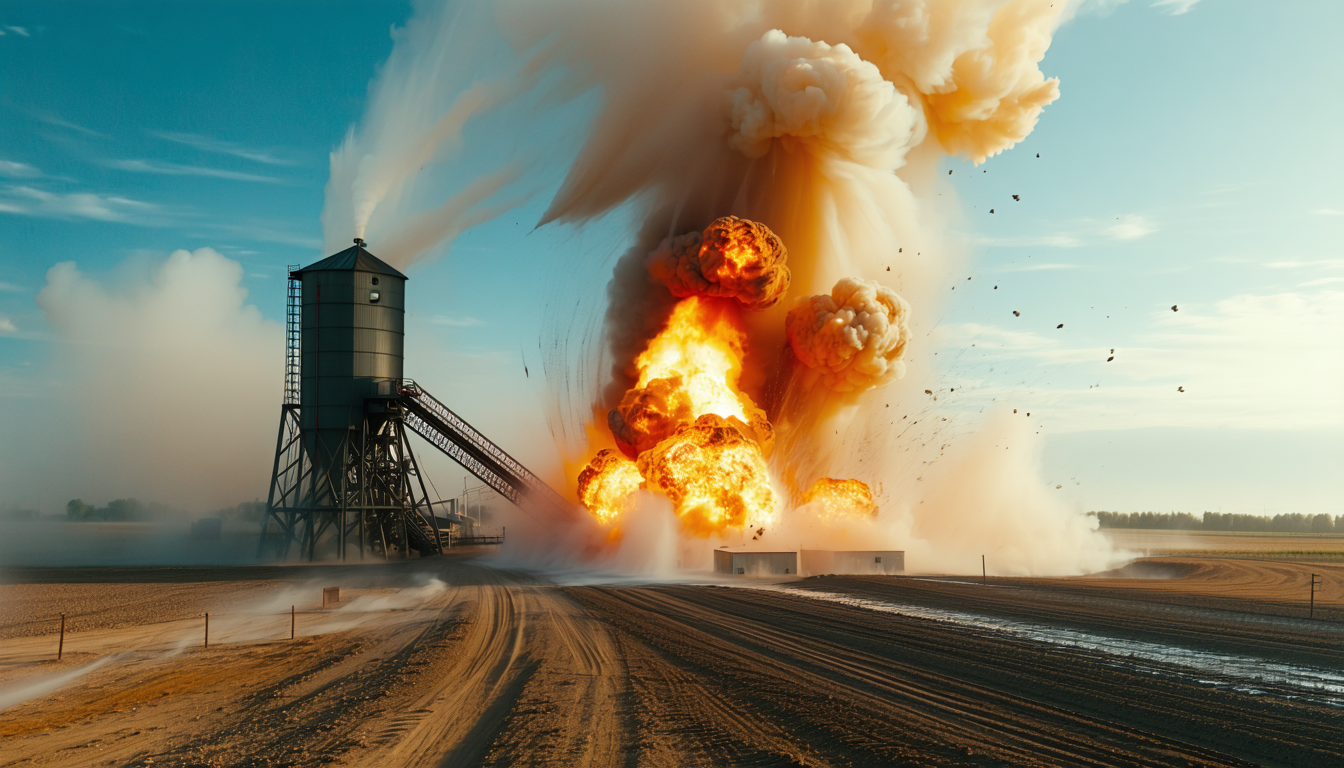
Grain elevator dust explosion incidents like the December 22, 1977 Continental Grain blast that killed 18 workers in Westwego, Louisiana remain the deadliest industrial accidents in U.S. food processing, and the same combustible dust hazards that caused it still kill workers today.
Key Takeaways:
- Chapter 21 replaced NFPA 61 in December 2024 but added stricter pneumatic conveying velocity requirements and hygiene overlay provisions not in the old standard
- Grain elevator explosions occur every 3.6 days on average in the U.S. according to Purdue University’s grain dust explosion database spanning 1958-2018
- Food processing facilities with flour, sugar, or starch operations face Kst values ranging from 180-300 bar·m/s, putting them in the explosive St-2 classification requiring immediate protection systems
Why Do Grain Elevators Explode? The Physics Behind Agricultural Dust Blasts
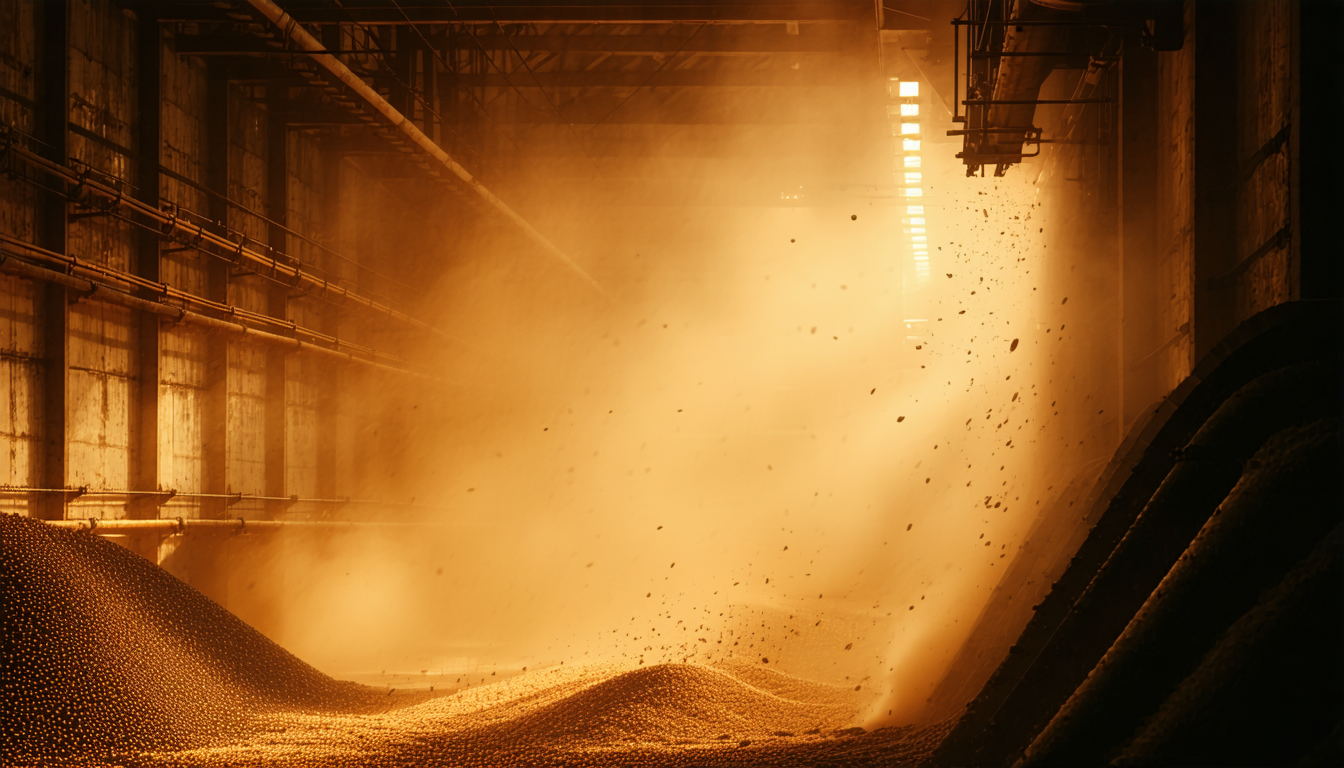
Grain elevator explosions are industrial accidents where airborne agricultural dust ignites and rapidly combusts in confined spaces. This means grain storage and processing facilities face constant explosion risk whenever five specific conditions, the dust explosion pentagon, align simultaneously.
Agricultural dust creates particularly dangerous conditions because grain handling generates massive quantities of fine particles. Every bushel of wheat moved through an elevator system produces approximately 0.1% dust by weight. Multiply this across the 2.1 billion bushels handled annually at major terminals, and you create explosive atmospheres measured in tons of airborne material daily.
The Continental Grain explosion killed 18 workers in 1977 when corn dust accumulated in bucket elevators ignited and propagated through interconnected equipment. The DeBruce Grain explosion in Haysville, Kansas killed 6 workers in 1998 following an identical pattern, dust accumulation, ignition source contact, and flame propagation through pneumatic systems.
Grain elevators explode more frequently than other industrial facilities because they combine three risk multipliers. First, continuous material movement keeps dust airborne. Second, bucket elevators and conveyor systems create friction ignition sources. Third, interconnected silos and transport systems provide propagation paths that turn small ignitions into facility-wide explosions.
Purdue University data shows grain elevator explosions occur every 3.6 days in the United States, with 469 documented incidents from 1958-2018. This frequency exceeds other combustible dust hazard industries because agricultural facilities process millions of pounds of explosive materials daily through high-friction mechanical systems.
Flour, Sugar, and Starch Explosion Characteristics: Kst Values That Drive Protection Requirements
Food processing dusts generate Kst values between 180-300 bar·m/s, placing most agricultural materials in the St-2 explosive classification that mandates immediate explosion protection systems.
| Material | Kst Value (bar·m/s) | St Classification | Maximum Pressure (bar) |
|---|---|---|---|
| Wheat Flour | 200-250 | St-2 | 8.5-9.2 |
| Corn Starch | 180-220 | St-1/St-2 | 7.8-8.4 |
| Sugar Dust | 180-220 | St-1/St-2 | 7.9-8.6 |
| Soy Flour | 210-280 | St-2 | 8.2-9.1 |
| Rice Dust | 160-200 | St-1 | 7.2-8.0 |
Wheat flour presents the highest explosion violence with Kst values reaching 250 bar·m/s. This material Kst profile exceeds coal dust (150 bar·m/s) and approaches aluminum powder (400+ bar·m/s) in explosive potential. Any facility processing wheat flour requires explosion venting, suppression, or isolation systems per NFPA 660 requirements.
Corn starch and sugar dust fall into the St-1 to St-2 boundary zone, with explosion characteristics varying by particle size and moisture content. Particles under 75 microns create higher Kst values and remain airborne longer, increasing explosion probability. Food processing equipment that reduces particle size, hammer mills, pulverizers, sifters, creates the most dangerous dust clouds.
Soy flour generates consistently high Kst values due to protein and oil content that enhances combustion rates. Processing facilities handling soy-based products face material combustibility that requires identical protection systems as grain elevators, despite different end products.
The St-2 classification means these materials create explosion pressures exceeding 7 bar in standard 20-liter test vessels. Any dust collection system, storage silo, or process enclosure handling St-2 materials must incorporate explosion protection to prevent equipment destruction and worker fatalities.
What Does NFPA 660 Chapter 21 Require for Food Processing Facilities?
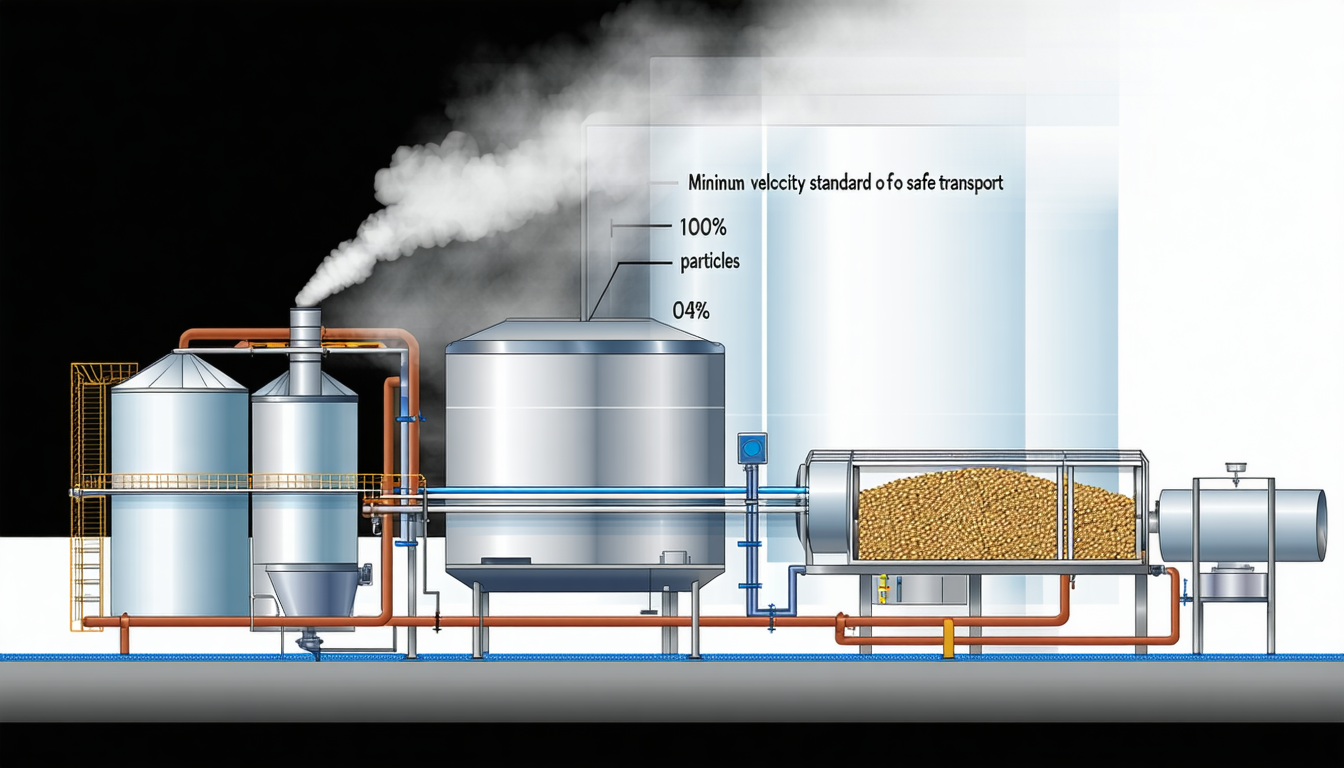
NFPA 660 Chapter 21 mandates specific requirements that differ from general combustible dust provisions, targeting the unique hazards of agricultural dust operations.
Pneumatic conveying velocity minimums of 4000 ft/min for grain dust transport. This exceeds the 3000 ft/min general industry standard because grain materials settle in horizontal runs at lower velocities, creating accumulation points that ignite during normal operations.
Equipment construction standards for agricultural environments. All electrical equipment in grain dust areas must meet Class II, Division 2 requirements minimum, with Class II, Division 1 classifications required within 5 feet of bucket elevators, belt conveyors, and pneumatic loading points.
Housekeeping frequency mandates specific to food processing operations. Chapter 21 requires daily cleaning of all surfaces within grain handling areas, with weekly deep cleaning of overhead structures and quarterly inspection of hidden accumulation points in equipment casings.
Dust collection system requirements for agricultural facilities. All grain dust collection points must incorporate explosion protection systems, venting, suppression, or isolation, sized according to the specific Kst values of processed materials.
Ignition source control beyond general industry standards. Chapter 21 prohibits smoking, open flames, and hot work within 50 feet of grain handling equipment, compared to 35 feet in general NFPA 660 provisions.
Preventive maintenance schedules for mechanical equipment. Belt alignment, bearing lubrication, and temperature monitoring must occur weekly in grain processing facilities, with documented inspection records required for OSHA compliance verification.
Chapter 21 requires minimum 4000 ft/min transport velocity for grain dust in pneumatic systems, 50% higher than general industry requirements. This velocity prevents particle settling that creates explosion-prone accumulations in horizontal conveying runs.
How Food-Grade Hygiene Requirements Overlay With Explosion Protection Systems
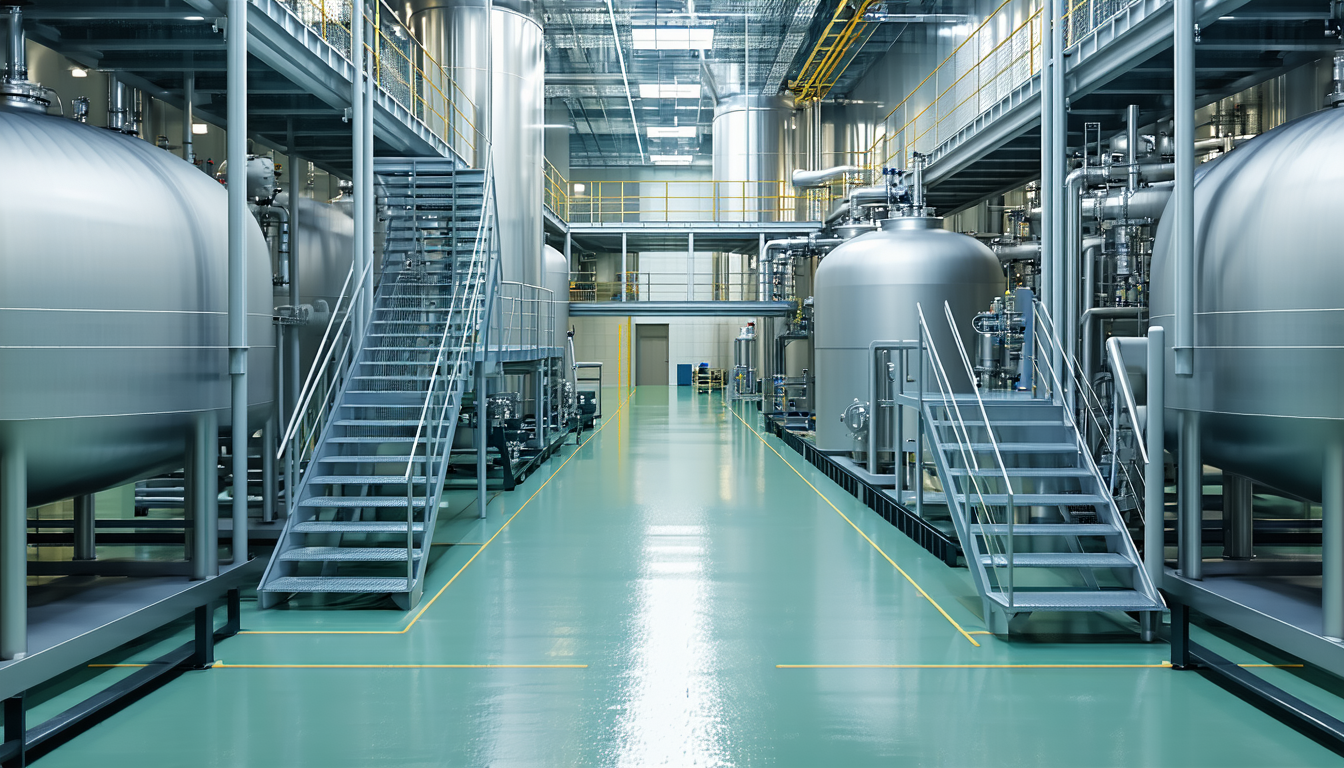
Food processing facilities must balance FDA sanitation mandates with NFPA 660 explosion protection requirements, creating equipment selection conflicts that require specific design approaches.
FDA requires daily washdown procedures in meat processing facilities, while NFPA 660 prohibits water application to aluminum dust collection systems. This conflict forces facilities to choose between stainless steel construction that meets both requirements or separate cleaning protocols that maintain sanitation without compromising explosion protection integrity.
HACCP plans must account for explosion protection systems as potential contamination sources. Explosion vents discharge combustible material during activation, creating food safety hazards if vent locations don’t consider product flow patterns. Suppression systems inject chemical agents that require FDA approval for food-contact surface applications.
Stainless steel construction adds 40-60% to dust collection system costs but eliminates washdown compatibility issues. Food processing facilities choosing carbon steel equipment with protective coatings face coating degradation from chemical sanitizers, leading to corrosion and potential ignition source creation.
Vent panel placement becomes critical in food processing environments where discharged material must avoid product contamination. Standard outdoor venting works for grain elevators but food processing facilities often require flameless venting systems that contain discharged material within the building envelope.
Grounding and bonding requirements for stainless steel equipment differ from carbon steel installations. Stainless steel’s higher electrical resistance requires additional grounding points and lower-resistance bonding connections to prevent static accumulation during material handling.
Pneumatic Conveying Explosion Risks in Food Processing: Why Standard Transport Fails
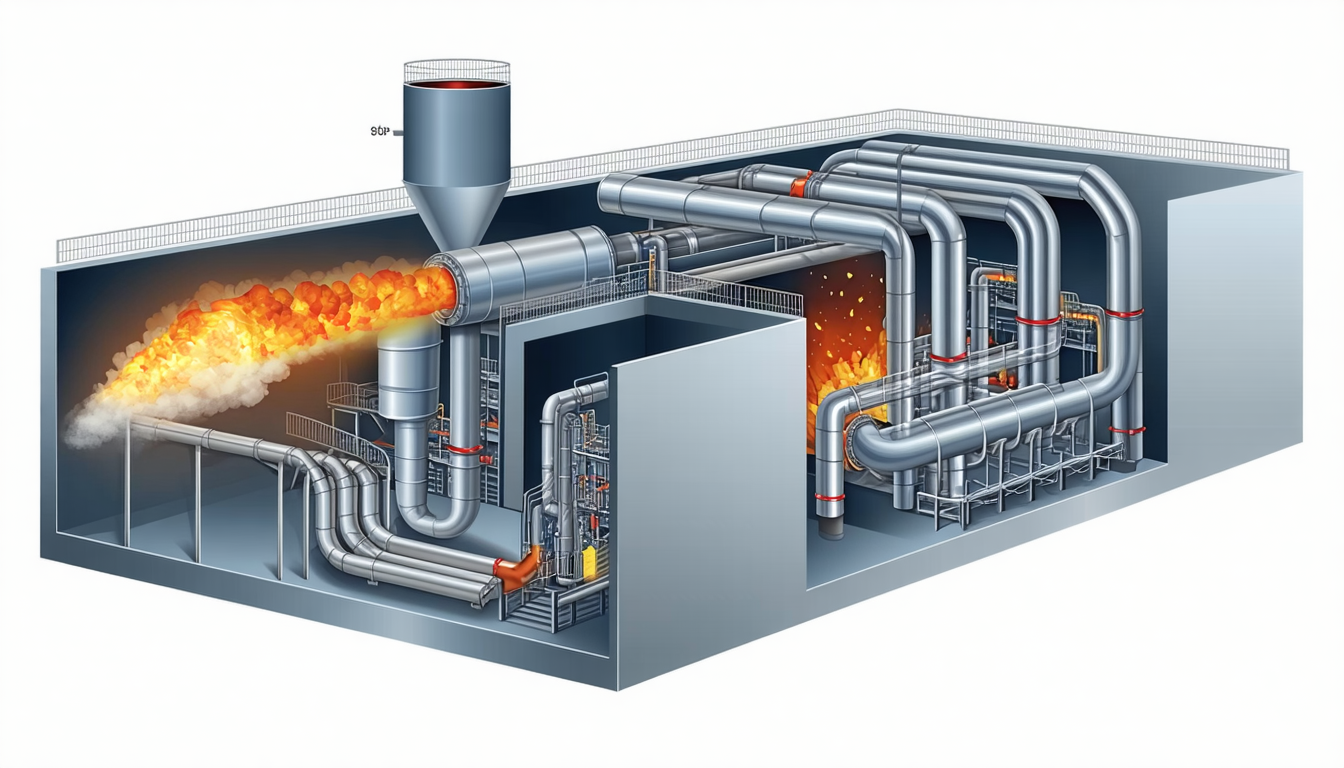
Pneumatic conveying systems create explosion propagation paths between process equipment, turning localized ignitions into facility-wide disasters through connected ductwork and material transport lines.
Calculate minimum transport velocity for your specific material. Grain dust requires 4000 ft/min minimum per NFPA 660 Chapter 21, but flour and sugar may need 4500-5000 ft/min depending on particle size distribution and moisture content.
Install explosion isolation valves at all connection points between equipment. Place isolation valves within 3 feet of dust collectors, cyclones, and storage vessels to prevent flame propagation through pneumatic lines during explosion events.
Size ductwork to maintain velocity throughout the system. Use 6-inch minimum diameter for grain dust transport, with bend radius calculations ensuring 3x diameter minimum to prevent turbulence and particle settling.
Implement pressure monitoring at key system points. Install pressure sensors before and after each isolation valve to detect pressure wave propagation and trigger isolation valve closure within 20 milliseconds.
Design horizontal runs to prevent material accumulation. Slope all horizontal ductwork 2 degrees minimum toward collection points, with cleanout access every 50 feet for inspection and material removal.
Standard 3000 ft/min conveying velocity creates dust settling in horizontal runs, requiring 4000+ ft/min for grain materials per Chapter 21 requirements. Settled material creates explosion-prone accumulations that ignite from static discharge or mechanical friction during normal system operation.
Frequently Asked Questions
What’s the difference between NFPA 61 and NFPA 660 Chapter 21?
NFPA 61 was withdrawn in December 2024 and replaced by NFPA 660 Chapter 21. Chapter 21 includes stricter pneumatic conveying velocity requirements and new provisions for food-grade hygiene compatibility with explosion protection systems.
How often do grain elevator explosions actually happen?
According to Purdue University’s grain dust explosion database, grain elevator explosions occur every 3.6 days on average in the United States. The database tracks 469 incidents from 1958-2018, resulting in 208 deaths and 783 injuries.
Can flour dust really explode like grain dust?
Yes, flour dust creates the same explosion risk as grain dust with Kst values ranging from 200-250 bar·m/s, placing it in the St-2 explosive classification. Flour particles under 75 microns become airborne easily and require identical explosion protection systems as grain elevators.